2026 | Professional

Relay: An Assistive Bead Bracelet for Aphasia
Entrant
Pratik & Jingya
Category
Product Design - Assistive Devices
Client's Name
-
Country / Region
United States
Gallery


About The Entry
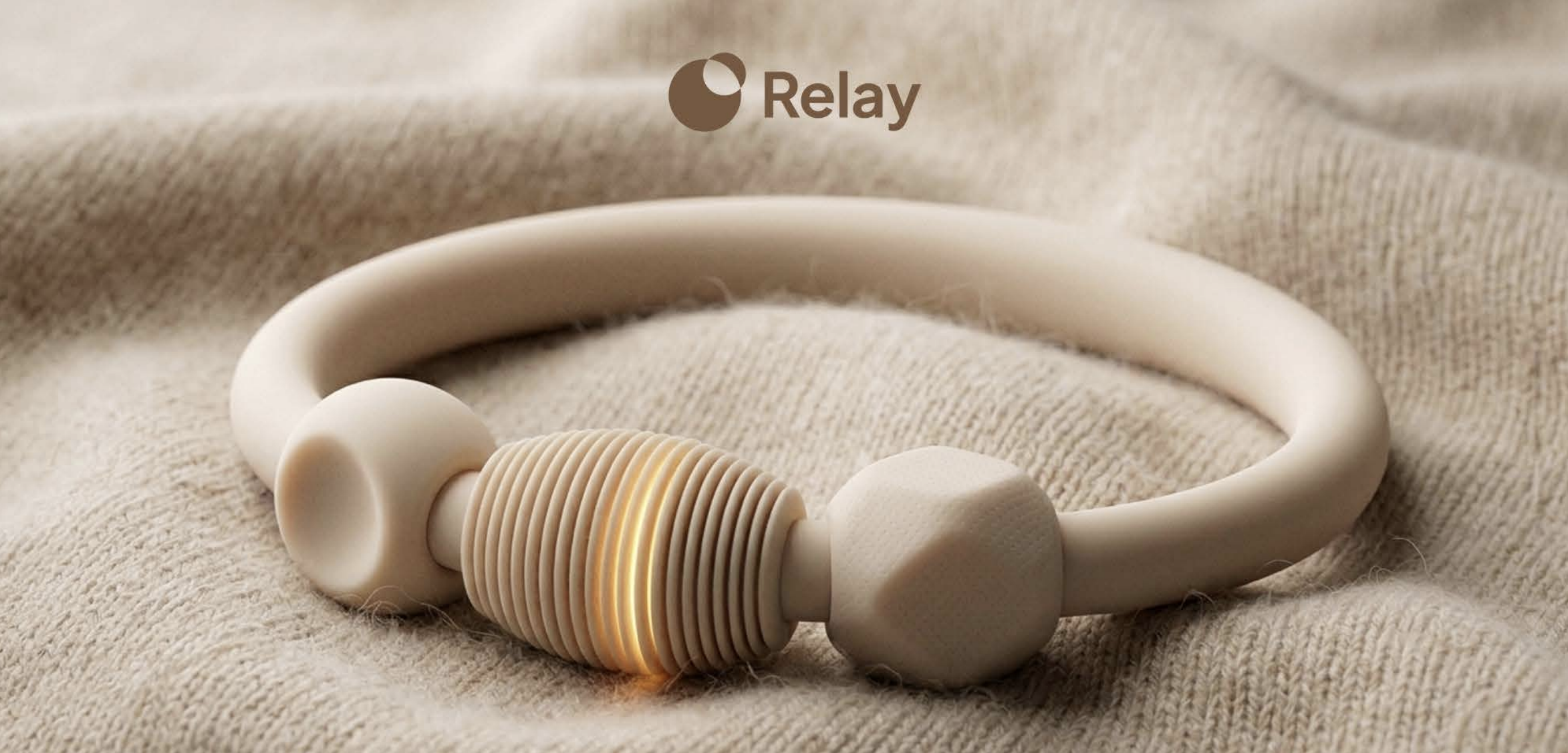
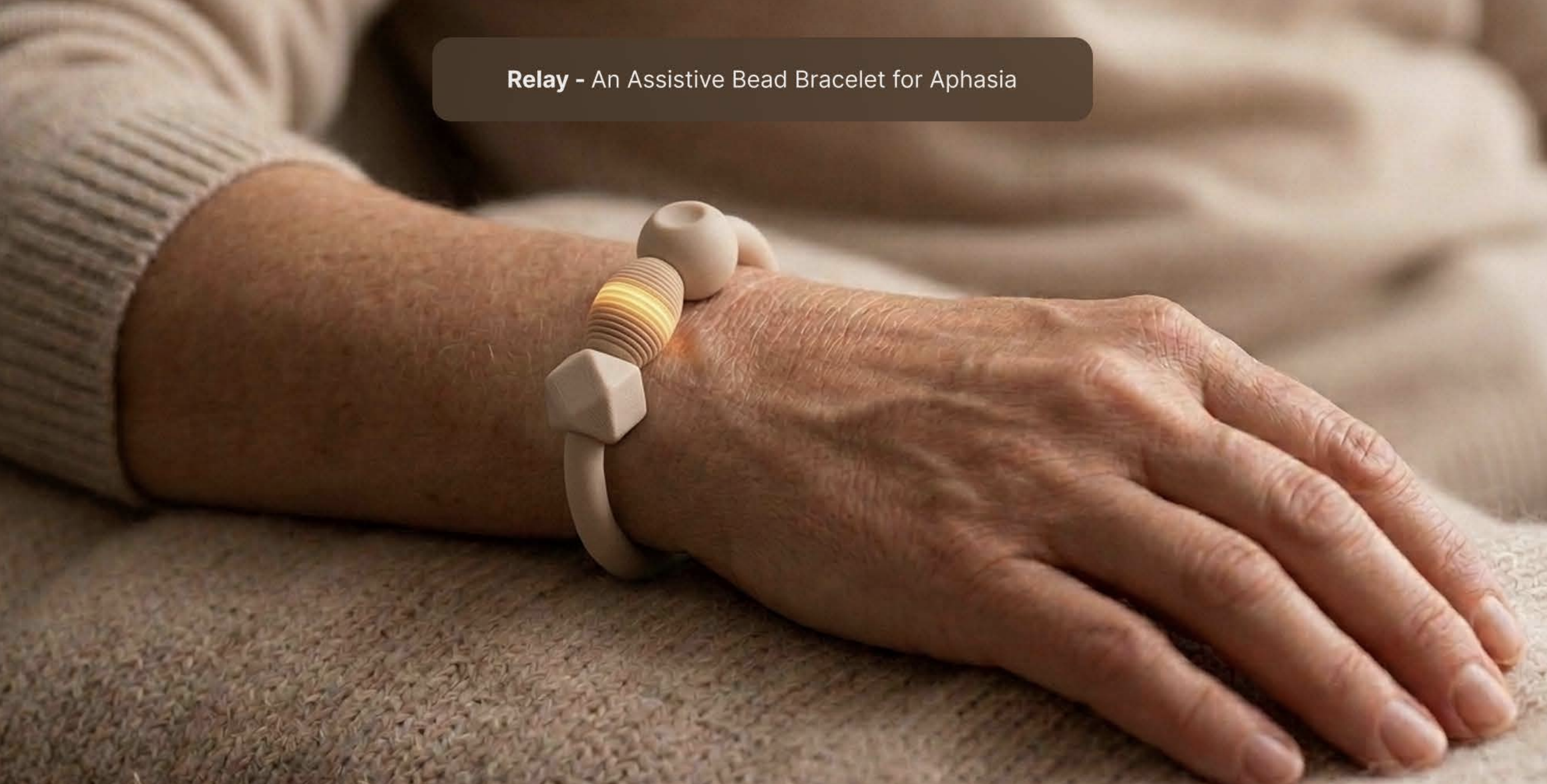
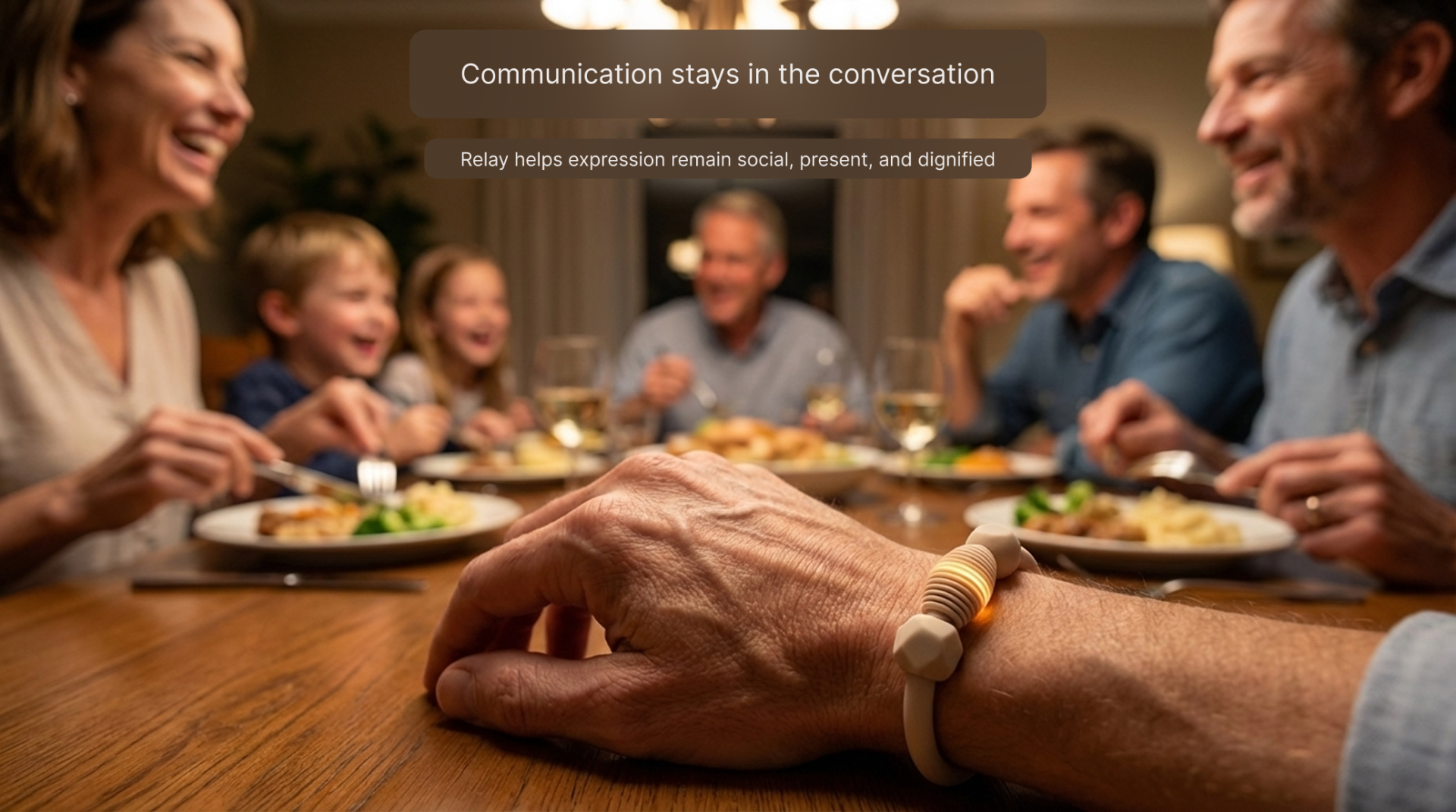
Relay is a tactile communication bracelet designed to help people with aphasia express essential phrases through touch rather than screens. Aphasia, often caused by stroke or brain injury, can affect speaking, understanding, reading, and writing, making everyday communication slow, effortful, and emotionally draining. While many AAC tools are effective, they can also be visually demanding, clinically coded, and socially conspicuous. Relay explores a different model: one that restores communication through the body, with dignity, discretion, and ease.
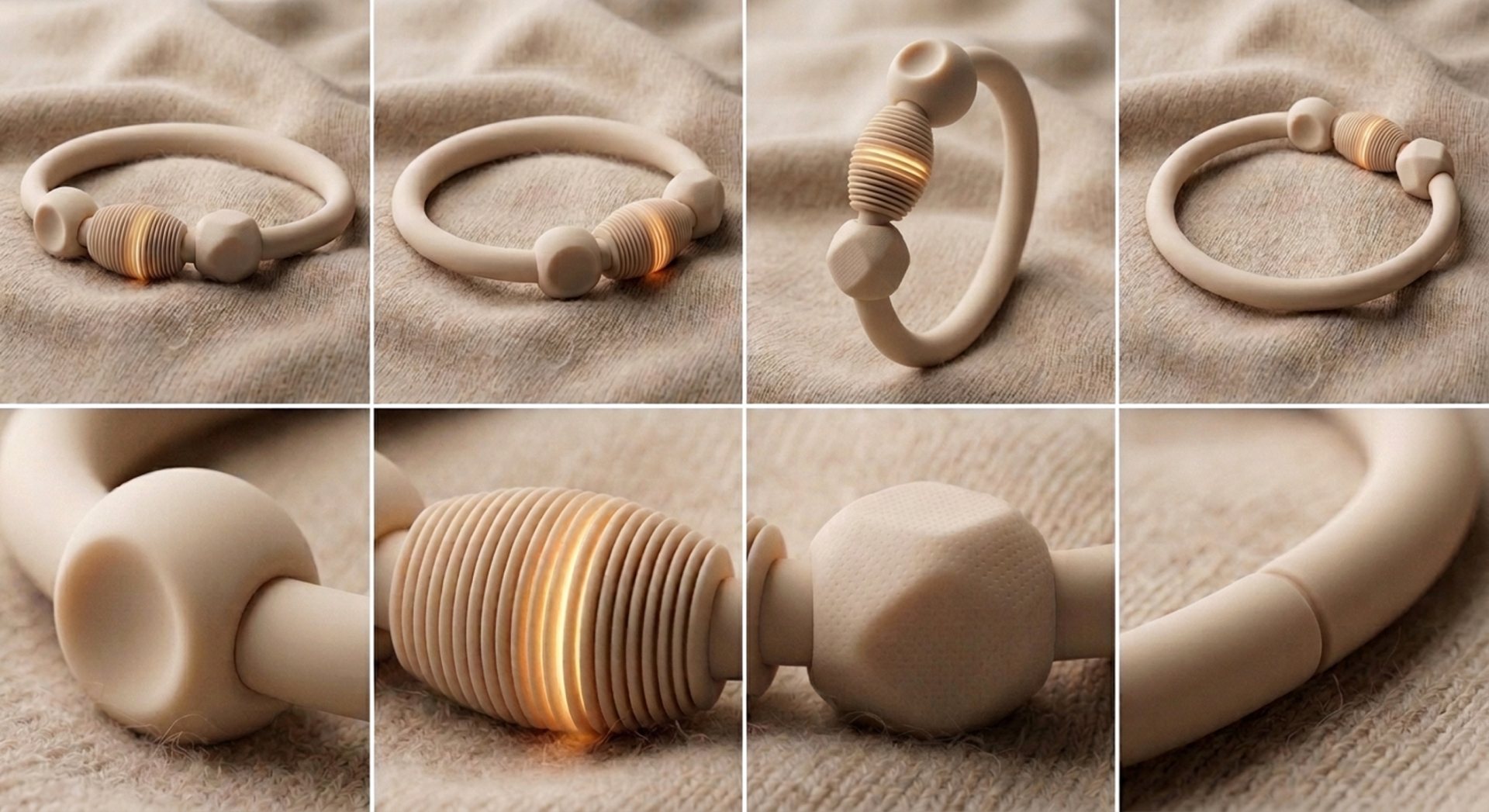
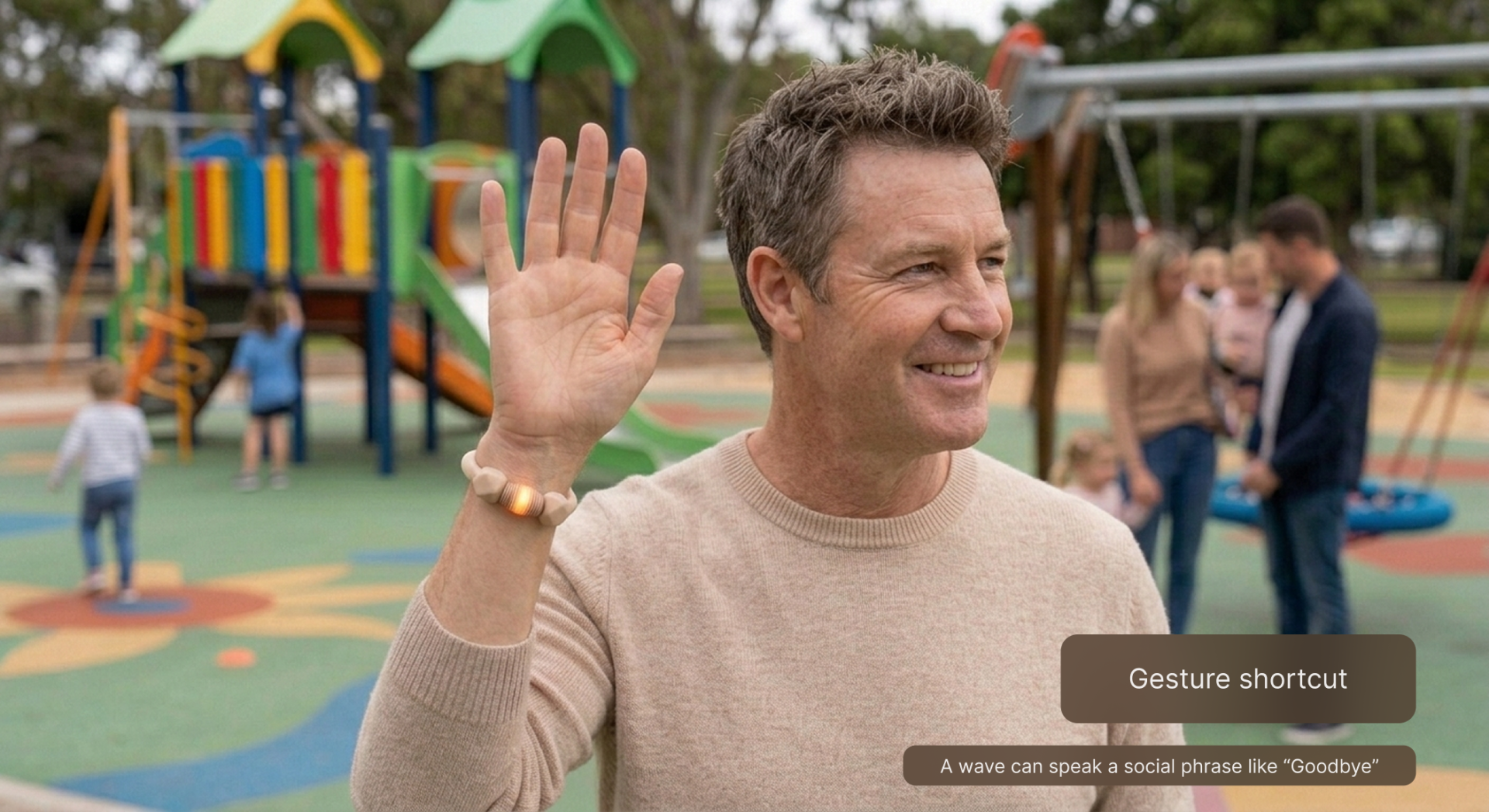
Instead of a central display, Relay uses three distinct tactile beads integrated into a bracelet. Each bead has a unique geometry and permanently represents a phrase family: a smooth concave bead for social and emotional expression, a ribbed elongated bead for daily needs, and a faceted dotted bead for health and care requests. Because each form is designed to be recognizable by touch alone, the wearer can identify meaning without looking down. Simple gestures such as single press, double press, and swipe or roll make at least nine high-frequency phrases immediately accessible. Haptic feedback and a subtle light ring confirm the selected phrase before it is spoken, helping the interaction feel trustworthy and low-stress.
Relay is paired with a companion app that reconstructs a familiar voice from older recordings, organizes phrase libraries, and syncs custom phrase sets to the bracelet. The system also supports context-aware switching, allowing vocabulary to adapt by location or routine while preserving the same tactile logic. At home, the bracelet may prioritize water, tea, or thank you; in a clinic, it can surface medication, pain, or please repeat.
The project’s central ambition is emotional as well as functional. Relay was intentionally designed to feel like a bracelet rather than a medical device, using soft matte materials, warm neutral tones, and a calm form language that feels personal instead of clinical. The goal is not only to help someone speak, but to let them remain socially present while doing so.
Relay proposes that assistive communication can be intuitive, technically plausible, and emotionally dignified at the same time.
Featured Media
Credits

Entrant
LSD Interior Design
Category
Interior Design - Showroom / Exhibit

Entrant
LEESUHEE ART
Category
Conceptual Design - Fashion

Entrant
JZFZ Architectural Design Co.,Ltd.
Category
Architectural Design - Residential
Entrant
Artistry Edge
Category
Conceptual Design - Wearable