2025 | Professional

Unfinished Reimagined
Entrant
Haochen He
Category
Architectural Design - Adaptive Reuse
Client's Name
-
Country / Region
China
Gallery
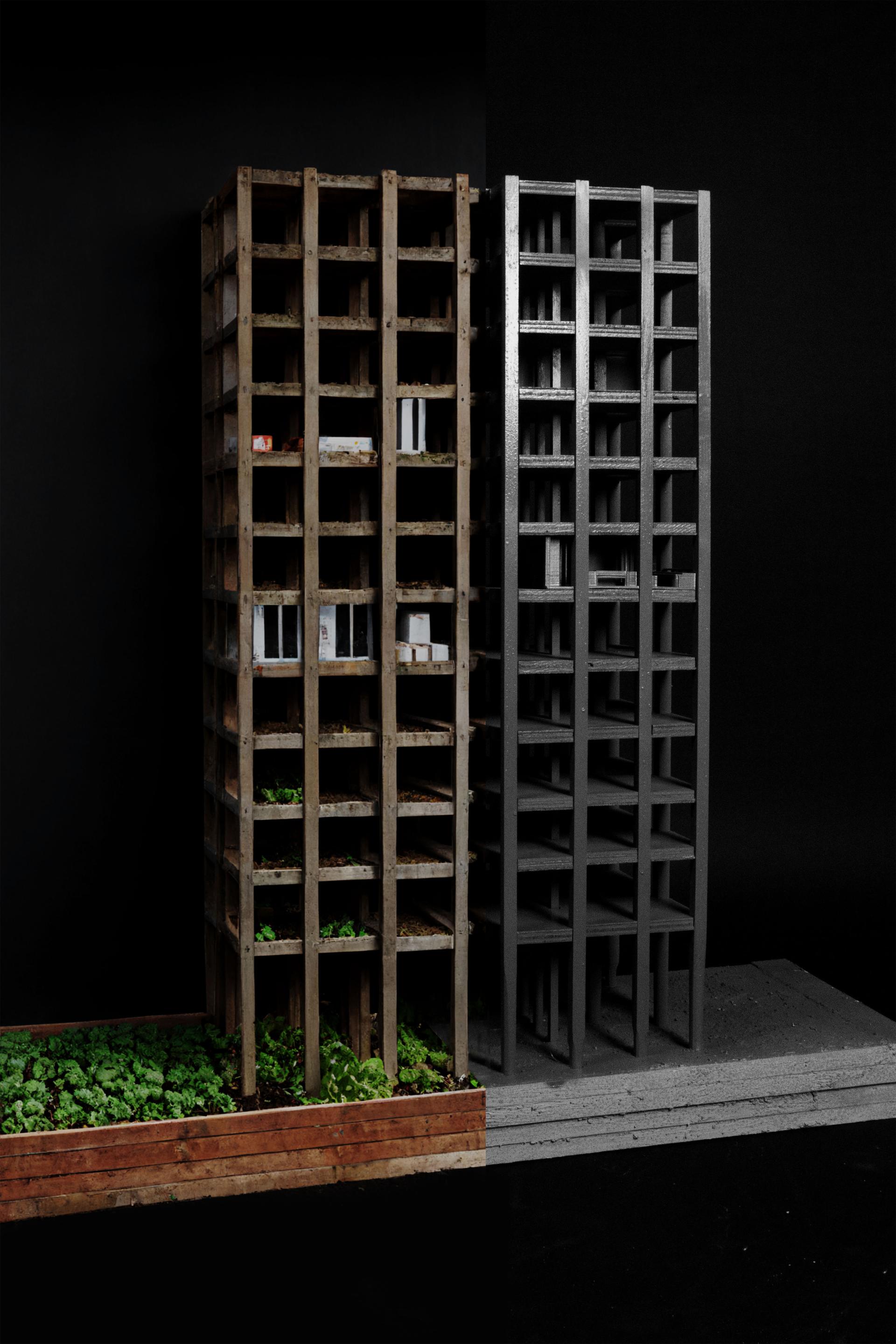
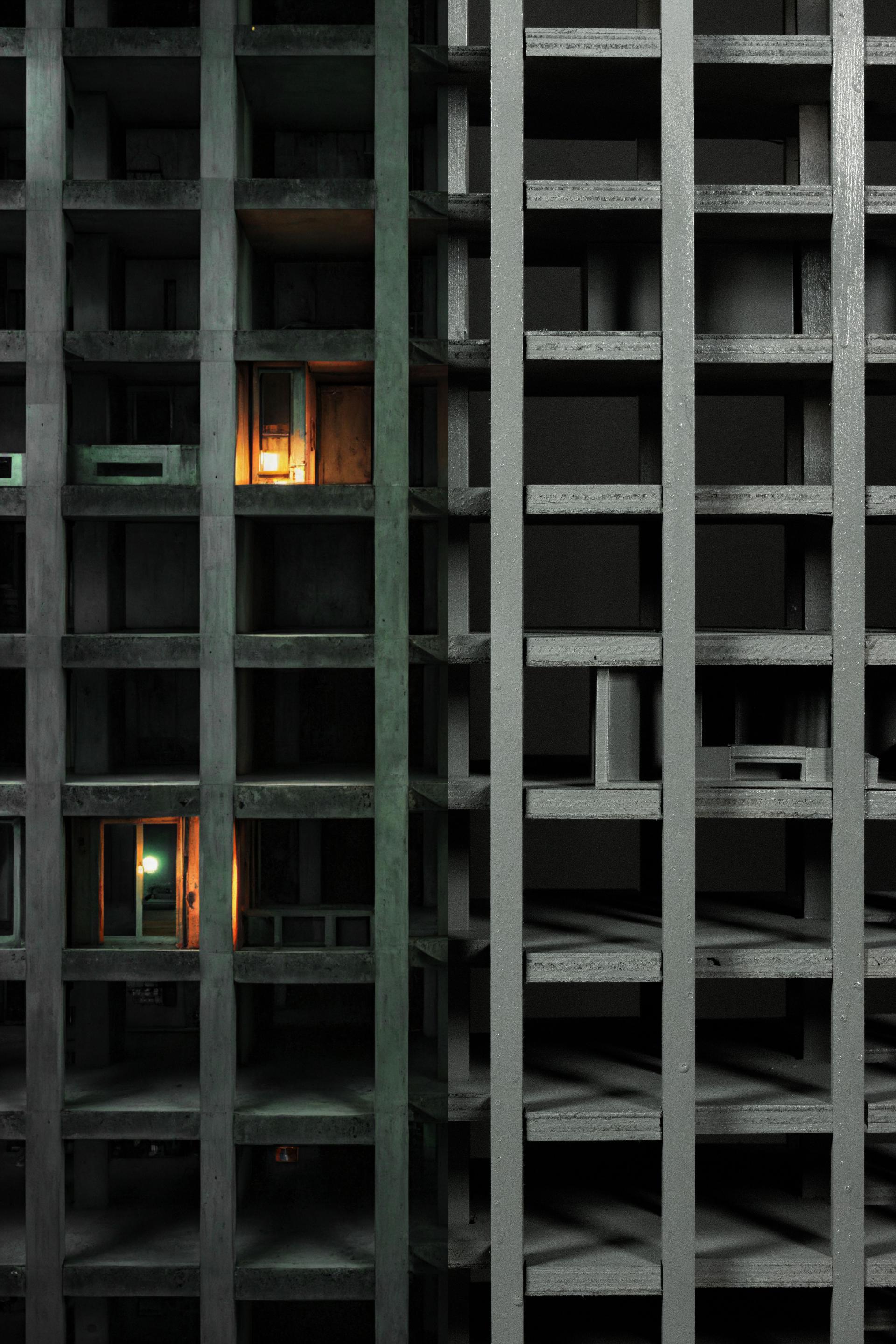
About The Entry
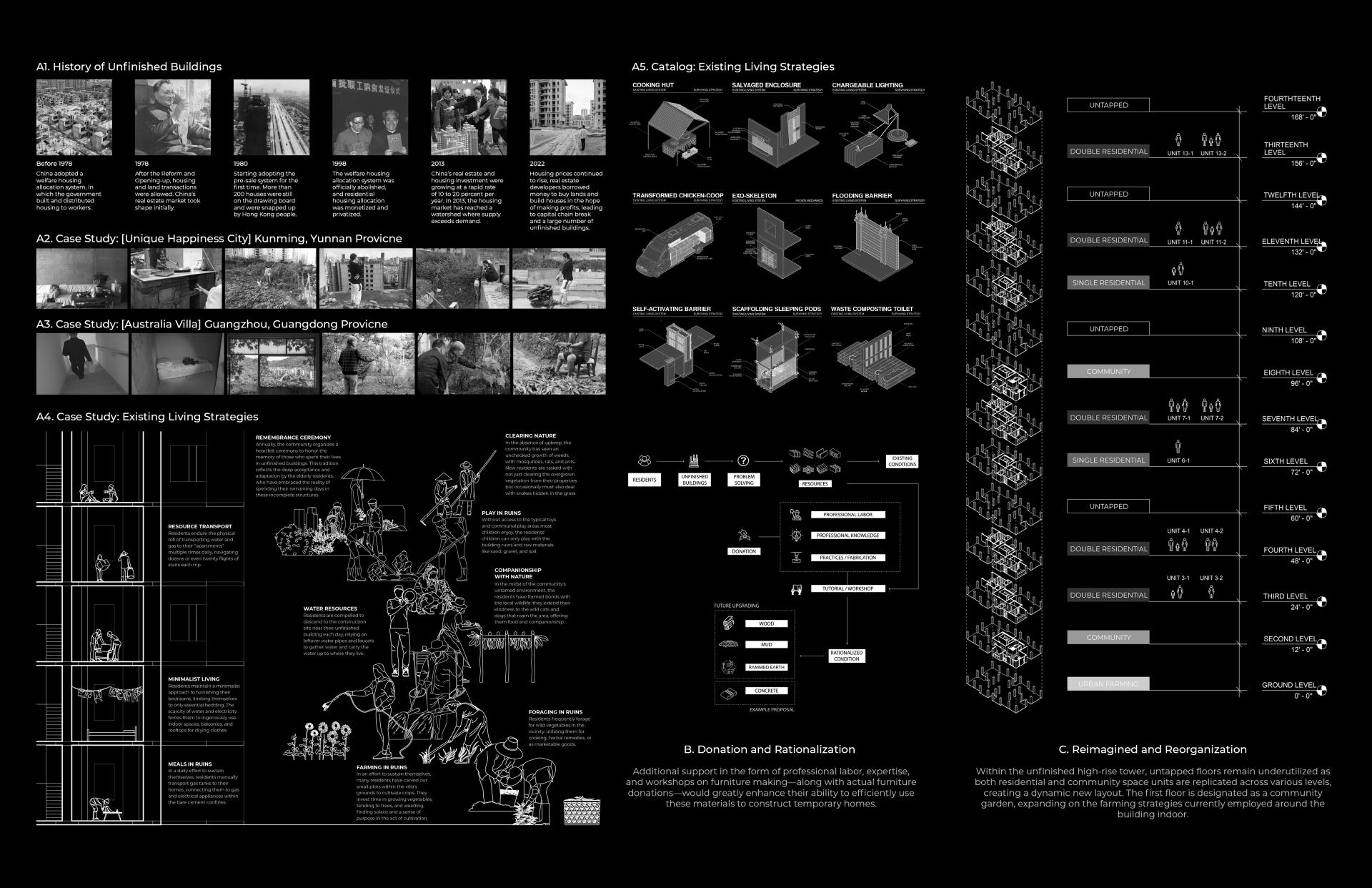
Across the globe, countless high-rise developments remain suspended mid-construction due to financial collapse, speculative overbuilding, or mismanaged planning. Inhabitants—often lower-income families—are left to navigate life in bare concrete frames without access to water, electricity, or proper sanitation. These unfinished buildings symbolize a broader crisis in affordable housing, where legal ambiguity and stalled infrastructure leave residents in prolonged precarity.
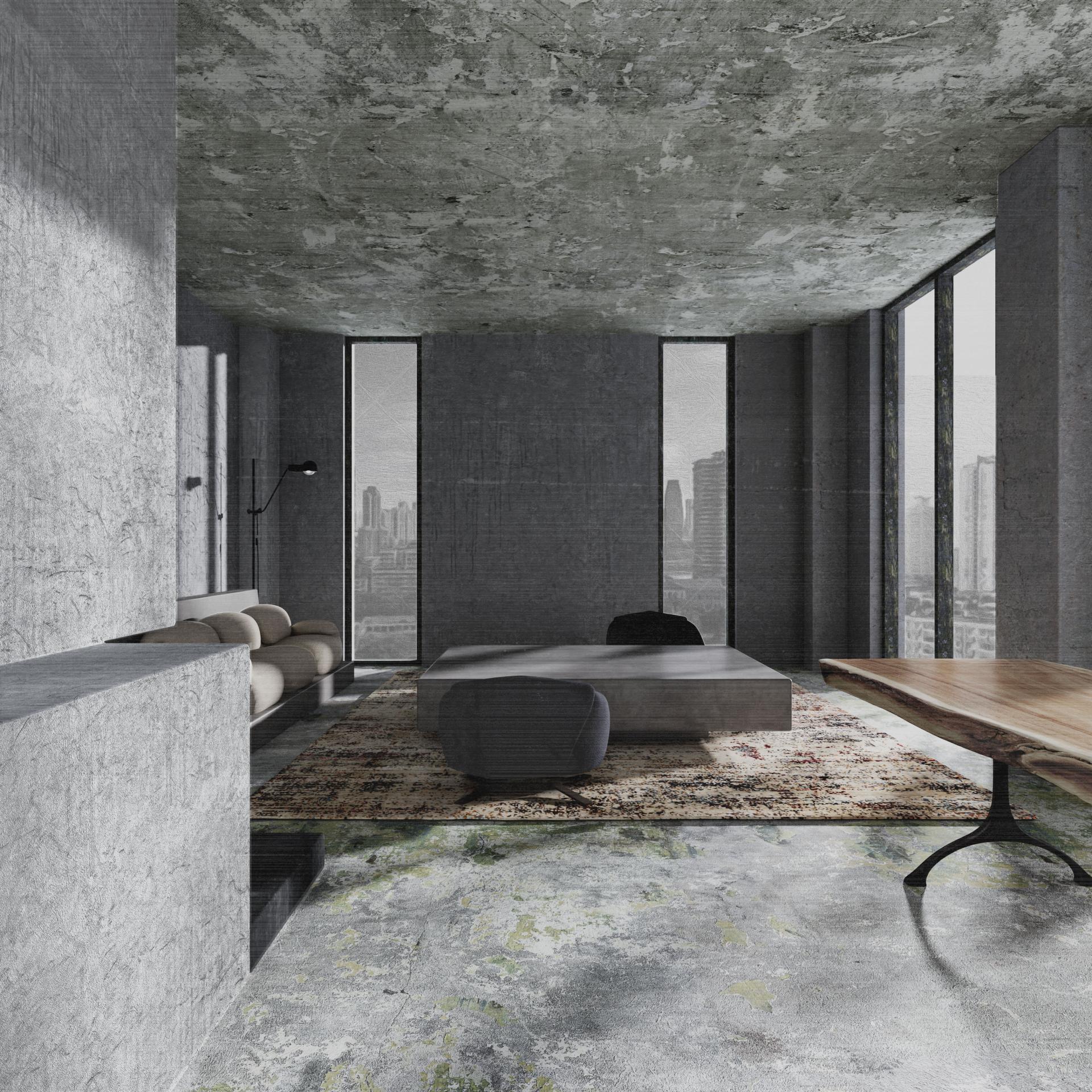
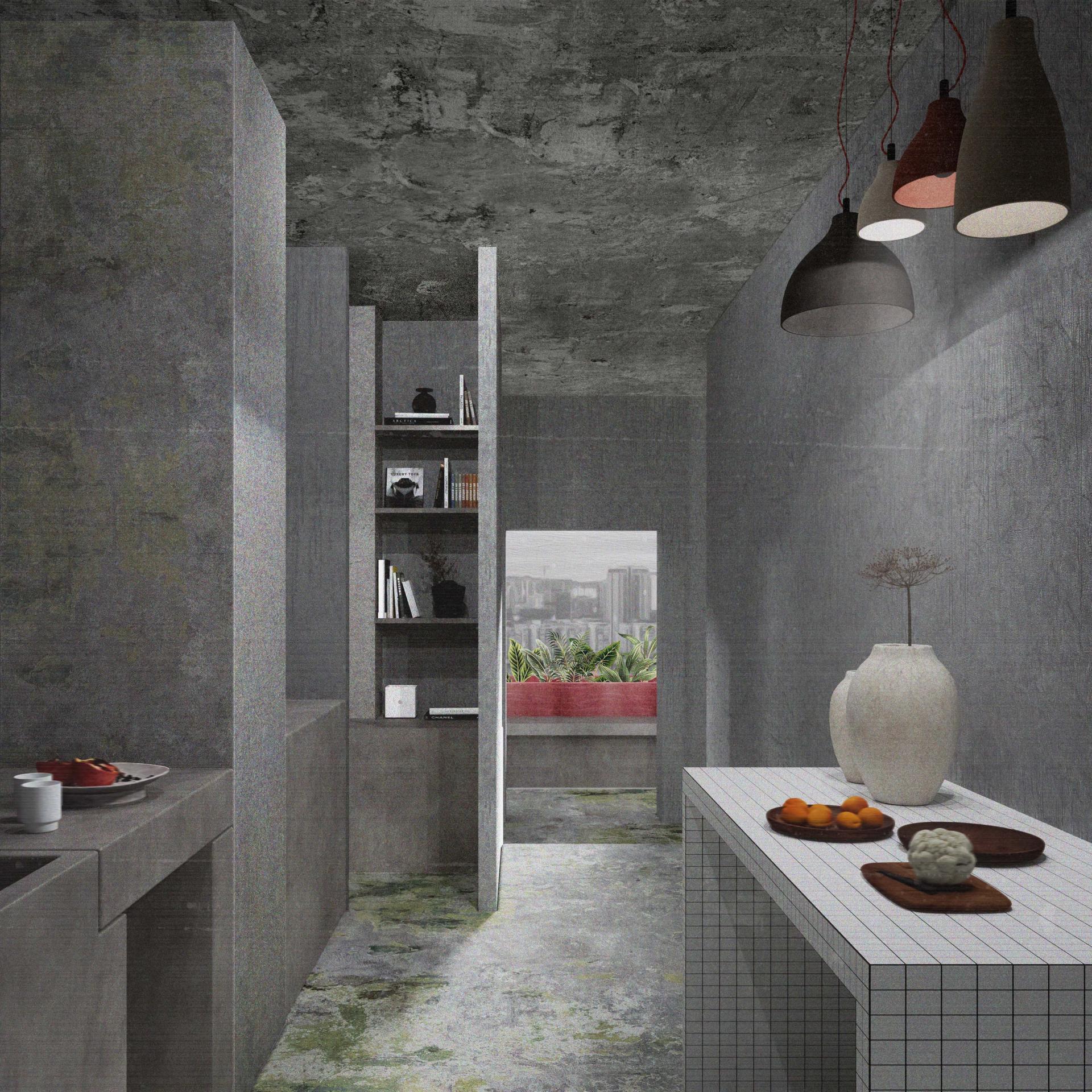
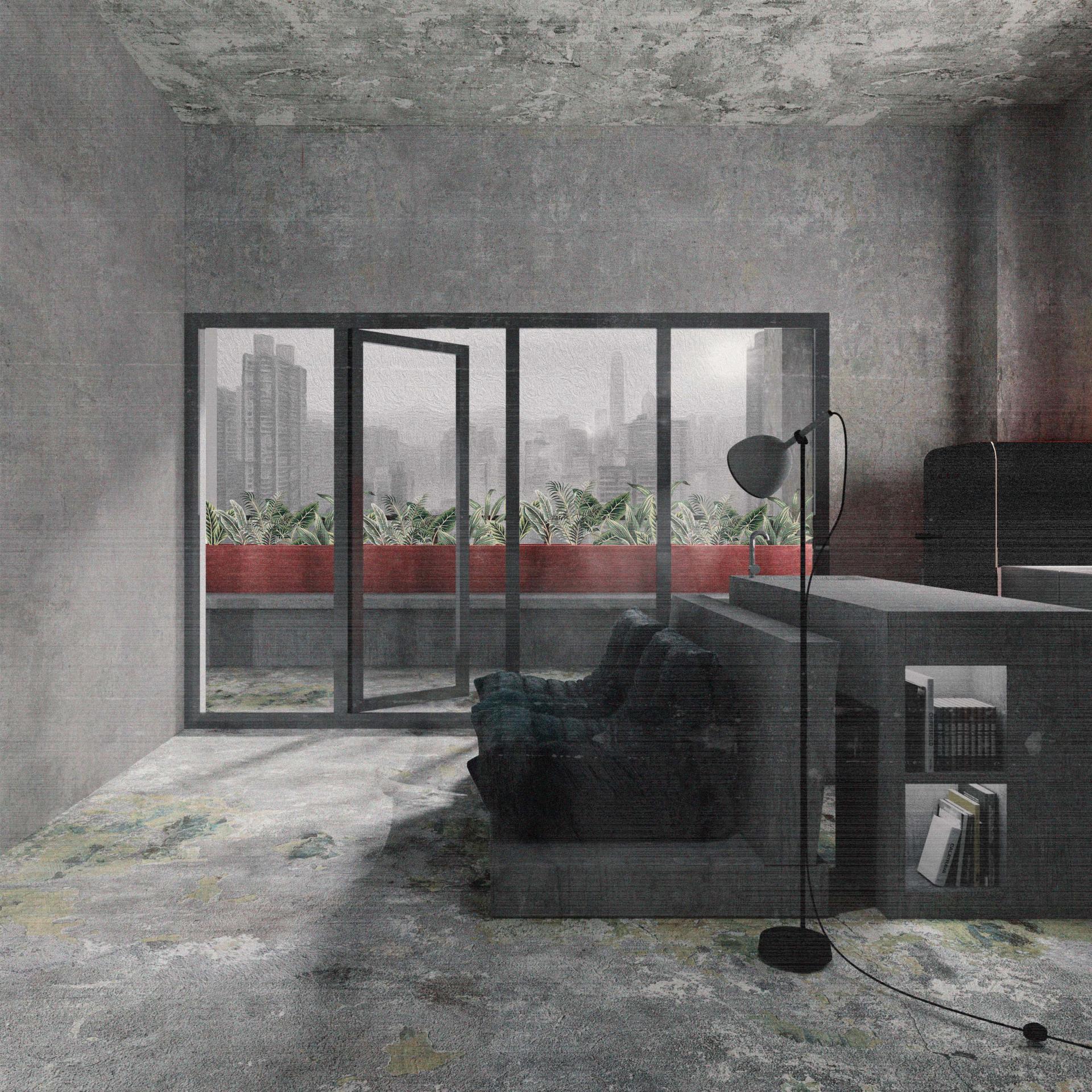
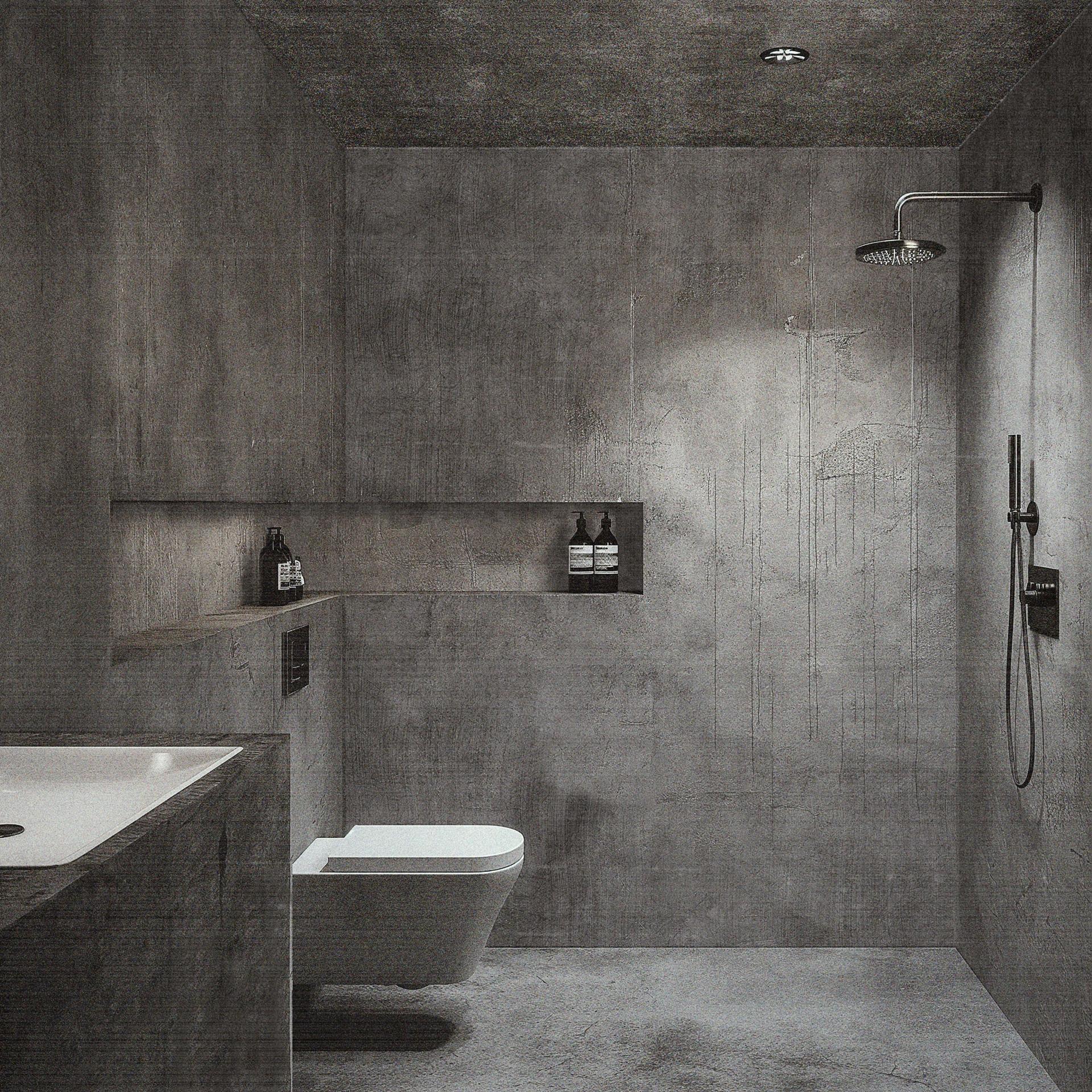
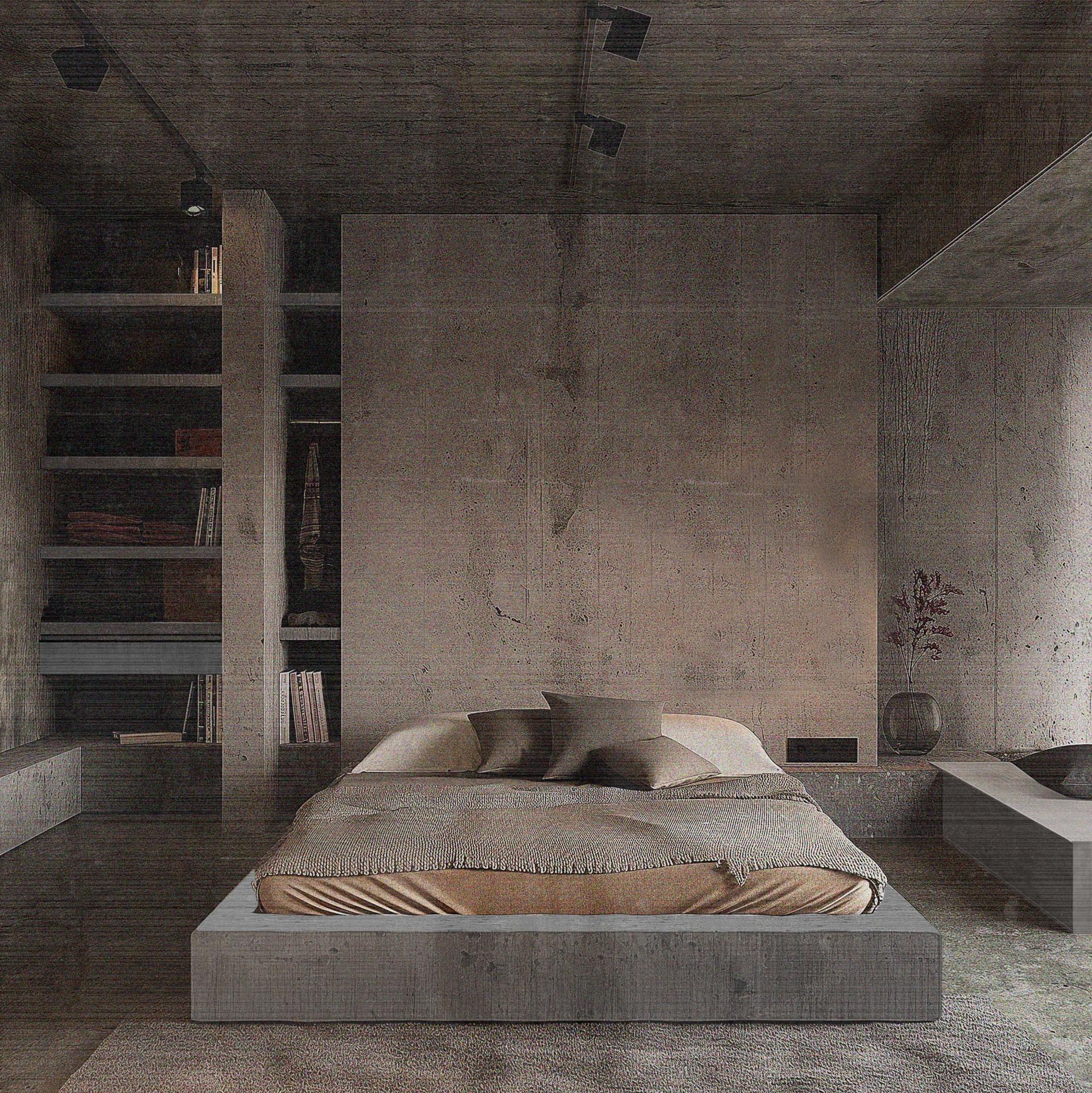
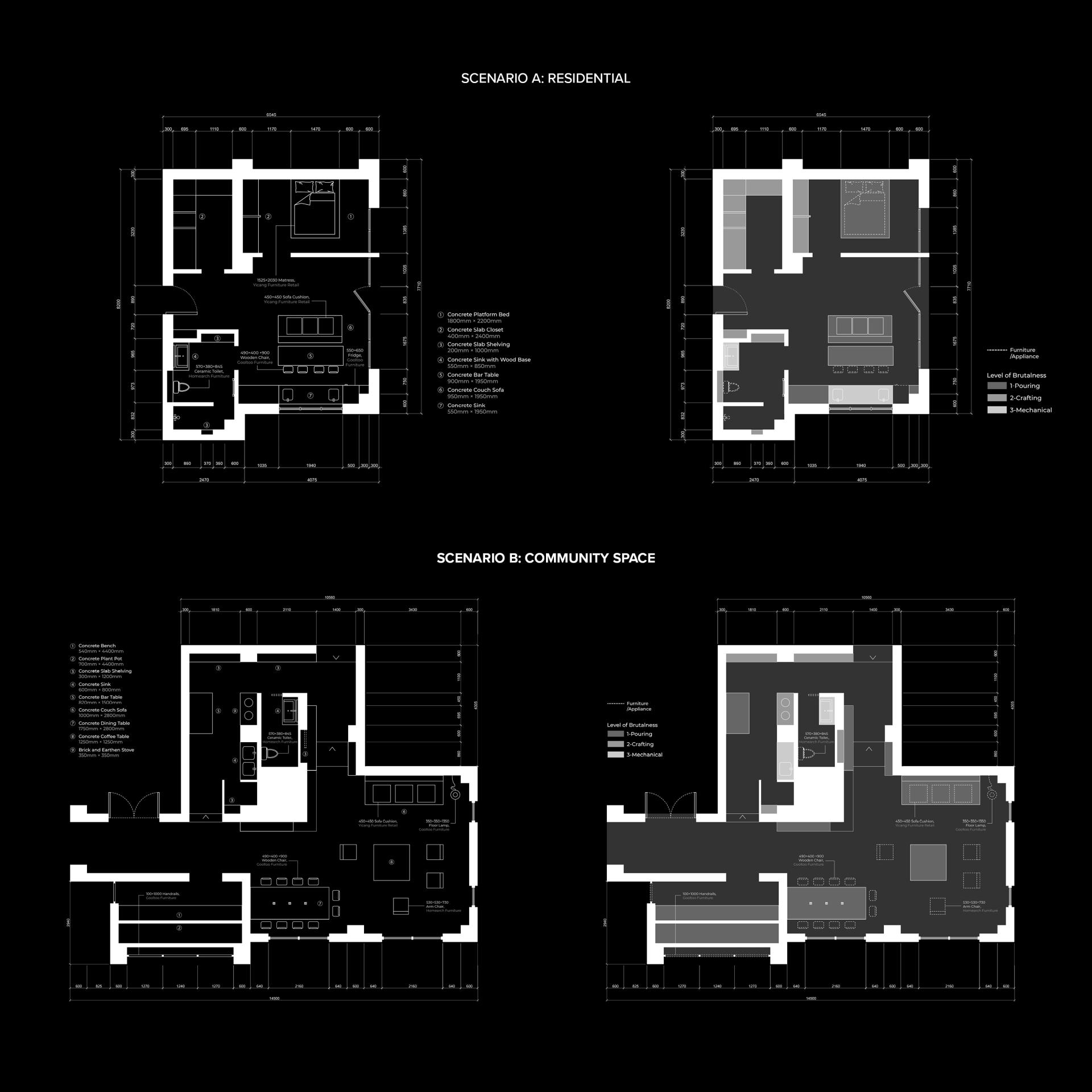
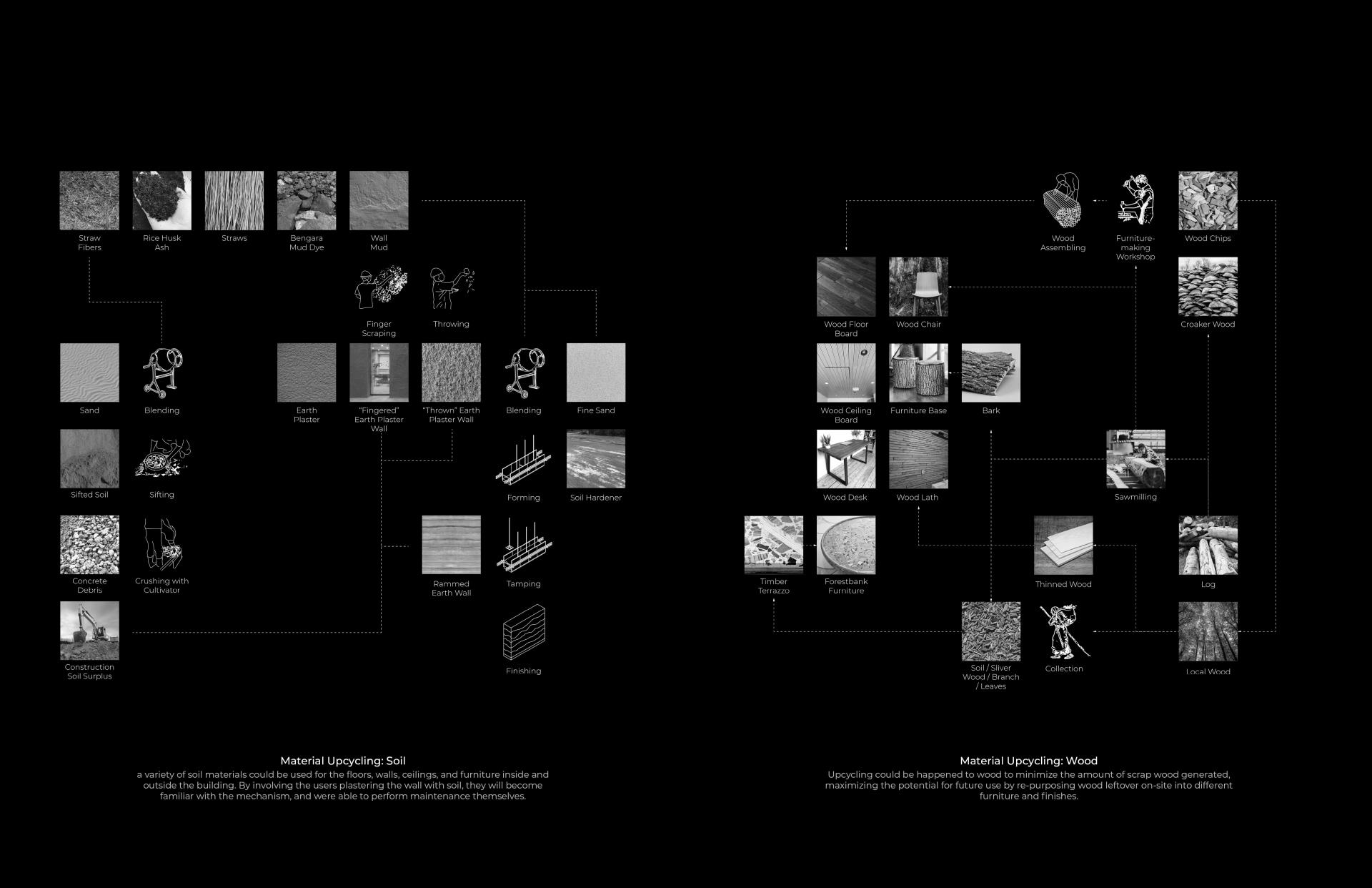
This project proposes an architectural and social strategy to reframe the unfinished not as failure, but as opportunity. Using a case study in Chongqing, it reimagines an abandoned tower as a testbed for adaptive reuse—where spatial dignity can be rebuilt from within. The proposal emphasizes the use of materials readily available on-site—such as soil, timber scraps, concrete debris—to construct essential domestic infrastructure. Residents shape their environments directly, crafting beds, kitchens, and storage through in-situ concrete and basic tools.
Communal zones—shared kitchens, gardens, and gathering spaces—are interspersed throughout the tower to promote social cohesion and collective care. Passive strategies for light, air, and thermal comfort reduce dependence on mechanical systems. Each intervention is incremental, allowing for future expansion and material improvement as resources evolve.
This project champions a bottom-up process: empowering residents to take part in the shaping of their homes and communities. Detailed visual guides and low-tech construction methods support a scalable model of self-reliant, affordable living.
Unfinished Reimagined offers a replicable framework for reinhabiting stalled developments through material efficiency, ethical spatial reuse, and community participation. It does not aim to finish the building in the conventional sense, but to render it livable—responsive to real human needs, open to future growth, and grounded in what is already present.
In doing so, it presents a new paradigm for transforming abandoned structures into engines of low-cost, sustainable housing.
Entrant
成都瞳创广告有限公司
Category
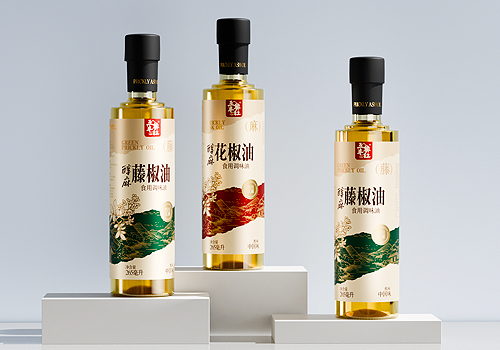
Packaging Design - Dairy, Spices, Oils, Sauces & Condiments

Entrant
Foshan Fei Li Shangpin Furniture Co., Ltd.
Category
Product Design - Furnishings
Entrant
ANTA(CHINA)CO., LTD
Category
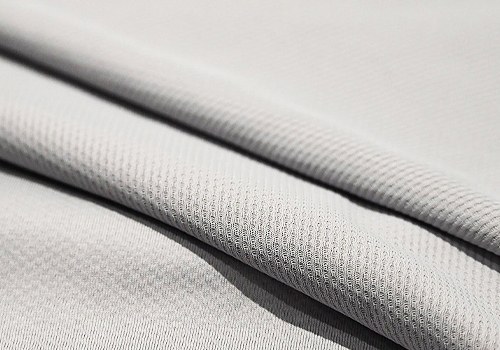
Fashion Design - Textile & Materials

Entrant
Hangzhou Rongzheng Furniture Co.,Ltd
Category
Furniture Design - Tables & Desks