2026 | Professional

University Gallery Embracing Technology
Entrant
Wanfang Long
Category
Architectural Design - Generative Architecture
Client's Name
Princeton University
Country / Region
United States
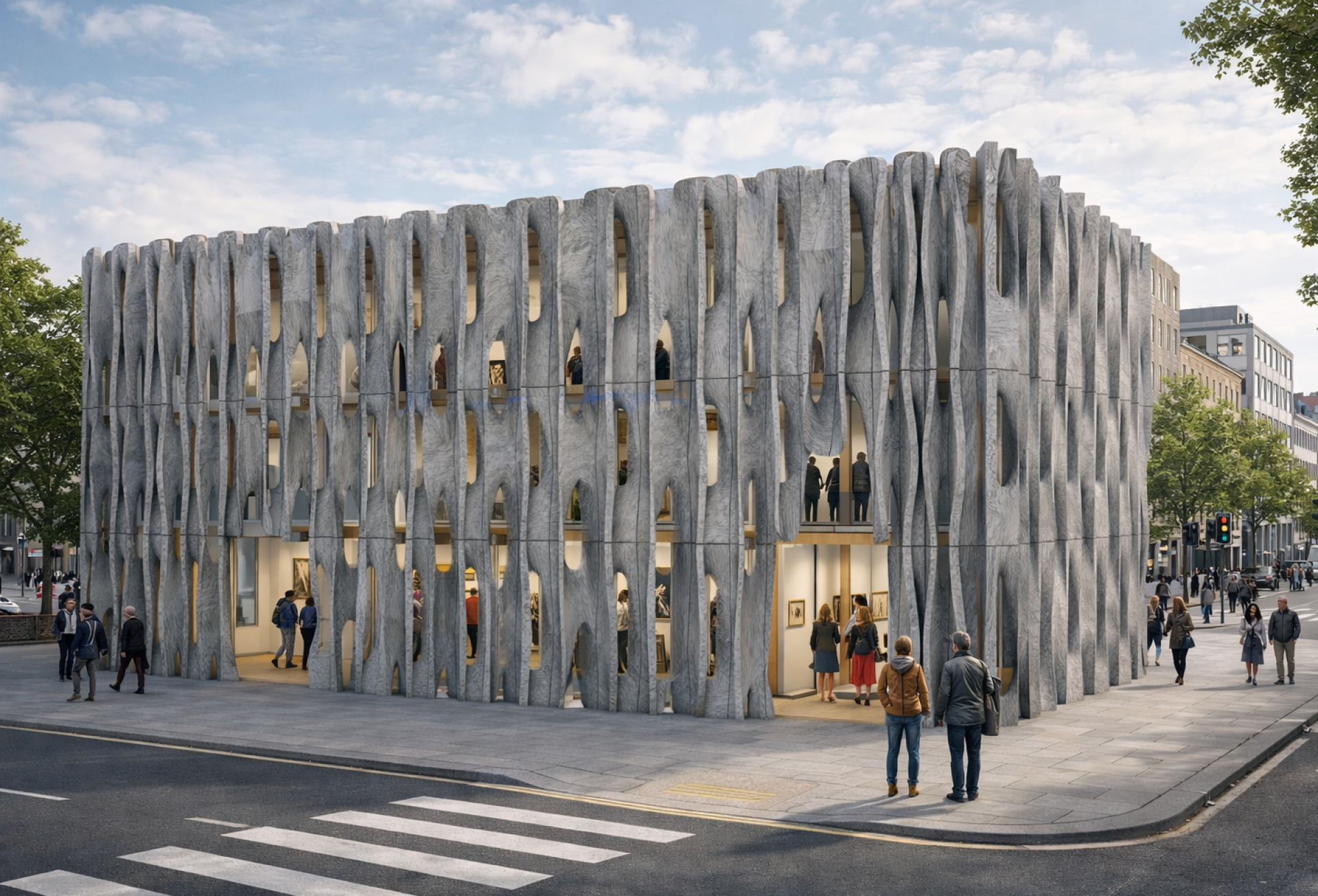
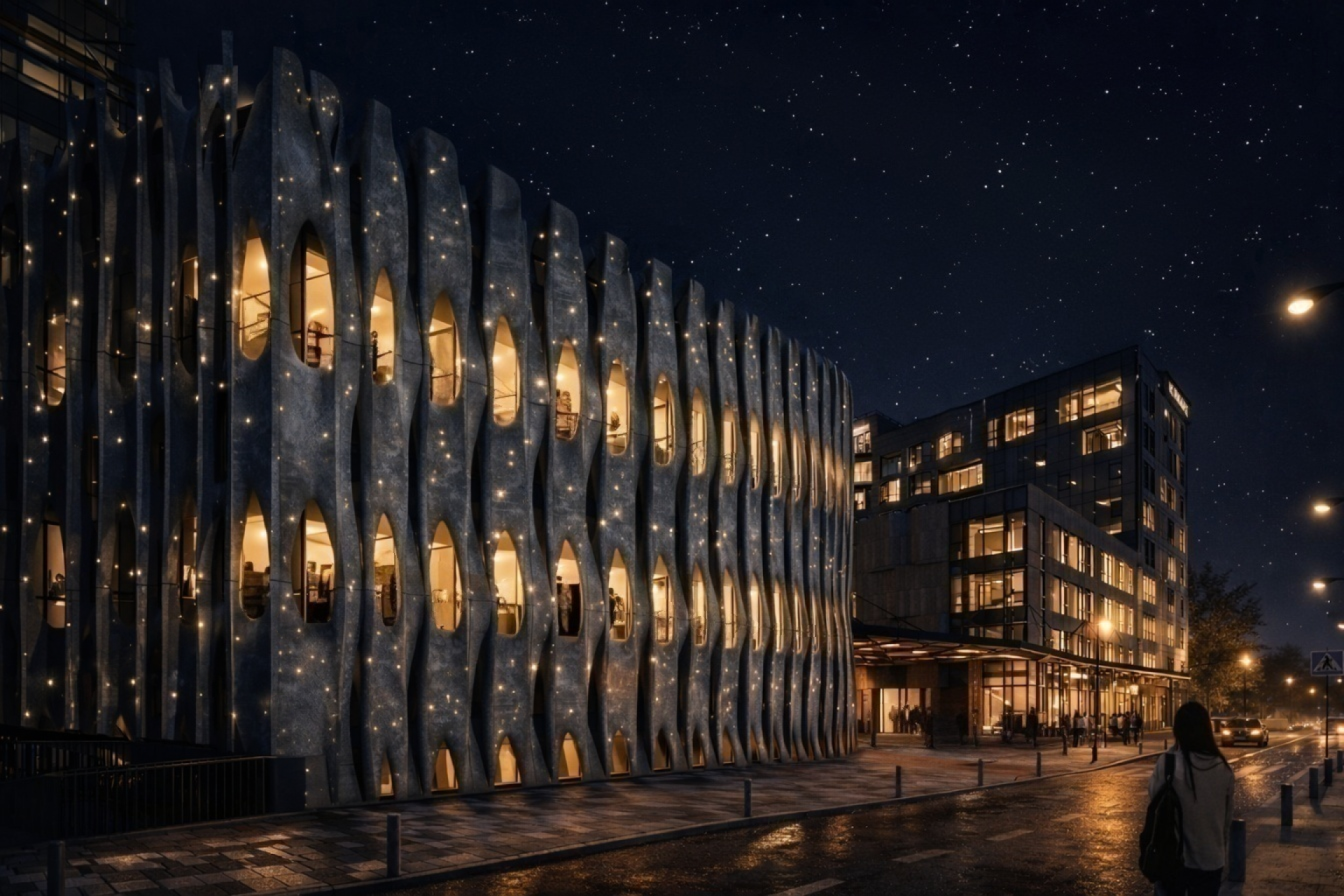
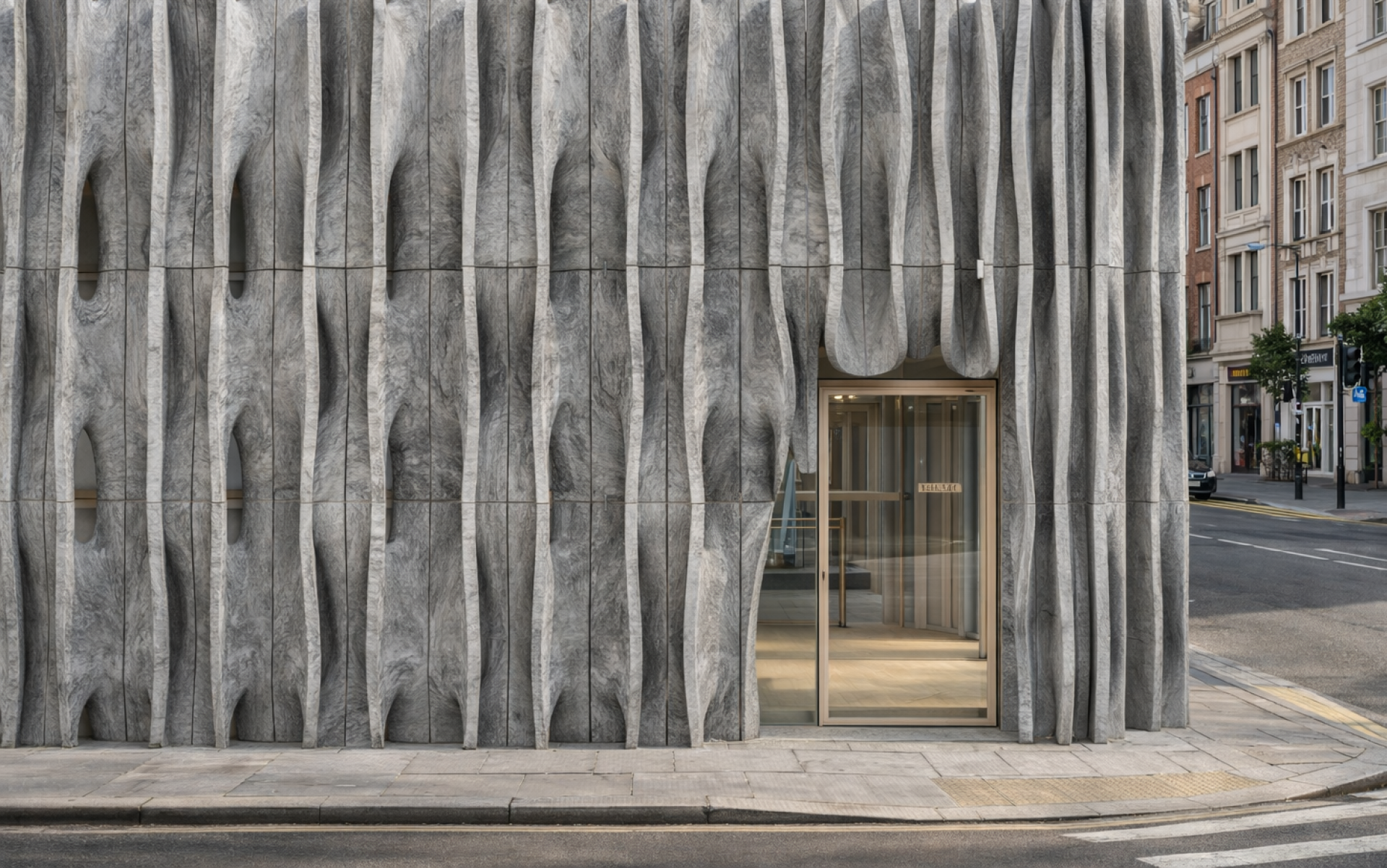
This project proposes a university gallery for Princeton University that explores the intersection of digital technology, material intelligence, and architectural form. The building façade utilizes a minimum surface logic, allowing indirect daylight to penetrate the interior while creating a continuous spatial dialogue between exterior and interior surfaces. The most optimal form of the façade is generated by Grasshopper while the lighting condition is tested with parameters through Ladybug. The fluid geometry is realized as a monolithic, organically cast concrete façade, digitally pre-fabricated to achieve both structural integrity and expressive form. Openings within the minimal surface are paired with recessed glass curtain walls, creating a layered envelope that balances transparency, mass, and thermal performance while maintaining the sculptural integrity of the concrete skin.
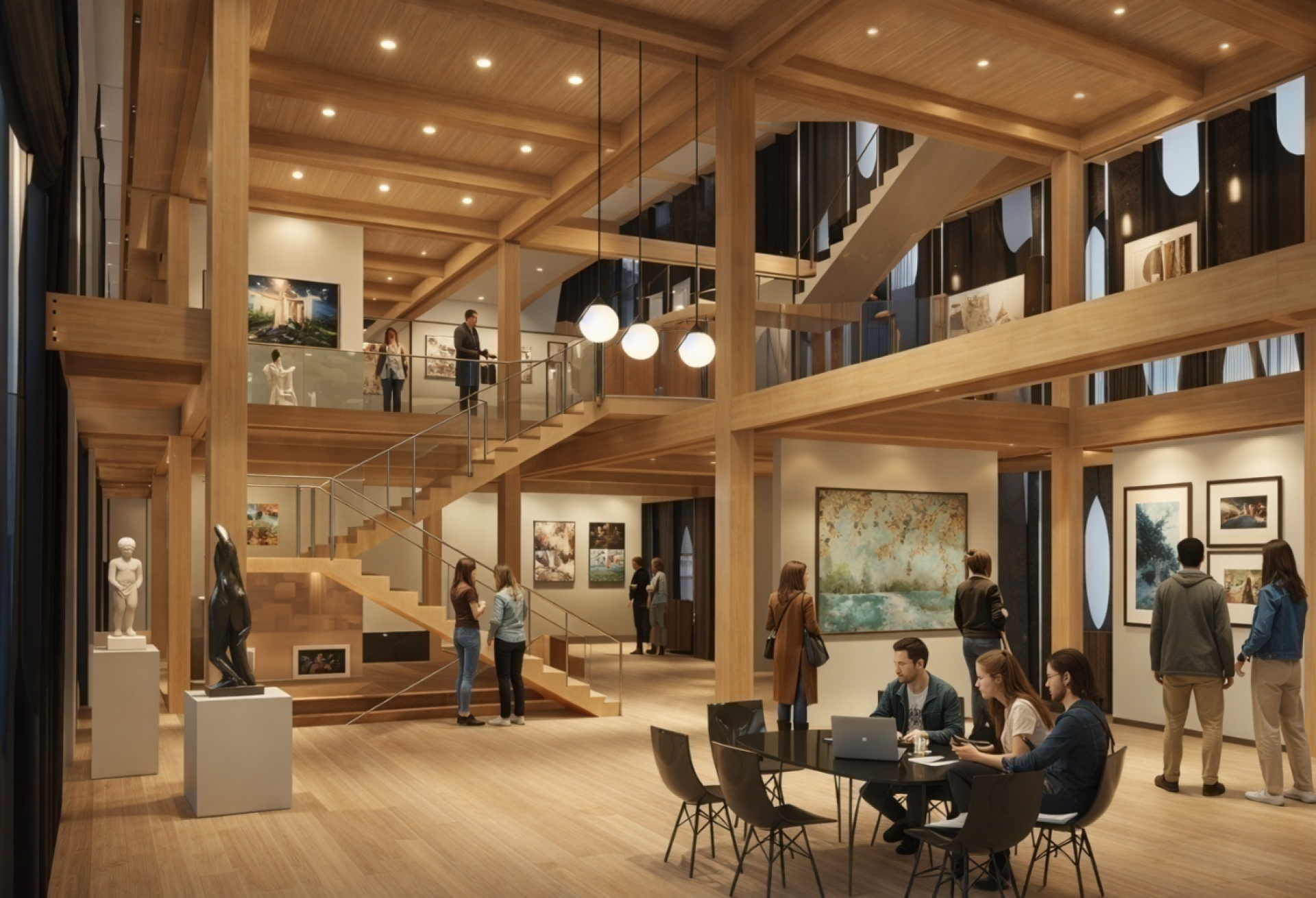
The interior structure employs a mass timber system using CLT with mortise-and-tenon connections. This joinery strategy enhances structural robustness while significantly reducing the reliance on metal fasteners, supporting both construction efficiency and material sustainability. Large-scale prefabricated timber floor plates are layer on-site on wood framing, enabling efficient assembly, expansive gallery spaces, and a warm, sustainable environment for visitors. Mass timber beams are anchored directly to embedded connections cast within the concrete façade, creating a precise integration between structure and envelope.
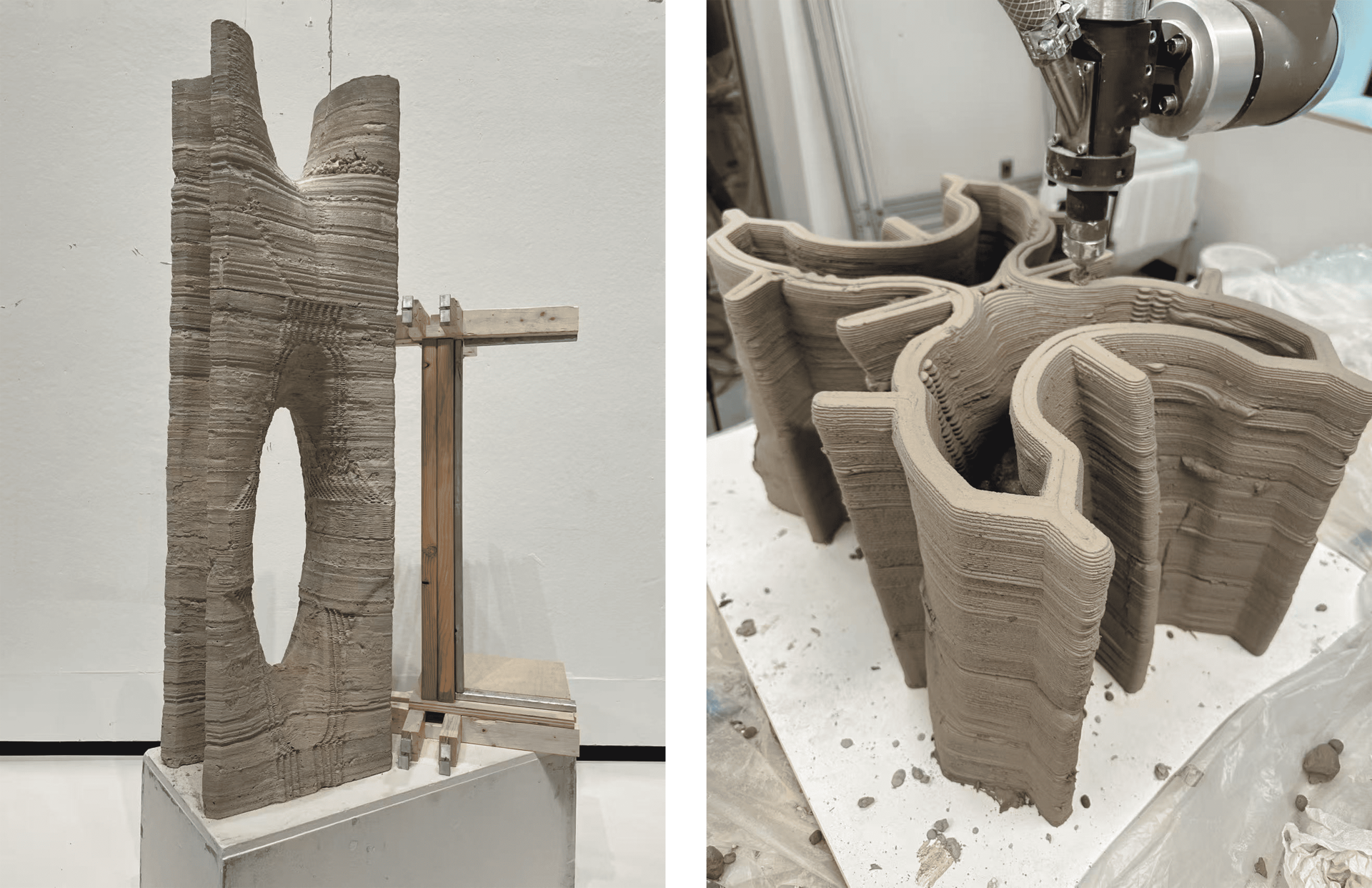
A 1/2” scale, 5-foot-tall façade prototype was modeled with grasshopper to find the most feasible geometry and later produced through robotic fabrication. Industrial robotic arms 3D-printed clay formwork to generate molds for concrete casting, with structural embeds placed during the pour. The façade geometry emerged as the clay naturally demolded, demonstrating an innovative fabrication workflow that bridges digital design and material intelligence.
Through the integration of parametric design, robotic fabrication, and mass timber construction, the University Gallery embodies a forward-looking architectural approach that redefines how digital processes can inform spatial experience, sustainable building practices, and material performance.
Credits

Entrant
REAL WILL
Category
Fashion Design - Lingerie / Intimates

Entrant
Yifan Zhang, Sue Hong, Yaezi Lee
Category
Product Design - UX / UI / IxD
Entrant
Mass Rapid Transit Bureau, Kaohsiung City Government
Category
Landscape Design - Master Planning
Entrant
Xuzhou Yuan Jiuchun Electronic Technology Co., Ltd.
Category
Product Design - New Category