Interview
Jung Min Chun
1 Congratulations on winning the MUSE Design Awards! Can you introduce yourself and share about what inspired you to pursue design as a career?
My name is Jung Min Chun, also known as Jessy Chun. I’m a multidisciplinary designer specializing in color, material, and texture. At heart, I’ve always been a knitter—knitting was my first language of expression, a meditative and emotional craft that continues to shape how I approach design. While studying at RISD and living in Europe, I developed my design skills through artistic practice and learned how color and materiality can tell stories through touch, form, and texture. I began my career as a knitwear designer in New York and later launched my personal label, J’EN, creating wearable art through hand-driven techniques and intuitive material compositions. Currently, I work as a Color and Material Designer in the mobility industry, continuing to explore new boundaries while staying grounded in emotional storytelling through texture and color.
2 What does being recognized in the MUSE Design Awards mean to you?
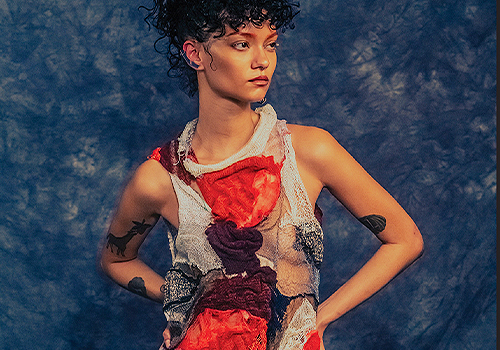
It’s incredibly meaningful. The My Wanderland collection was a very personal, instinctive project created with my hands from start to finish. To have it recognized on a global platform like the MUSE Design Awards affirms that experimental textile work still resonates and has a place in today’s design world.
3 How has this achievement impacted your career, team, or agency, and what opportunities has it brought so far?
This recognition has opened doors for me to speak more about the artistic skillsets involved in textile and fashion design. It has also strengthened my confidence to pursue my personal knitwear label and continue hands-on creative work alongside my professional projects. I'm now more determined than ever to grow my hand-crafted knitwear brand, J'EN, and to share my unique color and material palettes—Jessy's world—with a broader audience.
4 What role does experimentation play in your creative process? Can you share an example?
Experimentation is at the heart of my creative process. My Wanderland was developed entirely through trial and error—crafted on a single-bed knitting machine using layered, unconventional yarns and a mix of knitting techniques to create tactile, emotional textures that feel three-dimensional and alive on the skin. Rather than planning each piece in detail, I followed my instincts, allowing unexpected and beautiful accidents to become an integral part of the final work.
5 What's the most unusual source of inspiration you've ever drawn from for a project?
Isolation. During a time of solitude during COVID, I wrote in my journal every morning as soon as I woke up. I jotted down everything—thoughts, feelings, and the visuals that came to mind. Over time, this formed an imaginary world I found myself wandering through—an unseen space that felt wild, soft, and raw, somewhere between reality and fantasy. That inner world became the seed for My Wanderland. Instead of drawing inspiration from external visuals, I looked inward and translated pure emotion into knit—letting feeling guide the material and form.
6 What’s one thing you wish more people understood about the design process?
That it’s not always linear or logical. Design, especially when it involves material exploration, is often messy, intuitive, and time-consuming. The emotional labor and invisible process behind a piece are just as valuable as the final outcome.
7 How do you navigate the balance between meeting client expectations and staying true to your ideas?
I always begin by deeply understanding the client’s needs—not just the visual direction, but the emotions, values, and goals behind it. It’s important to listen with both intuition and empathy. Once I grasp that core intention, I reinterpret it through my own creative lens—translating their story into a design language that feels personal, textured, and layered.
8 What were the challenges you faced while working on your award-winning design, and how did you overcome them?
The biggest challenge wasn’t just technical—it was internal. Translating intangible emotions into wearable knits using limited tools like a single-bed manual knitting machine was difficult, but the deeper challenge was learning to believe in myself throughout that process. I was responsible for every step—yarn sourcing, testing, fitting and assembly—which meant there was no one else to lean on but my own instincts. Letting go of perfectionism was one of the hardest but most liberating lessons. I had to embrace the imperfections, the unexpected twists, the irregularities in the material—and trust that they were not flaws, but the very things that gave the work life. Once I stopped trying to control every outcome and started honoring the organic nature of the process, the pieces began to take on a soul of their own. That shift allowed My Wanderland to become more honest, more alive—and ultimately, more meaningful.
9 How do you recharge your creativity when you hit a creative block?
I step away from design. Sometimes I read, walk in nature, or simply spend time observing colors and materials around me. I look through the photographs in my albums. I let my senses rest and absorb again. And I write—putting thoughts and feelings into words often helps me reconnect with the core of what I want to express.
10 What personal values or experiences do you infuse into your designs?
Curiosity is at the core of everything I do. It’s what keeps my process alive—an ongoing desire to explore, question, and experiment without fear of the unknown. I don’t believe in staying within safe boundaries. Whether I’m working with textiles, colors, or materials, I’m always chasing the “what ifs” that lead to new discoveries. For me, the most powerful designs are the ones rooted in emotional truth. I value vulnerability in the creative process—being honest with what I feel and letting that guide the textures, colors, and rhythms in my work. I often approach design as storytelling through touch, using materiality to evoke memories, sensations, or even unspoken feelings. Through tactile intimacy and poetic experimentation, I hope to create pieces that don’t just communicate visually, but emotionally—inviting people to feel, to remember, and maybe even to see themselves reflected in the work.
11 What is an advice that you would you give to aspiring designers aiming for success?
Trust your instincts and don’t wait for permission to create. Start with what you have—even if it's just a sketchbook or a simple tool. Your unique voice comes from your process and your perspective. Stay curious, stay open, and keep experimenting.
12 If you could collaborate with any designer, past or present, who would it be and why?
I’d love to collaborate with a master weaver or artisans—someone who understands the emotional possibilities of fiber not just as a material, but as a language. There’s something deeply poetic about working with someone whose hands have spent years listening to the rhythm of threads, who can sense the mood of a yarn simply by touch. These artisans carry a wisdom that goes beyond technique—they hold stories, traditions, and intuitions that machines can’t replicate.
13 What's one question you wish people would ask you about your work, and what's your answer?
I would want people to ask me, "How do you want people to feel when they experience your work?" To that, my answer would be that I want my work to make people pause—even if just for a moment. Whether it sparks a smile, a gasp, or quiet curiosity, my hope is that it stirs something they didn’t expect. I want them to notice the subtle details—even the imperfections or so-called mistakes—because those irregularities hold honesty, vulnerability, and emotion. If the piece lingers in their mind, visually or emotionally, then I know it’s done what it was meant to do.