Interview
Yin Ying Sun
1 Congratulations on winning the MUSE Design Awards! Can you introduce yourself and share about what inspired you to pursue design as a career?
I’m Yin Ying Sun (Sarita), a product and UX designer with a diverse background spanning architecture, human-computer interaction, and even elements of game design. Over the past few years, I’ve focused on building AI-powered products across different industries, from finance to consumer tech. The common thread in my work is a drive to create experiences that feel intuitive, inspiring, and empowering for users. My early studies in architecture taught me how thoughtful design can shape people’s behavior and emotions within physical spaces, and it was a natural leap to translate those insights into the digital realm. The rapid evolution of AI offered a unique canvas to fuse cutting-edge technology with user-centric thinking, allowing me to solve complex problems and connect with people in more meaningful ways. Ultimately, this fusion of innovation, empathy, and storytelling is what sparked my passion for design—and keeps me exploring new possibilities every day.
2 What does being recognized in the MUSE Design Awards mean to you?
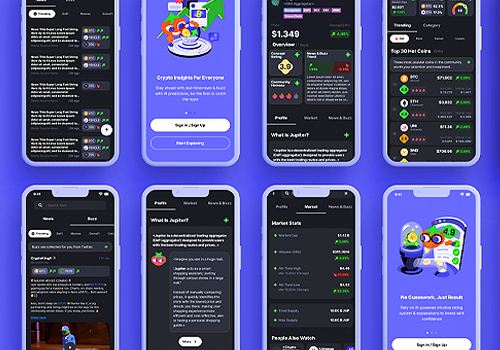
It’s a genuine honor - this is my second time winning a Gold, and each project has told a distinct story. The first was for an app called “Light Up,” a donation platform that harnesses interactive maps and real-time project updates to connect socially-conscious donors with NPOs. It pushed me to think deeply about transparency, engagement, and the emotional bonds people form when they do good. Now, with Cryptomato, I’ve ventured into a completely different sphere—AI-driven finance—yet the core principles of intuitive UX and user empowerment remain the same. Transitioning from leading UX/UI designs on client projects to building my own product as a founding designer has been both exhilarating and humbling. Winning again reaffirms my belief that design excellence transcends industries and that empathy, innovation, and storytelling are the threads binding all meaningful user experiences.
3 How has this achievement impacted your career, team, or agency, and what opportunities has it brought so far?
Winning this award has opened doors for deeper collaboration, both within my network and beyond. It’s helped my team earn greater trust from stakeholders who now see the tangible outcomes of investing in thoughtful UX. Personally, it’s led to connections with talented designers and expanded the scope of projects I lead. It feels like a signal boost for our team’s creativity—fellow innovators recognize that our work is not only functional but also impactful, motivating us to aim even higher in future initiatives.
4 What role does experimentation play in your creative process? Can you share an example?
Experimentation is the backbone of my design approach. I typically generate multiple interface variations for a single feature, testing each for usability, visual clarity, and emotional resonance. For instance, when designing a crypto rating widget, I explored various layouts, color palettes, and micro-interactions to see which would most intuitively convey a coin’s performance. Early prototypes revealed surprising user preferences, so by keeping the process flexible and playful, I uncovered an approach that felt both enlightening and reassuring for beginners.
5 What's the most unusual source of inspiration you've ever drawn from for a project?
I often draw on methodologies found in game design, which may seem surprising in a professional UX context. Game mechanics—like progressive challenges, clear feedback loops, and incremental rewards—offer a rich toolbox for guiding user engagement. By studying how games gradually introduce complexity, I can map a similarly structured “onboarding” into product experiences. Instead of overwhelming users upfront, features are unlocked progressively, fostering curiosity and nurturing a sense of achievement. This approach not only brings an element of fun to otherwise technical or complex tasks, but also makes the learning curve feel more natural and inviting.
6 What’s one thing you wish more people understood about the design process?
That great design isn’t an “aha” moment; it’s an iterative journey. It requires consistently testing assumptions, gathering feedback, and refining every detail—even the ones that seem insignificant. Each subtle tweak and micro-interaction ultimately shapes how users feel. A design might look simple in its final form, but it likely emerged from many rounds of insights and improvements that build toward something intuitive and delightful.
7 How do you navigate the balance between meeting client expectations and staying true to your ideas?
I rely on data-driven evidence to bridge that gap. User testing, surveys, and analytics guide conversations, ensuring decisions aren’t made based on guesswork alone. If a client requests a feature that doesn’t align with user needs, I present findings that illustrate the potential risks or benefits. By showing real user feedback and backed-up metrics, we collaboratively arrive at solutions that satisfy both business goals and user expectations while preserving the core of my design vision.
8 What were the challenges you faced while working on your award-winning design, and how did you overcome them?
A major hurdle was simplifying crypto terminology without losing the essence. Early on, users got lost in jargon and complex charts. To tackle this, I collaborated closely with professional traders, extracting the most critical metrics and rewriting them in everyday language. I also ran multiple user tests, refining the layout each time until it felt naturally comprehensible.
9 How do you recharge your creativity when you hit a creative block?
I step away and do something completely different—like going surfing, hiking, or visiting museums. Taking my mind off the problem often sparks fresh perspectives when I return. Talking to friends outside the design world also helps; a simple conversation can unlock new angles. Creativity is cyclical, so giving myself mental space allows those eureka moments to surface naturally.
10 What personal values or experiences do you infuse into your designs?
I prioritize empathy and transparency. My architectural background taught me that space, whether physical or virtual, must foster well-being and openness. Every design I craft aims to empower users, making them feel guided instead of judged. From color choices to interface wording, I strive for a sense of approachability—so no one ever feels that they’re “not expert enough” to engage with what I’ve created.
11 What is an advice that you would you give to aspiring designers aiming for success?
Never stop iterating. Stay curious, be relentless about testing your ideas, and don’t fear failure. Each misstep is an opportunity to refine your craft. Also, invest in understanding people at a fundamental level—observe behaviors, ask questions, and truly listen. Empathy fuels great design.
12 What's one question you wish people would ask you about your work, and what's your answer?
I wish people asked more about how I measure long-term impact. My answer is that true success for me isn’t just a smooth launch, but seeing real users benefit continuously over time—whether that’s them developing confidence in a new technology, achieving a personal goal, or simply feeling less overwhelmed. Longevity, positive user feedback, and tangible improvements in people’s lives are the real metrics that drive my design vision.