Interview
Chun Yueh
1 Congratulations on winning the MUSE Design Awards! Can you introduce yourself and share about what inspired you to pursue design as a career?
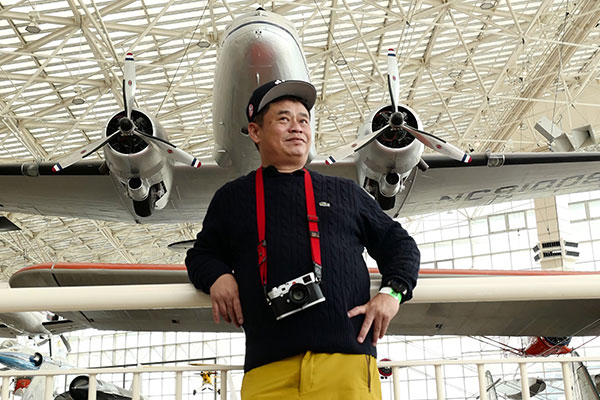
I am the founder of Chun Yueh Construction and a graduate of the Architecture Department at Hualien Vocational High School of Industry & Commerce. After entering the workforce, I spent many years deeply involved in construction engineering and quality control. This strengthened my execution skills while shaping my sense of design. By combining both, I strive to create architecture that balances rationality and emotion. In 2005, I established Chun Yueh Construction in Toufen, Miaoli, and later founded the Chun Yueh Architectural Research Studio, where I currently serve as Director. My vision is to create buildings that are structurally sound, yet warm and humane. Over the years, I have received seven Gold Awards in architecture and a First Prize honor, and I continue to explore how a home can grow and evolve alongside the families who live in it. Growing up surrounded by the mountains of Taroko and the ocean at Qixingtan in Hualien taught me that architecture should not only be a structure — it should be a breathing, living space with warmth and soul. My inspiration to pursue design came from traveling the world with my family. Through these journeys, I witnessed the beauty of residential cultures abroad and became convinced that people in Taiwan deserve world-class homes. With this belief, I integrated engineering-driven rational thinking into creativity and design, dedicating myself to building architecture truly suited for living — right here on this island. For me, this journey has been one from construction to creation — a mission to allow my family, and many more families, to experience the world-class lifestyle they deserve. A home should be more than a place to stay. It should accompany every stage of life, breathing with warmth, comfort, and understanding.
2 What does being recognized in the MUSE Design Awards mean to you?
Being recognized by the MUSE Design Awards is, to me, a moment filled with warmth. It is not only an affirmation of my work Chun Yueh Yanman, but also a dialogue with the lifestyle of Southern France. I once lived in Nice, in the South of France. The sunlight, the sea breeze, and the gentle rhythm of life there made me realize something important — the French are romantic not because they chase romance, but because they understand how to live. They turn a simple breakfast on the balcony, an afternoon glass of wine, or even the aroma from a kitchen into the scenery of daily life. This experience inspired the design of Chun Yueh Yanman. I integrated the island kitchen and balcony into an open living space, where home is no longer defined by walls, but by the free flow of light, wind, and fragrance. In this space, family members can cook, converse, and enjoy the view — naturally sharing life and time together. Winning this award is more than an honor. It feels like a response — that through architecture, I have shaped a uniquely local expression of romance, allowing everyday moments at home to hold a world-class sense of poetry.
3 How has this achievement impacted your career, team, or agency, and what opportunities has it brought so far?
Winning felt like an echo of life itself — a reminder that the true value of architecture lies in its ability to change how people feel about living. Most of Chun Yueh’s homeowners come from science parks and the tech industry, where daily life is built on pressure and precision. But the moment they step into Chun Yueh Yanman, and see sunlight falling across soft beige and warm orange, their expressions soften. That is the color of Menton — a color of sunlight, warmth, and a gentle softness toward life. Step into the island kitchen and it carries the taste of Marseille. Here, the kitchen is the heart of the home. Cooking is not just cooking — it becomes the rhythm of family life. Olive oil, the aroma of coffee, laughter moving through the space — a lifestyle where people finally put down their phones and gather again. And when the wind passes through the balcony, and afternoon light falls upon the terrace, that is a balcony from Nice. We blurred the boundary between the living room and the outdoors, so people could find a new rhythm of life between sunlight and breeze. These three cities became the three souls of Chun Yueh Yanman: the colors of Menton, the flavors of Marseille, the breeze of Nice. They turned architecture into more than form — they turned it into a way of living. Many clients have told me: they once bought a home only for work, but now they go home for life. And that — is the true meaning behind winning on this prestigious platform. It proves that when architecture inspires people to live more beautifully, that is the warmest international language of all.
4 What role does experimentation play in your creative process? Can you share an example?
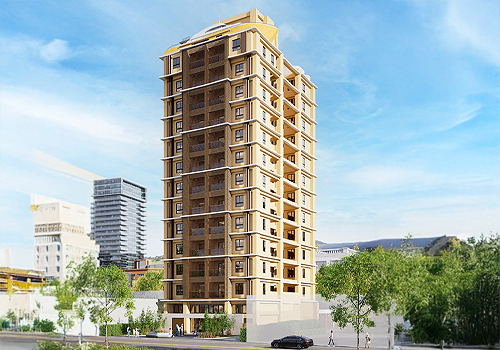
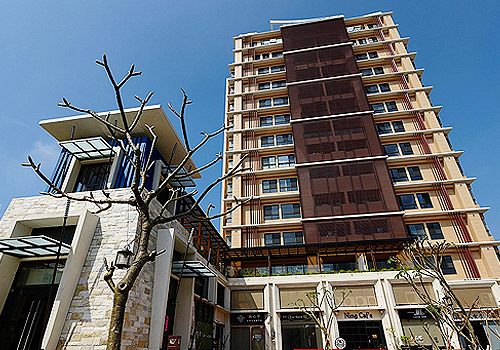
In my creations, the spirit of experimentation means using subtraction to create addition in life. In Chun Yueh Yanman, I explored several experiments on how people live. The building adopts a four-units-per-floor layout with a 3.5-meter ceiling and a natural skylight above, inspired by Roussillon — a mountain town wrapped in ochre red and golden light. I hoped that home could feel like its air: filled with brightness, warmth, and the freedom to breathe. The rooms on both sides can be connected or separated according to a family’s life cycle, inspired by Avignon — where courtyards open and close, symbolizing the ebb and flow of intimacy within a family. The living room and dining room are combined, inspired by Marseille — turning the heart of the home into a space for communion and shared life. The kitchen island extends to the balcony, inspired by Nice — where cooking, sunlight, and sea breeze mingle to create the romance of a terrace-borne lifestyle. The bathroom includes two toilets and one large shower, inspired by Biot — a hillside town surrounded by springs and sunlight, which guided me to let the bathroom breathe, glow, and feel like a space made of light. The exterior façade uses the Milano-beige tone of Menton with rhythmic grilles, reflecting the visual cadence of Southern France; and on the rooftop, the yacht-harbor aesthetics of Antibes become the “Fifth-Facade Yacht Peak,” bringing the spirit of the sea into the skyline. These experiments turn architecture into more than a residence — they make it a living laboratory of sunlight, wind, and life from the south of France.
5 What's the most unusual source of inspiration you've ever drawn from for a project?
For me, inspiration often comes from the most unexpected moments in everyday life. One of the most unusual inspirations I’ve ever experienced began with an ordinary breakfast on a street corner in the south of France. That morning, I sat on a small balcony in Nice. Sunlight poured into my cup of black coffee, and the breeze drifted in from the sea. Next door, neighbors chatted on their balcony. Someone cooked in the kitchen. Someone else hung laundry in the sun. And in that simple moment, I realized — true architectural aesthetics don’t exist in form alone, but in the breath of daily life. That realization sparked an experiment in Chun Yueh Yanman: I fused the kitchen island with the balcony so cooking could happen in the presence of sea breeze; I combined the living room and dining room, inspired by Marseille’s warm dining culture; and I opened a skylight in the bathroom, allowing it to be enveloped in light and gentle mist, like the hillside village of Bormes-les-Mimosas. None of these ideas came from textbooks or architectural theory. They were born from the simplest, most authentic scenes of living. I believe that when design begins with life itself, architecture gains a soul.
6 What’s one thing you wish more people understood about the design process?
I hope more people understand that design is not just drawing lines — it is a simulation of real life. In my process, every line represents an actual behavior that will take place in a home. I never begin with materials; I always begin with people — How do they wake up in the morning? Where do the children play? Where does the family spend time together? After dinner, who sits on the balcony? Who relaxes in the bath? Just like in Chun Yueh Yanman, every space is the outcome of a living experiment: four units per floor with a 3.5-meter ceiling, a natural skylight to let air and sunlight move freely; a connecting room that adapts as the family grows; a combined living and dining area — like the shared dining culture of Marseille; and a kitchen island aligned with the balcony, so cooking and sea breeze coexist within the same view. None of these decisions happened by chance. They were shaped through continuous simulations of real living scenarios. I hope people can see this clearly — good design is not a single spark of inspiration, but the natural result of daily life being tested, refined, and proven over time.
7 How do you navigate the balance between meeting client expectations and staying true to your ideas?
In my design process, I allow rationality and sensibility to participate in the conversation together. Clients often seek practicality and safety, while I hope architecture can embrace light, wind, and rhythm. In Qunyue Yangman, I use design to let both coexist. Take the bathroom, for example — it is designed with two toilets, a spacious shower, and a double sink that allows two people to use the space at once: one washing hands, the other grooming — each with ease and personal comfort. The inspiration comes from Biot, a small town in southern France surrounded by springs and sunlight, where life moves slowly but warmly. I hope residents can feel that same gentle flow in their own home. I also insist on using patented grilles to welcome natural wind and light, and I created a “Fifth-Facade Yacht Peak” on the roof, letting the free spirit of the Antibes coast anchor itself above the city. When clients experience these details firsthand, they no longer see it as the designer’s insistence — they feel it as a kind of happiness, quietly nurtured through everyday living.
8 What were the challenges you faced while working on your award-winning design, and how did you overcome them?
In this project, the greatest challenge came from the balcony. Traditional layouts usually include two small balconies — one attached to the living room and another to the kitchen. But I always felt that such spaces were too narrow, fragmented, and lacked purpose; people had little reason to step outside. So I carried out a subtractive experiment: merging two small balconies into one expansive terrace. This decision brought many challenges in structure, waterproofing, and drainage, but my goal was clear — to create a balcony where life could truly happen. The inspiration came from Nice. There, a balcony is not just an extension of the home; it is a second living room. You can drink coffee in the morning, enjoy the sea breeze in the afternoon, and watch the stars at night — a lifestyle where indoor and outdoor living flow naturally together. Above the balcony, I added a patented grille that allows residents to feel wind and light while maintaining privacy from the outside. It frames the view outward while protecting the intimacy within, keeping the openness of the space intact. When the large balcony was complete, wind began to flow through the interior, and sunlight reached the kitchen with ease. Life suddenly became softer, fuller, more layered. And in that moment, I realized this was not just a structural adjustment, but a living experiment — one that invites people to step outside and experience life in motion.
9 How do you recharge your creativity when you hit a creative block?
When I hit a creative block, I don’t force myself to stare at drawings hoping for ideas to appear. Instead, I load my family into our camper van and we take off — to see the fjords of Norway, to watch the sea at Qixingtan, to admire the mountains in Taroko. The wind, the mountains, the sea — they remind me again that inspiration begins in life, not on paper. I also bring my brushes and paint watercolors from the places I visit, capturing the glow of light and the warmth in the air through color. Sometimes I read poetry to clear the mind; sometimes I wander through Eslite bookstore, flipping through books about architecture and travel; and with my Leica M, I record light, architecture, daily life, and plants — because every angle of sunlight reveals a new rhythm of time and living. These moments allow me to reset — to return to myself. For me, creativity is not a sudden spark, but a slow awakening that comes after many journeys, pages, and moments of observation. It is the rhythm of the heart, rediscovered through life.
10 What personal values or experiences do you infuse into your designs?
My core belief is that a home should grow with its people. A home is not a fixed layout — it is a living entity that evolves over time. That is why I designed connecting rooms, allowing the space to adapt naturally to four stages of family life: newlyweds, raising children, the peak of fullness, and the empty nest — each with its own spatial rhythm. My understanding of life comes from travel and from quiet, precious moments shared with those I love. When family members need room to breathe or process emotions, they can step onto the fifth façade — the rooftop yacht — and release themselves between wind and light. This is my vision of home: a place that understands people, responds to emotion, and grows with time.
11 What is an advice that you would you give to aspiring designers aiming for success?
This time, Chun Yueh Yanman received a win in the award program — not only as recognition for the work itself, but as a response to the idea of lifestyle-oriented architecture. The award celebrates breaking convention and using design to elevate the way people live. Chun Yueh Yanman reflects that spirit within a local context. I design architecture to breathe with the emotions of the family — connecting rooms that grow with time, spacious balconies that invite people outdoors, and a fifth façade, the yacht peak, that becomes a release point for the heart. This approach has touched many of my clients. High-tech engineers working under constant pressure often tell me, “This is the life I truly want.” They do not buy the house merely for its space, but for the feeling of being able to breathe — of being soothed by living, not constrained by it. So I want to say to young designers: Design is not the pursuit of flashy form. It is the practice of making life better. Before drawing every line, ask yourself — will this design improve how someone lives? Awards will come and go, but life remains. True design is not for trophies. It is for the quiet moment when someone steps into their home, exhales, and finds themselves again.
12 If you could collaborate with any designer, past or present, who would it be and why?
I would choose Antoni Gaudí. He made architecture a part of nature, and in Chun Yueh Yanman, I continue that spirit. The exterior walls use curved forms rather than rigid lines, like the breathing façade of Casa Batlló, allowing the building to move with wind and light. The lobby features fan-shaped stones from Bali, echoing the living textures of the Sagrada Família, letting material itself speak in the space. The stairwell’s book wall is engraved with the names of world cities, like the smooth, flowing contours of Casa Milà, allowing one to read the story of the architecture as they walk. Gaudí made architecture a part of nature — and I aim to make architecture a part of life.
13 What's one question you wish people would ask you about your work, and what's your answer?
I hope someone will ask me one day: “Will your architecture make my life better?” My answer is — yes. The connecting rooms, like Avignon, grow with the family. The expansive balcony, like Nice, brings the kitchen into the landscape. The bathroom, like Biot, allows two people to share yet feel free. The 3.5-meter ceilings, like Roussillon, let wind and sunlight flow without restraint. The fifth façade, like the yacht peak of Antibes, becomes a release for the heart. This is my approach to design — to create architecture that truly improves life.