Interview
Zihua Mo
1 Congratulations on winning the MUSE Design Awards! Can you introduce yourself and share about what inspired you to pursue design as a career?
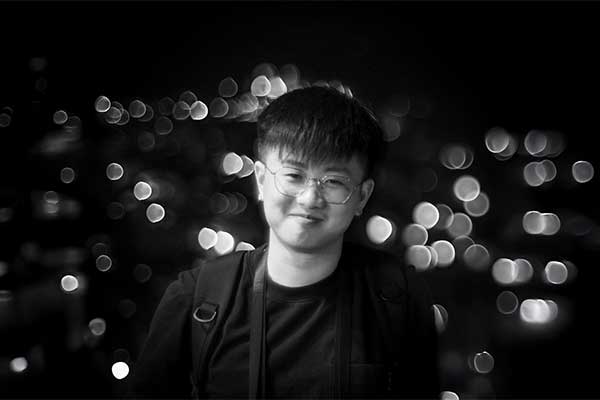
Thank you! I’m Zihua Mo. I studied Urban and Rural Planning in China during my undergraduate years and later came to the United States to pursue architecture. I received my MArch from the University of Pennsylvania and currently work as an architectural designer. My decision to pursue design came from something simple and instinctive — ever since I can remember, I’ve loved making things, drawing, crafting, and music. Design satisfies these fundamental creative impulses while giving me the chance to bring order to a chaotic world, to carve out better spaces for living, even if only by a little. It is a profession capable of directly changing the world, and that sense of purpose brings me a fulfillment no other path could.
2 What does being recognized in the MUSE Design Awards mean to you?
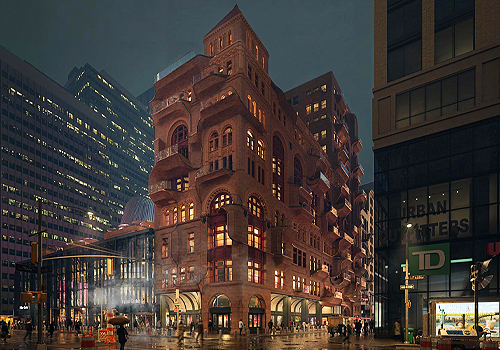
Having my work recognized by the MUSE Design Awards affirms the project on multiple levels — its concept, methodology, and potential impact. Dissolving Corbin Building is not a conventional project. It is firmly rooted in its urban context, yet proposes a vision that reaches beyond the ordinary. It engages with adaptive reuse, urban revitalization, public space reactivation, and new modes of living. Formally, its flowing surfaces, complex geometry, and dialogue with the historic façade depart from typical massing and detailing approaches. Above all, the project uses a universal language — food — to rebuild connection in a world shaped by conflict and de-globalization, offering a sanctuary within New York’s dense concrete environment. This recognition encourages me to pursue work that is ambitious, imaginative, and brave.
3 How has this achievement impacted your career, team, or agency, and what opportunities has it brought so far?
As someone who has been quietly creating on my own, receiving this award is an important affirmation. It steadies me through moments of self-doubt — especially in a global economy where many designers have had to shift paths out of necessity. It also gives my work the chance to be seen beyond the boundaries of my own portfolio, to stand alongside inspiring projects from around the world. That visibility — that exchange — is deeply motivating and meaningful to me.
4 What role does experimentation play in your creative process? Can you share an example?
Experimentation is essential — much like biological evolution. You can never predict which “mutation” will lead to a better outcome. Design demands ongoing trial, comparison, and refinement. Experimentation disrupts habitual thinking and opens the door to possibilities we could not foresee. In the façade redesign for this project, I explored numerous directions: inserting elements starkly different from the original façade, testing denser and more dramatic interventions, and many subtle variations in between. After repeated iteration, the final strategy emerged — a balanced, parasitic-like system that echoes the historic façade while introducing a contemporary visual language of its own.
5 What's the most unusual source of inspiration you've ever drawn from for a project?
The idea came from wandering the city with friends, searching for good food. While thinking about how to create a public space people truly love, a simple question surfaced: why not design a building organized around food? The beauty of the United States lies in its diversity — people from different places bring their cultures, their stories, and their cuisines. If that diversity could be translated into architecture and everyday living, what form might it take? From that thought grew a range of programmatic possibilities: food courts, rooftop bars, urban farming, shared kitchens, and more.
6 What’s one thing you wish more people understood about the design process?
Design is rarely linear. It is multi-threaded — many directions are explored, evaluated, and ultimately set aside. Yet the paths not chosen are never wasted. Their best parts may resurface elsewhere, and more importantly, they sharpen intuition, experience, and judgment.
7 How do you navigate the balance between meeting client expectations and staying true to your ideas?
Design is not pure artistic expression; it begins with the client’s needs. But as professionals, we also have a responsibility to uncover possibilities the client may not be able to articulate, yet would greatly benefit from. When a client’s preferences contradict fundamental principles or best practices, communication becomes crucial. We need to guide them through patient, informed dialogue. And when our ideas are questioned, the best response is to offer deeper, clearer reasoning supported by solid knowledge — addressing their concerns while preserving the integrity of the design.
8 What were the challenges you faced while working on your award-winning design, and how did you overcome them?
One major challenge was convincing others that the complex curved geometry was feasible. To address this, I studied advanced fabrication technologies and analyzed structural strategies used in successful adaptive-reuse projects. The final approach became a complete workflow: subdividing large surfaces into smaller panels using projection lines; robotic 3D-printing of clay modules for the curved geometry; installing new steel frameworks; and attaching the printed panels, which also support integrated planters. This system enables the new structure to cantilever beyond the original façade.
9 How do you recharge your creativity when you hit a creative block?
I intentionally step outside architecture. I slow down and immerse myself in other fields — games, music, art, film, current events, history, or simply everyday life. Even when they seem unrelated, thought patterns intersect. When I leave the architectural bubble, inspiration often returns in unexpected ways.
10 What personal values or experiences do you infuse into your designs?
I prefer design that connects with everyday life rather than stand apart from it. I value warmth and humanity over cold elitism. At the same time, I pursue innovation — experimenting with unconventional forms and advanced construction methods. My multidisciplinary background allows me to think across scales: from urban context and site relationships, to spatial organization and circulation, down to the fine details of material and aesthetic refinement.
11 What is an advice that you would you give to aspiring designers aiming for success?
Continuously expand your exposure. Study great work, new methods, and emerging explorations. Without that, it’s easy to design in isolation and produce work that feels outdated, even if it appears “good.” Sharpen awareness and cultivate curiosity — the more entry points you perceive, the richer your design vocabulary becomes.
12 If you could collaborate with any designer, past or present, who would it be and why?
Zaha Hadid. Many reduce her buildings to curvy, fluid forms — which I think is a misunderstanding. Her architecture went through many phases; curves were only one of them. What stayed constant was her position at the forefront of architectural exploration — radical, courageous, and far ahead of her time. Every project expanded the boundaries of what architecture could be and shifted expectations across the field. I often wonder what extraordinary work she might still be producing if she were with us today.
13 What's one question you wish people would ask you about your work, and what's your answer?
A question I wish people asked is: “Was there a part of the project that seems subtle but required an incredible amount of effort?” For me, it was recreating the real façade of the Corbin Building. I sourced high-resolution drawings and modeled every detail — from window frames to cornices to decorative ornamentation. For extremely complex reliefs, I visited the site to photograph them, generated depth maps using AI, converted them into 3D reliefs, and refined them manually. For elements too high to photograph, I used AI to convert line drawings into realistic reliefs, then into depth maps for modeling. The effort paid off — these details brought remarkable depth and realism to the final renderings.