Interview
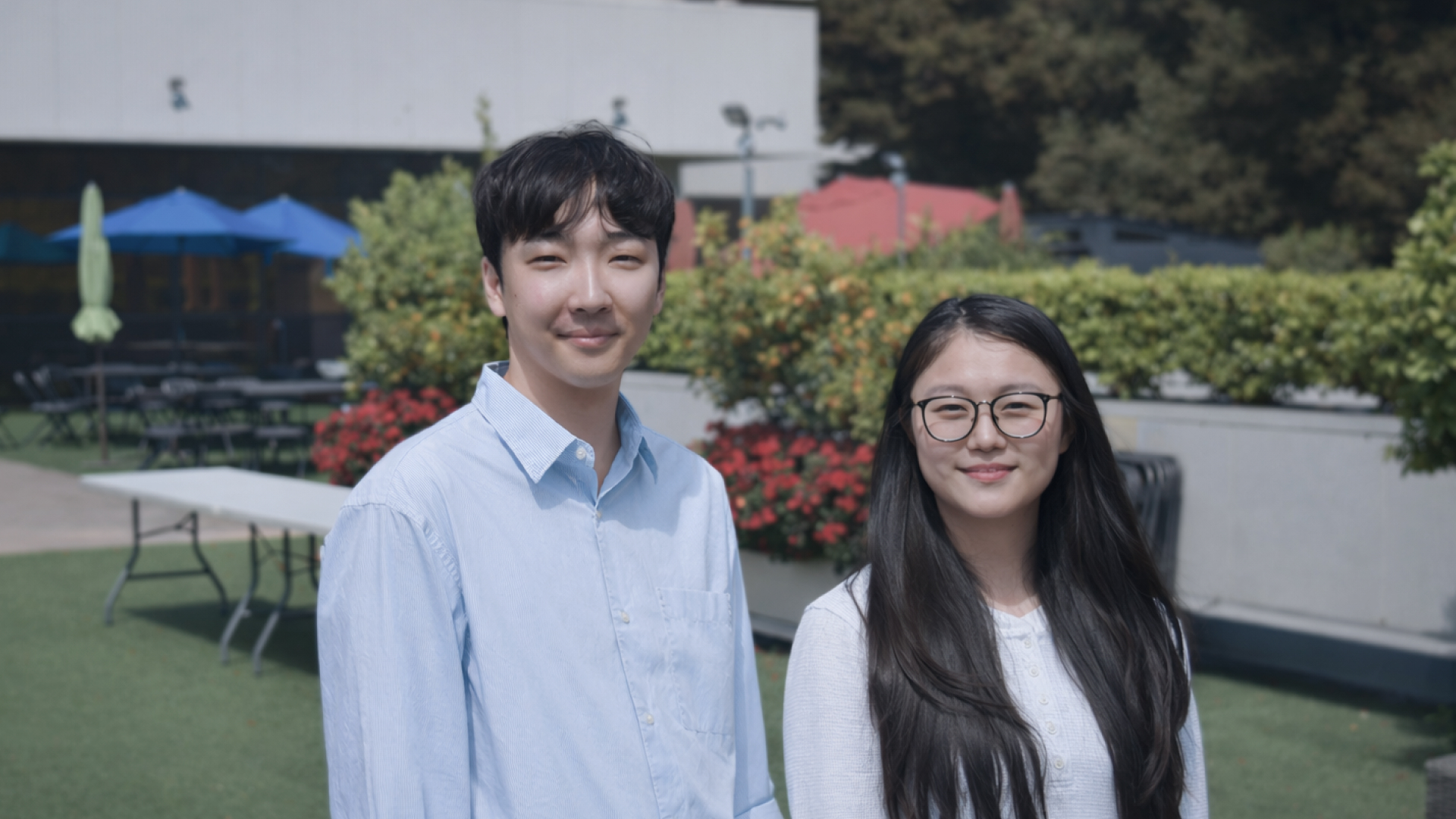
Yitian Zeng and Shinga Yoshimine
1 Congratulations on winning the MUSE Design Awards! Can you introduce yourself and share about what inspired you to pursue design as a career?
Yitian: My name is Yitian and I frequently go by Chloe. I grew up in Wuhan, China, and I have always been curious about how things work. As a child, I loved drawing, building small objects, and taking things apart just to understand them. Over time, I realized that design is not only about visuals but also about solving problems and making complex systems more accessible. That realization inspired me to pursue design as a career, where I can combine creativity with practical impact. Shinga: My name is Shinga. I was born and raised in Japan and later moved to California to pursue my master’s degree. While my academic background was not originally in design, I had the opportunity to take design courses as electives. Through those classes, I met a mentor who introduced me to how design works in real-world contexts beyond theory and aesthetics. That experience fundamentally changed how I saw design and inspired me to pursue it as a career.
2 What does being recognized in the MUSE Design Awards mean to you?
Yitian: It means a lot to me. Beyond the honor, it validates the process behind our work—the research, iteration, and thoughtful decisions that shape the final outcome. It reinforces my belief that design should solve real problems and make complexity more accessible. Shinga: Being recognized by the MUSE Design Awards is truly meaningful to us. It is encouraging to see our work acknowledged on an international stage and reinforces the idea that thoughtful design can connect with people across different cultures.
3 How has this achievement impacted your career, team, or agency, and what opportunities has it brought so far?
Yitian: This achievement has strengthened the credibility of our work. It has encouraged us to be more intentional in our process and more disciplined in how we execute ideas. Beyond visibility, it has pushed us to keep improving and thinking more critically about the impact of our work. Shinga: This recognition has been very encouraging for both my team and me. It has motivated us to stay curious, creative, and focused on building meaningful products that bring positive impact into everyday life. We have also seen increased interest from a wider audience, opening the door to new conversations and future opportunities.
4 What role does experimentation play in your creative process? Can you share an example?
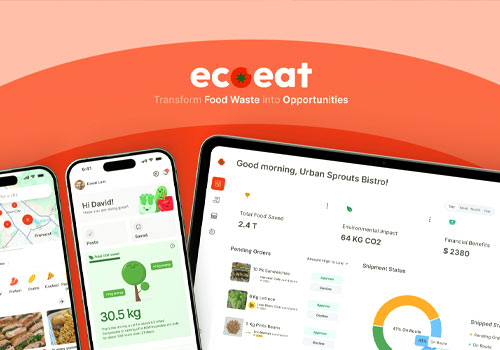
Yitian: Experimentation is essential in my process, but it often begins with observation. EcoEat emerged from noticing everyday food waste, such as fruit rotting in gardens and surplus meals being discarded in cafeterias. Rather than immediately building a solution, we tested small assumptions about user behavior and friction points. By iterating through feedback and refining the experience step by step, the idea gradually became more concrete. For me, experimentation means turning real-world observations into structured, meaningful solutions. Shinga: Experimentation is an essential part of my creative process. I typically begin by gathering inspiration from diverse design disciplines, including digital products, physical design, architecture, and spatial experiences. These references help me explore different ways of thinking before moving into execution. From there, I test multiple approaches to visualize ideas, examining how different forms, structures, or metaphors communicate meaning.
5 What's the most unusual source of inspiration you've ever drawn from for a project?
Yitian: One unusual source of inspiration for me comes from everyday challenges. Whether it is food being wasted or people navigating confusing systems, these ordinary moments often spark ideas. I am especially interested in situations people accept as normal but that could be thoughtfully improved. Shinga: Some of my most unexpected inspiration comes from simply playing with design tools outside of work. When experimenting freely without a specific goal, I often discover visual forms or interactions that I would not have intentionally planned.
6 What’s one thing you wish more people understood about the design process?
Yitian: One thing I wish more people understood is the importance of detail and consistency. Good design is not just about a single screen but about how everything works together as a system. Small inconsistencies can quietly affect usability and trust, so much of the process involves iterating, refining, and aligning even the smallest elements. Shinga: People often focus on the final visuals, which is natural since most experience design as users rather than designers. What I wish more people understood is how much thinking, testing, and problem-solving happens beneath the surface.
7 How do you navigate the balance between meeting client expectations and staying true to your ideas?
Yitian: I usually begin by listening carefully to understand the client’s goals and expectations. From there, I build on their ideas and shape them into clear design directions while explaining the reasoning behind each decision. For me, the process is about collaboration and mutual understanding, finding solutions that feel thoughtful and aligned with both the client’s vision and strong design principles. Shinga: I typically start by presenting two directions: one closely aligned with the client’s request and another reflecting my perspective on what may work best. This approach encourages open conversation, allowing us to discuss ideas and develop a solution that integrates both viewpoints.
8 What were the challenges you faced while working on your award-winning design, and how did you overcome them?
Yitian: For me, one of the main challenges was ensuring the project felt realistic, even as a concept. I continually questioned whether it could function effectively in real environments and deliver practical value. To address this, I grounded the design in real user behavior and constraints, prioritizing solutions that were helpful and achievable rather than purely idealistic. Shinga: One of the key challenges was finding the right balance between creating an engaging experience and maintaining the product’s core functionality. We wanted the design to feel enjoyable without distracting users from its purpose. To achieve this, we thoughtfully incorporated illustrations and motion graphics to enhance the experience while supporting usability and clarity.
9 How do you recharge your creativity when you hit a creative block?
Yitian: When I encounter a creative block, I step away and spend time outdoors. Exercise and time in nature help clear my mind and reset my focus, and I often find that ideas return once I stop forcing them. Shinga: When I face a creative block, I step back and explore work created by designers and creatives I admire. Observing how others approach ideas helps me reset my perspective and discover new inspiration.
10 What personal values or experiences do you infuse into your designs?
Yitian: I approach design from overall structure down to the smallest details, paying close attention to how features connect, where their boundaries lie, and how they can scale over time. For me, good design means building systems that are clear, consistent, and adaptable. Shinga: Having been born and raised in Japan, I grew up surrounded by aesthetics that value simplicity, balance, and tranquility, which strongly influence my design approach. I aim to create work that feels minimal yet impactful, prioritizing clarity and calm over excess.
11 What is an advice that you would you give to aspiring designers aiming for success?
Yitian: My advice is to focus on understanding the problem before jumping into solutions. Strong design comes from clear thinking, not just appealing visuals. Most importantly, be patient—growth takes time, and consistency matters more than quick success. Shinga: My advice is to stay curious and observe as much as possible. Design can take many forms, from posters and physical objects to websites and apps, and each offers valuable lessons. Exposure to diverse design perspectives helps build stronger judgment and creativity over time.
12 If you could collaborate with any designer, past or present, who would it be and why?
Yitian: If I could collaborate with anyone, I would choose Jony Ive. I admire how he approaches product design as a complete experience, thoughtfully balancing form, function, and emotion. That holistic perspective strongly resonates with me. Shinga: I do not have one specific designer in mind. I am inspired by learning from a diverse range of designers across different fields and eras, as each perspective offers something unique. I value the ability to observe, learn, and draw insights from many voices rather than focusing on a single influence.
13 What's one question you wish people would ask you about your work, and what's your answer?
Yitian: I wish people would ask, “How do you decide what not to build?” In product design, success is often about clarity and restraint— not every idea needs to become a feature. A significant part of my work involves defining boundaries, prioritizing what truly creates value, and ensuring the system remains focused and coherent. Sometimes what you leave out matters as much as what you include. Shinga: One question I wish people would ask is, “What is the difference between design and art?” For me, art is a form of free expression that does not require external constraints. Design also involves expression, but it must consider the people who use it, and that responsibility is what makes design both challenging and meaningful.