Interview
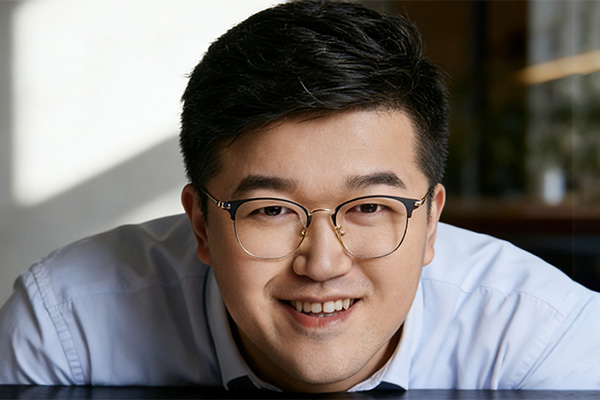
Xin Wei
1 Congratulations on winning the MUSE Design Awards! Can you introduce yourself and share about what inspired you to pursue design as a career?
Thank you so much for the recognition from the MUSE Design Awards. I’m Xin Wei, an interaction and user experience designer. I currently serve as Executive Vice Chairman of the Zhejiang Interaction Experience Design Professional Committee, Founder of the UXGO Interaction Experience Design Conference, Founder of DUDC Design Center, and a lecturer in product design at a university in Zhejiang Province. My journey into design began with a curiosity about how technology can truly serve people. As a child, I loved disassembling and reassembling electronic devices. Later, while working at Alibaba and DiDi, I witnessed hundreds of millions of users interacting with interfaces every day. That experience made me realize that great design is not just about aesthetics — it is about making complex technology feel human, warm, and emotionally resonant. From that moment, I decided to dedicate myself to creating designs that help users feel comfortable, joyful, and understood.
2 What does being recognized in the MUSE Design Awards mean to you?
Winning a Gold at the MUSE Design Awards means a great deal to me. It is not only a validation of my individual work, but also a kind of “official stamp” on more than ten years of persistence across big tech practice, teaching, industry leadership, and entrepreneurship. Especially in an era where AI is rapidly transforming design, this recognition gives me strong confidence that user-centered design — one that integrates culture, technology, and emotion — remains irreplaceable. This honor motivates me to continue connecting people with technology and students with the industry through design.
3 How has this achievement impacted your career, team, or agency, and what opportunities has it brought so far?
Being recognized by the MUSE Design Awards has had a meaningful impact on my career and our team. The award has increased our visibility within the design community and generated interest in our approach and work. It has also strengthened the confidence and cohesion of our team, reinforcing the value of human-centered and sustainable design. This recognition has opened new opportunities for collaboration with companies, research institutions, and international design platforms, and has also led to invitations for lectures and educational engagements. More importantly, it allows me to further promote the philosophy of responsible design and the integration of AI into sustainable, everyday family life, inspiring other designers and organizations to consider long-term social and environmental impact in their work.
4 What role does experimentation play in your creative process? Can you share an example?
Experimentation is a core part of my creative process. I strongly believe that the best designs often emerge from “failing fast and failing forward” through rapid iteration. For example, in my 2026 award-winning smart home product, we initially built on traditional 2D flat interaction logic. However, user testing revealed overly long paths and high cognitive load. I chose to completely rethink the original approach and experimented with 3D spatial gestures combined with AI-driven predictive interaction. This significantly reduced mis-touches and received strong recognition from the jury. Embracing and learning from failure is the part I enjoy most.
5 What's the most unusual source of inspiration you've ever drawn from for a project?
One of the most unusual sources of inspiration came from observing family routines in everyday life. Simple acts like sorting laundry or noticing how clothes wear over time sparked ideas about how AI could support sustainable habits and reduce waste. I realized that meaningful design often emerges from close observation of ordinary, overlooked moments.
6 What’s one thing you wish more people understood about the design process?
I wish more people understood that design is not “beautification” — it is “decision-making.” Every wireframe, color, and animation choice is actually a series of decisions made on behalf of the user. When people only see the surface aesthetics and miss the deeper understanding of user psychology, behavior, and emotion behind those decisions, design loses its soul.
7 How do you navigate the balance between meeting client expectations and staying true to your ideas?
I approach this balance by listening carefully to clients’ goals and constraints, then framing my design proposals in a way that highlights long-term value and user benefit. For SmartWash AI, I worked closely with stakeholders to demonstrate how sustainable, AI-driven solutions could meet both business and user needs, enabling innovation while aligning with practical requirements.
8 What were the challenges you faced while working on your award-winning design, and how did you overcome them?
One major challenge was integrating AI into a household routine without adding complexity. Users do not want to manage complicated interfaces for something as simple as laundry. To address this, we conducted extensive user testing, observing real behaviors, and iterated toward a simple, predictive, and adaptive interface. This human-centered approach helped balance intelligence with usability.
9 How do you recharge your creativity when you hit a creative block?
When I face a creative block, I step away from screens and immerse myself in everyday life, observing routines, nature, or even mundane household tasks. Sometimes, inspiration comes from the smallest details. I also discuss ideas with my team or students, as dialogue often sparks new perspectives.
10 What personal values or experiences do you infuse into your designs?
The two values I infuse most into my work are “restraint” and “kindness.” Restraint comes from my big tech training — less is more; not every feature needs to be included. Kindness comes from teaching: I always ask myself whether this design makes users feel respected and understood. If the answer is no, I start over. Often, these two qualities resonate more deeply than flashy techniques.
11 What is an advice that you would you give to aspiring designers aiming for success?
First, never only do “what the boss wants” — do what users truly need. Second, conduct user testing consistently; even testing with five people is better than designing in isolation. Third, keep creating and sharing — even one Xiaohongshu post helps refine your expression and expand your influence. Fourth, do not fear failure. I have seen too many talented designers hold back because they are afraid to make mistakes. Embrace trial and error, iterate boldly — you will go further than you imagine.
12 If you could collaborate with any designer, past or present, who would it be and why?
I would love to collaborate with Dieter Rams. His philosophy of “less, but better” and his emphasis on responsibility in design resonate deeply with my work. His approach to simplicity, clarity, and sustainability continues to inspire how I integrate AI into everyday life in a responsible way.
13 What's one question you wish people would ask you about your work, and what's your answer?
I wish people would ask, “How does your design improve everyday life beyond aesthetics?” My answer is that SmartWash AI aims to seamlessly integrate advanced technology into daily routines, reducing waste, energy use, and cognitive load while supporting mindful and sustainable living. Design, to me, is about meaningful impact, not just appearance.