Interview
Neuf Design CO., LTD.
1 Congratulations on winning the MUSE Design Awards! Can you introduce yourself and share about what inspired you to pursue design as a career?
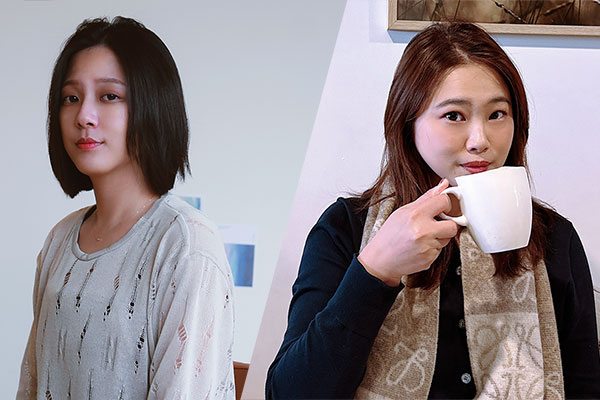
Neuf Design CO., LTD. is a studio co-founded by lead designer Lee Shin Yi and project director Lee Ying Yi. Their practice is built on a simple yet rigorous principle — Design Depth, Refined Simplicity. Working within a modern and minimal framework, they create a dialogue between rational structure and sensory materiality. Rather than pursuing visual reduction alone, they aim to preserve depth within simplicity, allowing tension to emerge through proportion, material, and detail. Their work spans from early-stage trademark evaluation to the development of brand identity systems, extending into packaging structure, material planning, and production supervision. Over time, their approach has evolved from an intuitive interest in aesthetics into a structured methodology — one that enables brands to remain consistent, clear, and adaptable across different contexts.
2 What does being recognized in the MUSE Design Awards mean to you?
Being recognized by the MUSE Design Awards is a meaningful validation of our approach. As a relatively small studio, it affirms that a design methodology rooted in structure, restraint, and material sensitivity can resonate on an international level. More importantly, it strengthens the trust between us and our clients, reinforcing the idea that design is not just a visual outcome, but a strategic tool with measurable impact.
3 How has this achievement impacted your career, team, or agency, and what opportunities has it brought so far?
This recognition has shifted the way our work is perceived. Increasingly, we are being approached not only as designers, but as strategic partners involved in early-stage brand thinking and decision-making. It has also created opportunities for cross-market collaborations, particularly with clients seeking more refined and internationally aligned brand systems.
4 What role does experimentation play in your creative process? Can you share an example?
Experimentation is an essential part of our process, particularly in bridging design intent with production reality. In our packaging projects, for example, we regularly test different paper stocks, structural forms, and finishing techniques to understand how they influence both visual perception and user interaction. This allows us to refine decisions not only aesthetically, but also in terms of production feasibility and long-term consistency.
5 What's the most unusual source of inspiration you've ever drawn from for a project?
We are often inspired more by culture and artistic expression than by direct visual references. By observing how cultural narratives and artistic elements are structured, we translate those ideas into design through graphics, packaging structure, and material choices. This allows the final outcome to feel distinctive and meaningful while remaining clear, refined, and relevant for contemporary brands.
6 What’s one thing you wish more people understood about the design process?
Design is not simply about visual styling — it is a process of making thoughtful decisions across structure, material, and communication. Every detail, from proportion to production method, contributes to how a brand is ultimately perceived. In this way, both visual identity and packaging become more than functional elements; they evolve into a cohesive perceptual experience shaped through design and visual art.
7 How do you navigate the balance between meeting client expectations and staying true to your ideas?
Our role is to translate client objectives into a clear and cohesive design system while guiding decisions that preserve long-term clarity, consistency, and value.
8 What were the challenges you faced while working on your award-winning design, and how did you overcome them?
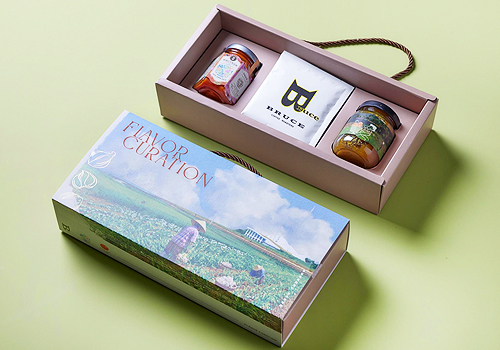
One of the main challenges of this project was translating the local character of Shengang into a refined and cohesive design language. The intention was to express the cultural landscape and atmosphere of Taiwan while maintaining a careful balance — capturing its richness and subtlety without becoming overly literal. To achieve this, we focused on refining visual details, composition, and material expression, allowing the cultural essence to be conveyed in a nuanced and contemporary way.
9 How do you recharge your creativity when you hit a creative block?
Rather than seeking constant stimulation, we focus on stepping back and recalibrating. This often involves observing everyday environments, materials, and spatial relationships, allowing ideas to develop gradually over time. We believe clarity of thought is ultimately more valuable than rapid output.
10 What personal values or experiences do you infuse into your designs?
Our approach is grounded in cultural depth, artistic expression, structure, and consistency. By translating cultural context through an artistic lens and anchoring it within a rational framework, we create design systems that remain clear, cohesive, and enduring over time.
11 What is an advice that you would you give to aspiring designers aiming for success?
Focus on understanding how design decisions are made, not simply how things appear. Developing sensitivity to proportion, material, and production allows design to move beyond aesthetics and become more enduring, thoughtful, and relevant within real-world contexts.
12 If you could collaborate with any designer, past or present, who would it be and why?
We look forward to exchanging ideas with designers from diverse cultural backgrounds around the world. Every designer brings a unique perspective, and each body of work holds its own value and significance.
13 What's one question you wish people would ask you about your work, and what's your answer?
One question we wish more people would ask is how our design approach maintains clarity and depth across different contexts. Our work is grounded in cultural depth, artistic expression, and structural thinking. Rather than focusing solely on visual outcomes, we approach design as an ongoing construction where visual language, material, and form are carefully aligned. Through this process, we aim to shape brands not only through appearance, but through perception — creating a sense of consistency, restraint, and quiet presence that endures over time.