Interview
Clover Li
1 Congratulations on winning the MUSE Design Awards! Can you introduce yourself and share about what inspired you to pursue design as a career?
I am a computational artist, designer, and entrepreneur whose work explores how algorithmic systems reshape perception, authorship, and visual culture. My practice combines computation, physical fabrication, embedded technologies, and interactive systems to examine the evolving relationship between humans and machines. I serve as Design Lead at Evokai and have collaborated with organizations across the technology and energy sectors, including SLB and NOV. Across both industry and artistic practice, I am interested in how design can translate complex technologies into meaningful human experiences. My interest in design began with a fascination for systems rather than objects. I was drawn to the idea that design could make invisible processes visible and transform complexity into meaningful experiences. Over time, that curiosity evolved into computational art and emerging technologies, where code became both a creative medium and a research tool. Today, my work examines how autonomous systems generate form, behavior, and meaning, and how they shape the ways we perceive, interpret, and interact with the world.
2 What does being recognized in the MUSE Design Awards mean to you?
This recognition is deeply meaningful because it affirms the value of interdisciplinary experimentation. Many of my projects exist at the intersection of design, technology, computation, fabrication, and interaction. Awards such as the MUSE Design Awards demonstrate that innovative work does not need to fit within traditional boundaries to make a meaningful impact. On a personal level, this honor reinforces my commitment to exploring emerging technologies with both curiosity and critical thought. It also provides an international platform to foster broader conversations about human-machine collaboration, computational creativity, and the future of design.
3 How has this achievement impacted your career, team, or agency, and what opportunities has it brought so far?
The award has significantly expanded the visibility of my work across the design, technology, and research communities. As Design Lead at Evokai, it reinforces the value of interdisciplinary approaches that combine design, computation, and emerging technologies. It has also strengthened recognition of a practice that bridges art, research, and industry, creating opportunities to collaborate with researchers, institutions, and global organizations. Beyond the artistic sphere, the award has highlighted the broader relevance of these design methodologies. Projects such as OceanLung and Sofar demonstrate how translating complex systems into intuitive human experiences, integrating emerging technologies, and designing meaningful interactions can extend into digital transformation, visualization, and technology adoption initiatives. These principles have also informed collaborations with organizations including SLB and NOV. The recognition has opened new opportunities for exhibitions, interdisciplinary collaborations, and conversations about the future of human-centered design. It continues to encourage me to pursue work that brings together technical innovation, creativity, and social and environmental impact.
4 What role does experimentation play in your creative process? Can you share an example?
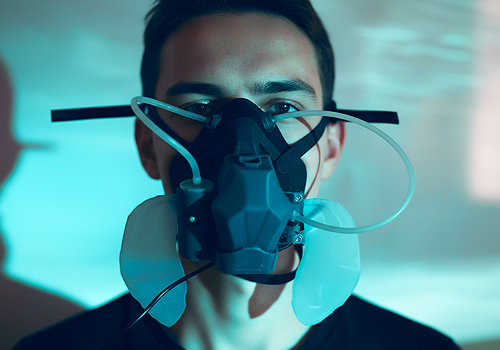
Experimentation lies at the core of my practice. Rather than beginning with a predetermined outcome, I often design systems that generate unexpected behaviors. Through iterative testing, observation, and refinement, each project gradually reveals possibilities that could not have been anticipated from the outset. A good example is OceanLung, a wearable installation that translates ocean deoxygenation into a physical breathing experience. The project involved exploring electronics, pneumatic systems, silicone fabrication, and responsive interaction design through an iterative process. I developed custom molds for inflatable structures, integrated embedded hardware and sensors, and programmed airflow behaviors that respond dynamically to environmental data. The final work emerged through continuous refinement, with material behavior, technology, and user experience shaping one another throughout the creative process. For me, experimentation is more than a method of solving problems; it is a way of discovering new forms of interaction, expression, and understanding.
5 What's the most unusual source of inspiration you've ever drawn from for a project?
One of the most unexpected sources of inspiration for my work has been biological systems that function without centralized control. Cellular development, swarm intelligence, and ecological adaptation have all shaped my thinking. They demonstrate how complex structures and behaviors can emerge from simple local interactions. This perspective informed both OceanLung and Sofar. In OceanLung, I translated environmental data into a responsive breathing system that physically transforms the wearer's experience of air. In Sofar, I explored how distributed interactions can foster a sense of presence and empathy across distance. Both projects are rooted in the belief that meaningful experiences emerge through the relationships between interconnected elements rather than centralized control.
6 What’s one thing you wish more people understood about the design process?
I wish more people understood that design is fundamentally a process of inquiry rather than simply decoration. The visible outcome represents only a small part of the journey. Behind every project are countless hours of research, experimentation, testing, failure, and refinement. Particularly in computational and interactive design, much of the creative process involves building systems, observing behaviors, and exploring the relationship between technology and human experience. The final work is often shaped by hundreds of decisions that remain invisible to the audience, yet they are what ultimately define the experience.
7 How do you navigate the balance between meeting client expectations and staying true to your ideas?
I view design as a collaborative process rather than a compromise between competing priorities. My role is to understand each client's objectives while identifying opportunities to introduce new perspectives that strengthen the overall outcome. Whether working with startups, cultural institutions, or global organizations, I focus on aligning innovation with purpose. The most successful projects emerge when creative exploration is guided by clear objectives, allowing experimentation to drive meaningful solutions rather than existing solely for novelty.
8 What were the challenges you faced while working on your award-winning design, and how did you overcome them?
One of the greatest challenges was bringing multiple disciplines together into a cohesive experience. Projects such as OceanLung and Sofar combine hardware, software development, fabrication, interaction design, and conceptual storytelling. Balancing these elements while maintaining an intuitive and engaging user experience required extensive collaboration, prototyping, and refinement. I addressed these challenges through continuous testing and iteration. Rather than viewing technical limitations as obstacles, I treated them as opportunities to inspire new design solutions. This approach allowed me to refine both the technology and the user experience, ensuring that each work communicated its ideas clearly while remaining functional, immersive, and engaging.
9 How do you recharge your creativity when you hit a creative block?
When I encounter creative blocks, I often shift my attention to a completely different discipline. Reading scientific research, studying biological systems, exploring emerging technologies, or observing natural phenomena frequently sparks unexpected connections that later influence my work. Creative breakthroughs often happen when ideas from one discipline are translated into another. Stepping beyond traditional design contexts allows me to discover new perspectives, methodologies, and questions that ultimately lead to fresh creative directions.
10 What personal values or experiences do you infuse into your designs?
Curiosity is the value that most consistently drives my work. I am fascinated by how systems function, how knowledge is constructed, and how technology shapes the way we perceive the world. My experience working across art, technology, and industry has reinforced my belief that design can bridge complexity and understanding. Whether I am working with environmental data, interactive technologies, responsive materials, or computational systems, my goal is to translate complex processes into experiences that inspire reflection, exploration, and engagement. To me, design is most meaningful when it reveals connections that were previously invisible and encourages people to see the world from a new perspective.
11 What is an advice that you would you give to aspiring designers aiming for success?
Develop depth before chasing trends. Technologies, tools, and aesthetics will continue to evolve, but the ability to think critically, conduct meaningful research, and solve complex problems will remain valuable throughout every generation of design. I would also encourage designers to embrace interdisciplinary learning. Some of the most significant innovations emerge at the intersection of different fields. Drawing knowledge from technology, science, culture, and human behavior can offer perspectives that extend well beyond traditional design education. Most importantly, remain curious. Curiosity is often the starting point of innovation because it encourages you to ask questions others may overlook and discover possibilities they have yet to imagine.
12 If you could collaborate with any designer, past or present, who would it be and why?
I would choose Charles and Ray Eames. Their work demonstrated an extraordinary ability to connect design, technology, education, and human experience. They viewed design not simply as the creation of objects, but as a way of understanding and communicating complex ideas. What I find most inspiring is their systems-oriented thinking and their willingness to work across disciplines. That philosophy closely aligns with my own interest in combining computation, emerging technologies, and design research to create new ways of understanding the world.
13 What's one question you wish people would ask you about your work, and what's your answer?
I wish more people would ask, “What do your projects reveal about the future relationship between humans and technology?” My answer is that I do not see technology as separate from humanity. We increasingly live within systems shaped by data, algorithms, and intelligent technologies, and my work explores how these systems influence perception, agency, and human experience. Through projects such as OceanLung and Sofar, I investigate how technology can become a medium for empathy, awareness, and connection rather than simply a functional tool. By making these relationships visible and tangible, I hope to encourage more thoughtful conversations about how people and emerging technologies can coexist and evolve together. Ultimately, my goal is not to predict the future, but to create experiences that help us better understand the technological realities already shaping it.