Interview
Xia Miao
1 Congratulations on winning the MUSE Design Awards! Can you introduce yourself and share about what inspired you to pursue design as a career?
I am Xia Miao, a designer and commercial photographer based in Shandong, China. My professional practice spans packaging design, brand visual communication, commercial photography, and e-commerce visual design. My path into design developed naturally through photography and visual communication. Working with commercial images made me increasingly aware that a product is not understood through a single image alone. Typography, packaging structure, material, color, information hierarchy, and the way a product is presented across different touchpoints all influence how people perceive it. That realization gradually moved my focus from creating individual images to thinking about complete visual systems. What continues to inspire me is the challenge of making complex product information clear, recognizable, and visually meaningful. For me, design is not simply about making something look attractive; it is about helping people understand a product more quickly and accurately while giving it a distinctive identity.
2 What does being recognized in the MUSE Design Awards mean to you?
Being recognized by the MUSE Design Awards means more to me than receiving an award itself. It is an affirmation that a design approach rooted in real products, real production conditions, and practical communication can also be recognized on an international platform. In this project, I was not simply trying to create an attractive package. I was working to make a functional building-material product easier to understand while maintaining a strong and consistent visual identity. Receiving this recognition encourages me to continue exploring how design can connect product information, materials, production, brand identity, and user understanding in a more integrated way. It also gives me greater confidence to keep developing a design practice that values clarity, practicality, and long-term consistency rather than visual impact alone.
3 How has this achievement impacted your career, team, or agency, and what opportunities has it brought so far?
As this recognition is still very recent, it is too early to measure its long-term impact or to claim specific opportunities that have resulted from it. What it has already given me, however, is greater confidence in the direction of my work and a stronger motivation to continue developing it. The award has also encouraged me to view my past and current projects more systematically—not only as individual design outcomes, but as part of a broader practice concerned with product understanding, visual communication, and practical implementation. I hope this recognition will create opportunities for further professional exchange, collaboration, publication, and participation in international design platforms. More importantly, it gives me a reason to keep refining my methods and to present my work to a wider audience with greater clarity and discipline.
4 What role does experimentation play in your creative process? Can you share an example?
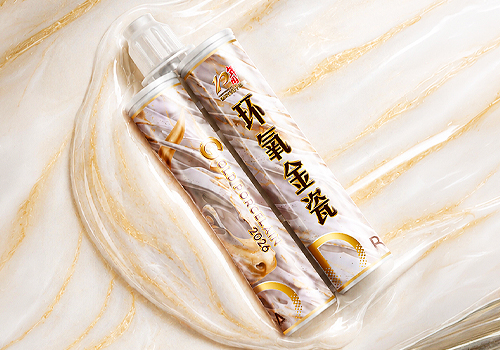
Experimentation plays an important role in my process, but I usually treat it as a practical cycle of comparison, adjustment, and verification rather than experimentation for its own sake. In the Golden Porcelain Bull packaging project, for example, I explored how the same visual identity could behave differently across variations of color, material, typography, and packaging structure. I compared the scale and placement of the bull motif, the hierarchy of product information, the use of gold elements, and the relationship between the graphic composition and the cylindrical form of the package. The white-and-gold and black-and-gold versions also required different visual balances even though they belonged to the same system. These comparisons helped me understand which elements needed to remain consistent and which could adapt to the physical carrier. For me, experimentation is most useful when it leads to a clearer, more coherent, and more practical final design.
5 What's the most unusual source of inspiration you've ever drawn from for a project?
One of the more unusual sources of inspiration for me has been the product category itself. In the Golden Porcelain Bull project, I was designing packaging for a functional building material—something that is usually judged first by performance rather than by visual expression. Instead of looking primarily to fashion or graphic trends, I drew inspiration from the qualities associated with the product and its context: strength, durability, protection, precision, and permanence. The silhouette of the Golden Porcelain Bull became a way to translate those qualities into a recognizable visual symbol, while the contrast between black, white, and gold helped give the product a more commemorative identity for the brand’s 10th anniversary. I find this kind of inspiration especially interesting because it comes from understanding what a product is and what it needs to communicate, rather than simply searching for an attractive visual reference.
6 What’s one thing you wish more people understood about the design process?
I wish more people understood that design is not only about the final visual result. What people see at the end is often the outcome of many decisions involving information hierarchy, structure, materials, production constraints, scale, and real-world use. A design may look simple when it is finished, but achieving that simplicity often requires repeated comparison, adjustment, and compromise. In packaging especially, a visual idea has to survive the transition from a flat layout to a physical object, and from a digital screen to actual production. For me, good design is not defined by how many elements are added, but by how clearly the necessary elements work together. The invisible decisions behind the final result are often just as important as the visible ones.
7 How do you navigate the balance between meeting client expectations and staying true to your ideas?
I do not see client expectations and creative ideas as two opposing sides. In most projects, the first step is to understand what the client is actually trying to achieve—what the product needs to communicate, who it is for, and what practical constraints the project has. Once those priorities are clear, I try to make my design decisions explainable rather than purely subjective. If I propose a certain hierarchy, material treatment, color relationship, or visual structure, I want to be able to explain how it supports the product, the brand, and the intended context. At the same time, staying true to my ideas does not mean protecting every initial concept. I am willing to adjust a design when feedback reveals a real problem, but I try not to compromise the core logic simply for decoration or short-term visual effect. The best outcome is usually one in which the client's objectives and the design idea become part of the same solution.
8 What were the challenges you faced while working on your award-winning design, and how did you overcome them?
One of the main challenges was balancing a commemorative, premium visual identity with the practical requirements of packaging for a functional building-material product. The design needed to feel distinctive for the 10th anniversary while still communicating clearly and remaining suitable for actual production. Another challenge was adapting the graphic system to the cylindrical packaging structure. Elements that work well on a flat layout can change significantly once they wrap around a three-dimensional surface. The scale and position of the Golden Porcelain Bull motif, the hierarchy of the product information, and the use of gold details all had to be considered in relation to the package's physical form. I addressed these challenges through repeated layout comparisons and adjustments. I established the bull motif, anniversary identity, and overall visual hierarchy as consistent elements, while allowing spacing, contrast, and composition to adapt to the black-and-gold and white-and-gold versions. By continually evaluating the design in relation to both the physical package and production requirements, I was able to keep the visual identity coherent without losing practicality.
9 How do you recharge your creativity when you hit a creative block?
When I reach a creative block, I usually stop forcing the design and temporarily change the way I am looking at the problem. Photography is one of the most effective ways for me to reset. Looking through a camera makes me pay attention again to light, proportion, texture, material, and small details that I may overlook when I have been staring at a screen for too long. I also like to return to the physical product itself rather than continue searching for more visual references. Holding the object, observing its material and structure, or reconsidering how people will actually encounter it often reveals something that was missing from the design. Sometimes the best way to move forward is simply to step away from the problem. When I return with a clearer eye, I can usually distinguish what is essential from what I was unnecessarily complicating.
10 What personal values or experiences do you infuse into your designs?
I bring a strong sense of clarity, responsibility, and practicality into my work. I believe design should not make people work harder to understand a product. It should organize information, guide attention, and communicate with as little unnecessary complexity as possible. My experience in design and commercial photography has also shaped the way I work. Photography taught me to pay close attention to light, material, proportion, texture, and the relationship between an object and its surroundings. Design taught me to look beyond the image and consider structure, information, production, and how the work will function in real use. I also value honesty in the design process. I prefer to work from the actual characteristics and constraints of a product rather than create a visual story that has little connection to what the product really is. For me, the strongest design is often the one in which visual expression, function, and reality reinforce one another.
11 What is an advice that you would you give to aspiring designers aiming for success?
My advice would be to focus less on finding a personal style too early and spend more time learning how to understand problems. Style can develop naturally through experience, but the ability to observe carefully, ask the right questions, and make sound decisions is much harder to replace. Work with real constraints whenever possible. Learn how materials behave, how things are produced, how information is read, and how people actually encounter the final design. A concept becomes much stronger when it can survive beyond the screen and function in the real world. I would also encourage young designers to stay curious outside their own field. Photography, architecture, manufacturing, writing, and everyday objects can all change the way you think about design. Success may look different for everyone, but building a practice based on observation, discipline, and continuous learning gives you something more lasting than simply following trends.
12 If you could collaborate with any designer, past or present, who would it be and why?
If I could collaborate with any designer, I would choose Dieter Rams. What I admire most about his work is not a particular visual style, but the discipline behind it—the belief that design should be understandable, useful, restrained, and closely connected to how an object actually functions. I would be especially interested in seeing how he approaches the point at which information, physical form, materials, and user experience meet. My own work often begins with a similar question: what is truly necessary, and what can be removed without weakening the product's identity or communication? A collaboration with him would be valuable not because I would want to imitate his aesthetic, but because I would like to understand how such rigorous thinking could challenge my own decisions and help me see familiar design problems from a more disciplined perspective.
13 What's one question you wish people would ask you about your work, and what's your answer?
I would want people to ask me: How do you know when a design is truly successful? For me, success is not determined by appearance alone. A design succeeds when people can understand what they are looking at, important information is clear, the visual identity is recognizable, and the idea continues to work when it moves from the screen into production and real use. I also believe successful design should feel inevitable in retrospect—as if the elements belong where they are and unnecessary complexity has been removed. Achieving that usually requires many decisions that the audience may never notice. If the final result communicates clearly, functions naturally, and remains faithful to the product itself, then I feel the design has done its job.