2026 | Professional

The Urban Lotus: A Sustainable Mobility Hub in Pingtung
Entrant
TSAI ARCHITECT & ASSOCIATES
Category
Architectural Design - Infrastructure
Client's Name
Pingtung County Government
Country / Region
Taiwan
Gallery



About The Entry
1. Context & Concept
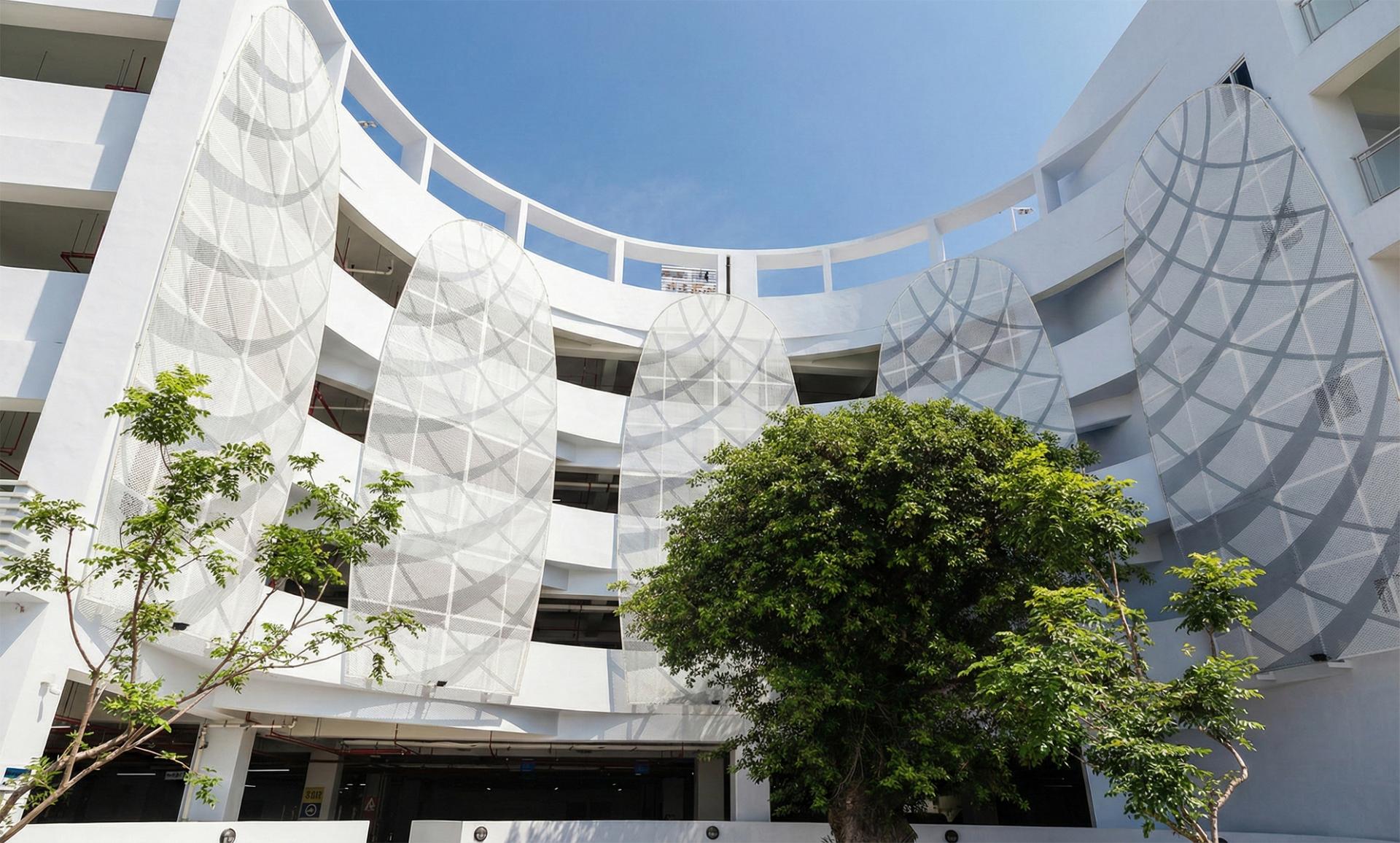
This project is located in Pingtung City, Southern Taiwan, a region characterized by its tropical climate and intense sunlight. To respond to local governance expectations and reflect the city's identity, the architectural form draws inspiration from the "Lotus," a flower that blooms abundantly in Pingtung's summers. We transformed the organic curves of lotus petals into architectural vocabulary, creating a distinct urban landmark that softens the rigidity of traditional infrastructure.
2. Climate Adaptation & Sustainable Skin
Addressing the tropical heat, the design adopts a "breathing architecture" strategy. The facade primarily utilizes expanded metal mesh and perforated panels. Acting like the veins of a leaf, this permeable skin effectively filters harsh sunlight for shading while facilitating natural cross-ventilation, significantly reducing the energy consumption required for mechanical cooling.
3. Ecological Preservation & Decarbonization
Respecting the site's original context, existing trees were preserved in situ. These trees serve as a green buffer zone, softening the architectural boundaries and playing a crucial ecological role by absorbing vehicle carbon emissions, thereby merging landscape aesthetics with carbon reduction goals.
4. Human-Centric Functionality
Moving beyond traditional parking structures, this project emphasizes pedestrian safety through clearly separated circulation paths. Additionally, public restrooms are integrated to enhance user convenience, transforming the facility into a friendly urban node.
5. Commercial Viability & Urban Safety
To ensure operational sustainability, advertising spaces are subtly integrated into the facade design, generating revenue without compromising architectural aesthetics. The lighting design is a key feature; at night, the building glows like a lantern, highlighting the structural beauty of the "Lotus" form while enhancing neighborhood safety.
The Urban Lotus redefines the typology of a parking structure, transforming a utilitarian facility into a sustainable civic landmark. By weaving Pingtung’s floral imagery with climate-responsive strategies—natural ventilation and preserved greenery—the design achieves a harmony between nature and infrastructure. It stands not just as a transit node, but as a vibrant, breathing sculpture that enhances urban safety and ecology, proving that everyday functional necessities can also be profound architectural statements.
Credits

Entrant
Fujian Xiangshang Culture Communication Co., Ltd.
Category
Interior Design - Cultural

Entrant
Lights on U
Category
Fashion Design - Jewelry

Entrant
ENGINEAI
Category
Product Design - Robotics
Entrant
Printing Tech. Research Inst., Kaohsiung Printing Assn., ANGLE visual integration
Category
Conceptual Design - Exhibition & Events