2026 | Professional

Lensi Storage Device
Entrant
ShangRao COOKTIME KITCHENWARE CO., LTD
Category
Product Design - Furnishings
Client's Name
-
Country / Region
China
Gallery




About The Entry
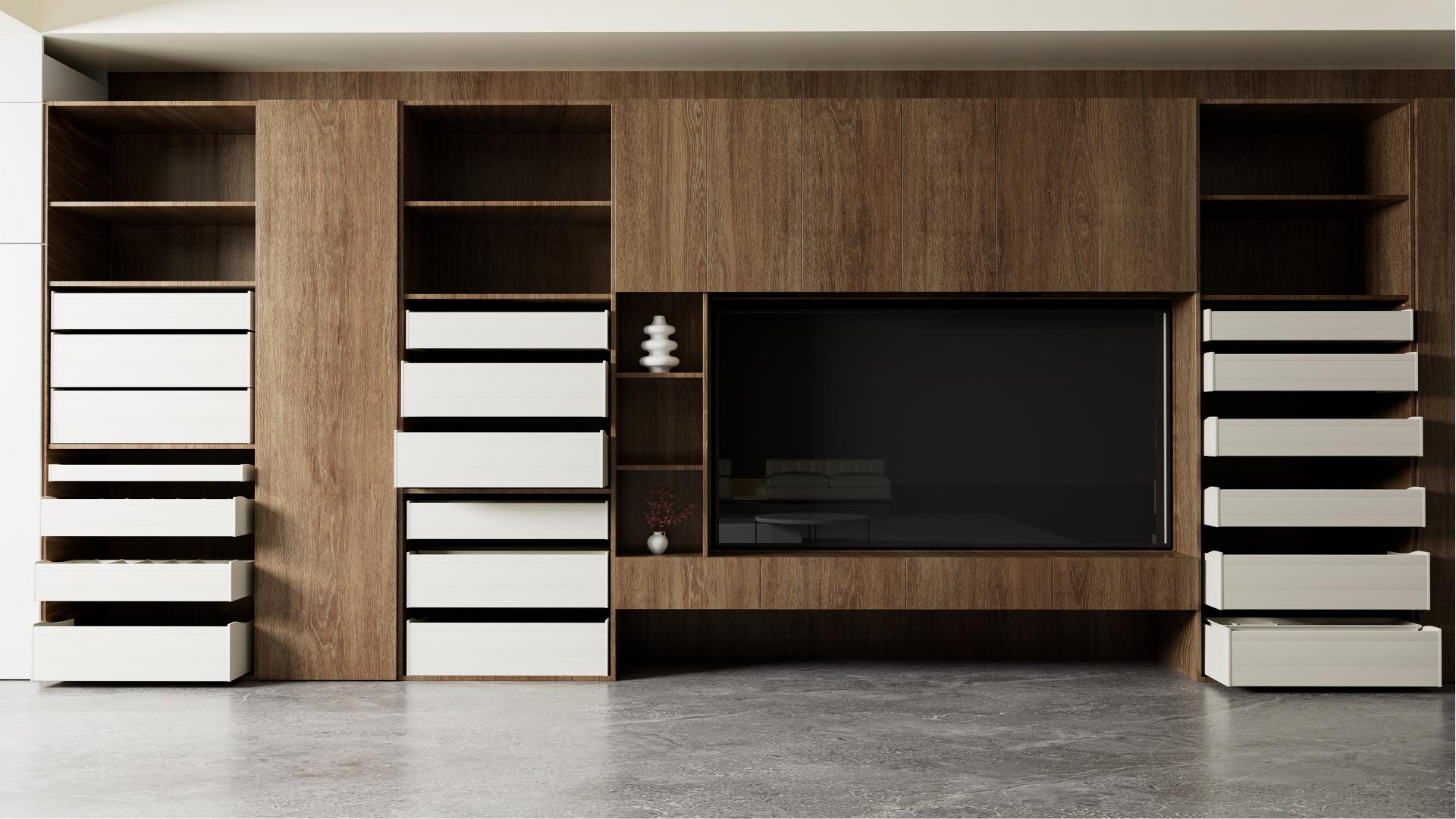
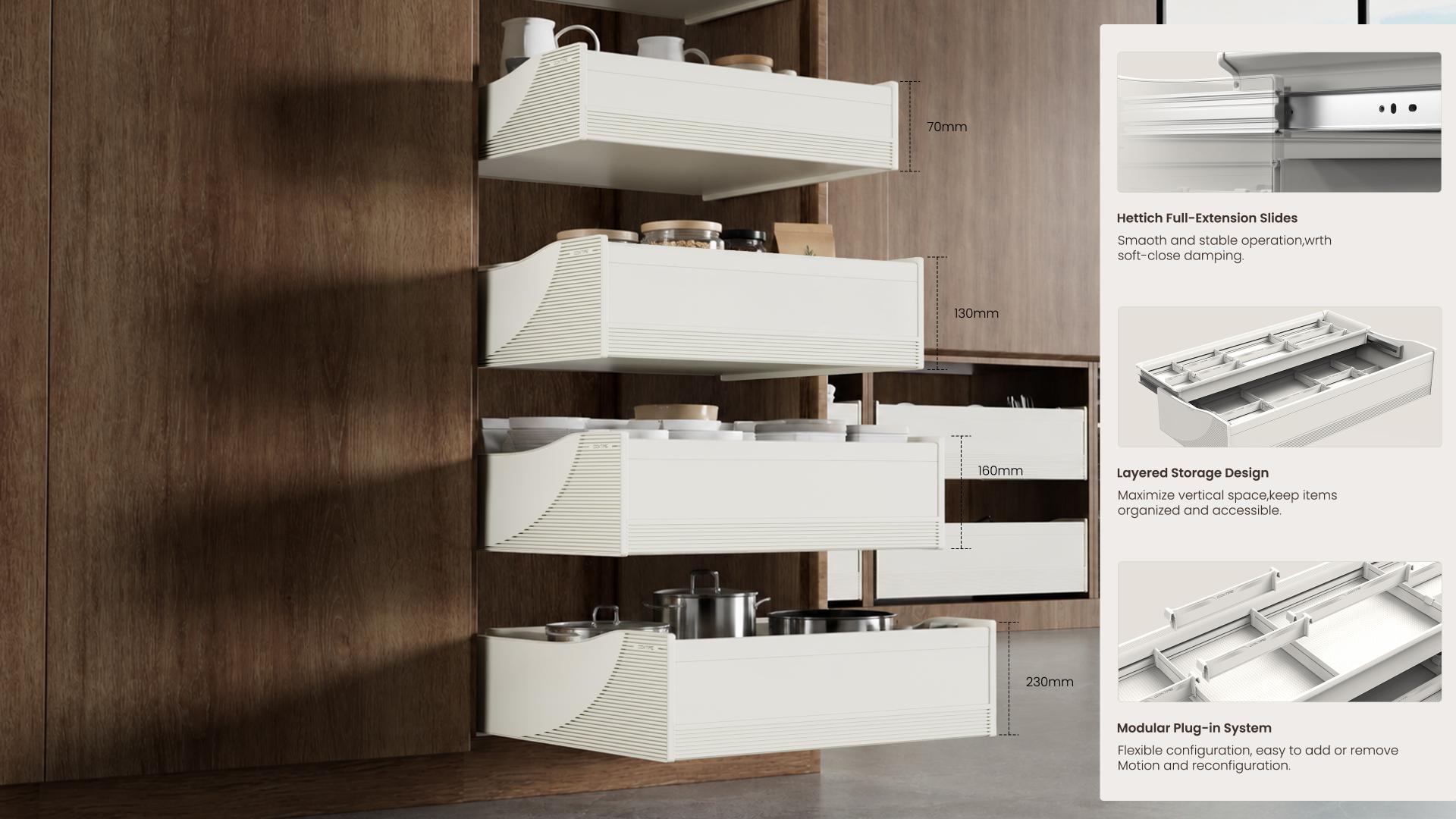
Every object should have a defined place, with storage and retrieval kept intuitive, hygienic and safe. This principle guides the Lensi Storage Device built around the relationship between people, belongings and space. Storage locations are planned according to movement paths, item dimensions, properties and frequency of use.Standardised drawers, functional modules and cabinet units extend the same logic across the whole home, including kitchens, dining areas, living rooms, entryways, wardrobes and utility spaces. Inspired by the flexibility of flowing water and the stability of mountain rock, the design combines adaptability with an underlying sense of order. As rooms, possessions and daily routines change, individual configurations can be reorganised while the shared platform remains consistent. The side panel defines the visual identity of the Lensi Storage Device. Its section is shaped in two directions: horizontally, it tapers from approximately 10.5 mm at the front to 8 mm at the rear; vertically, the outer edge rises above the inner edge. Together, these transitions form a continuous three-dimensional surface that gradually becomes lighter toward the back, reducing the rigid, mechanical character associated with conventional straight-sided hardware. Fading ripple textures, generous negative space and the integrated COOKTIME mark translate the water-and-mountain concept into a clear, restrained visual order. Die-cast aluminium forms the main structural frame, while the warm stone tone and polymer covers soften its hard-edged appearance, helping the system sit more naturally within domestic interiors. The same side-panel geometry extends across both door-linked and independent pull-out configurations. In the former, the cabinet front is directly connected to the drawer, while the latter is installed independently behind single- or double-door cabinets, maintaining a consistent design language across different cabinet structures. The system supports both door-linked and independent pull-out installations. In the door-linked configuration, the cabinet front is connected directly to the drawer so both open in a single movement. The independent pull-out version sits behind a single- or double-door cabinet and can be accessed after the cabinet door is opened. These two configurations allow the storage system to work with different cabinet structures and opening arrangements.
Credits

Entrant
Shenzhen Space Digital Technology Co., Ltd.
Category
Interior Design - Showroom / Exhibit
Entrant
Bigking Interior Design/ Nick Huang
Category
Interior Design - Residential
Entrant
Future Life Interior Design
Category
Interior Design - Showroom / Exhibit

Entrant
BEARWAKE
Category
Product Design - Toys