2026 | Student

A Smart Assistive Exoskeleton for Mobility
Entrant
Nanjing Institute of Technology
Category
Conceptual Design - Healthcare
Client's Name
-
Country / Region
China
Gallery


About The Entry
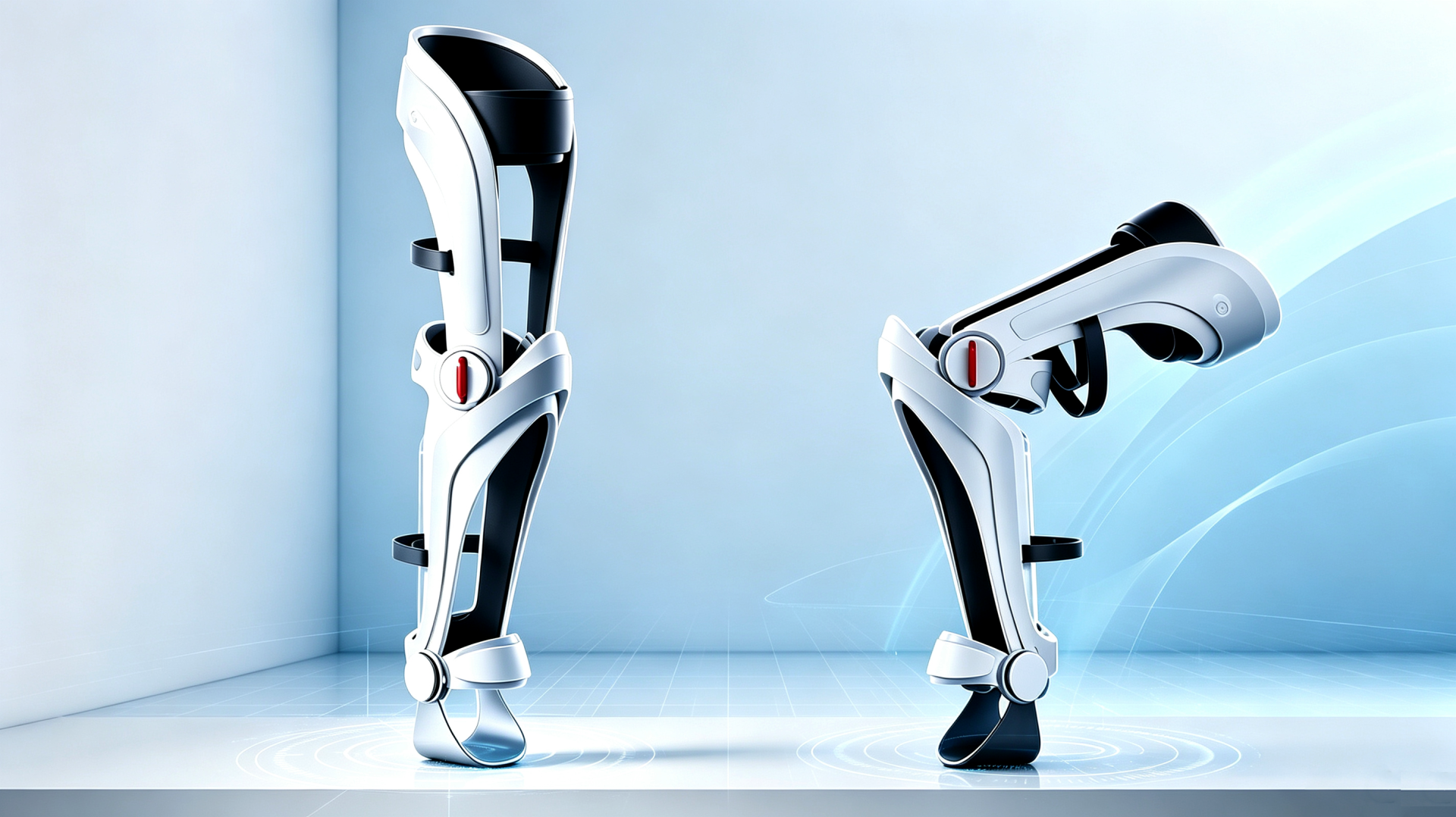
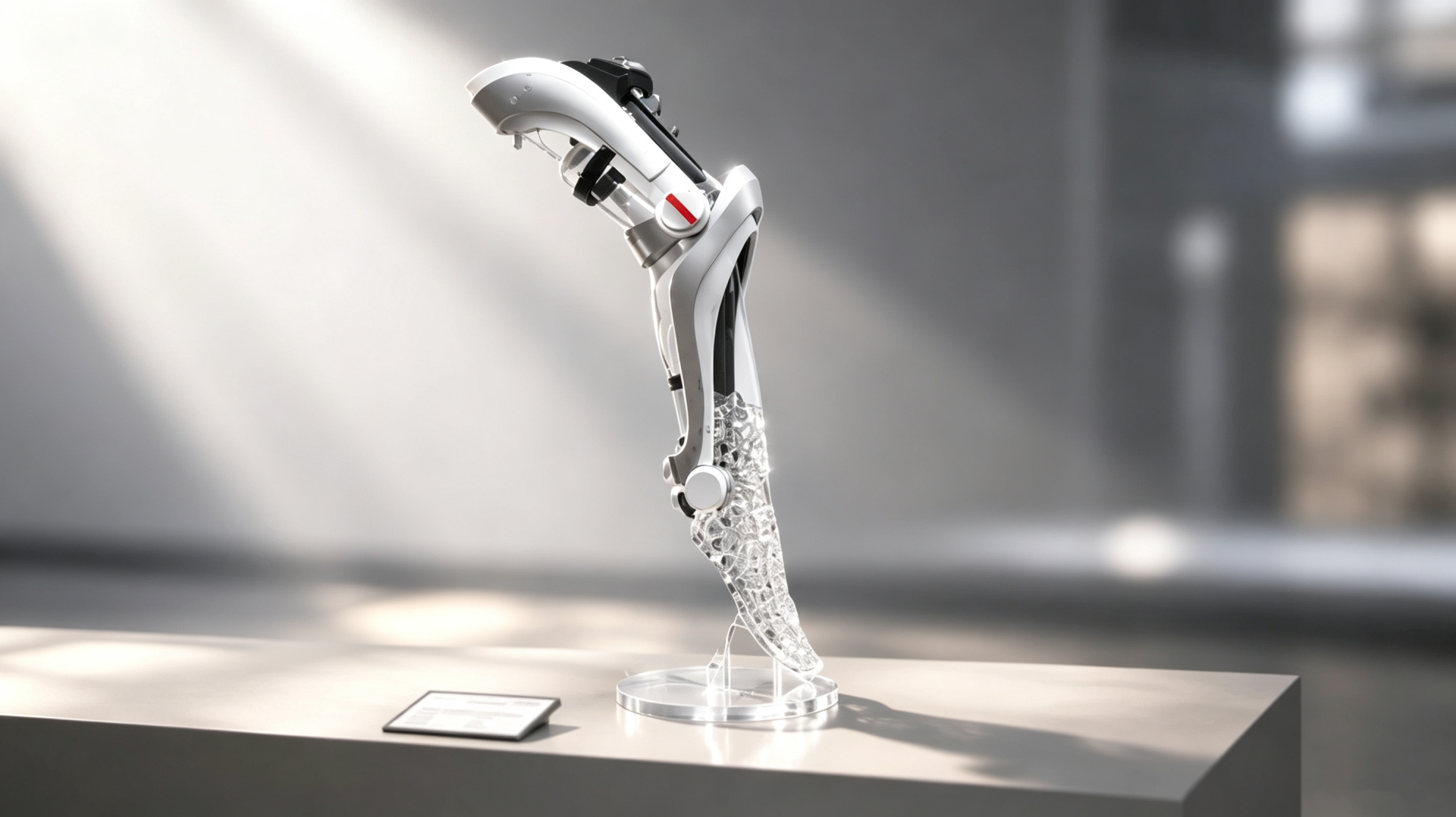
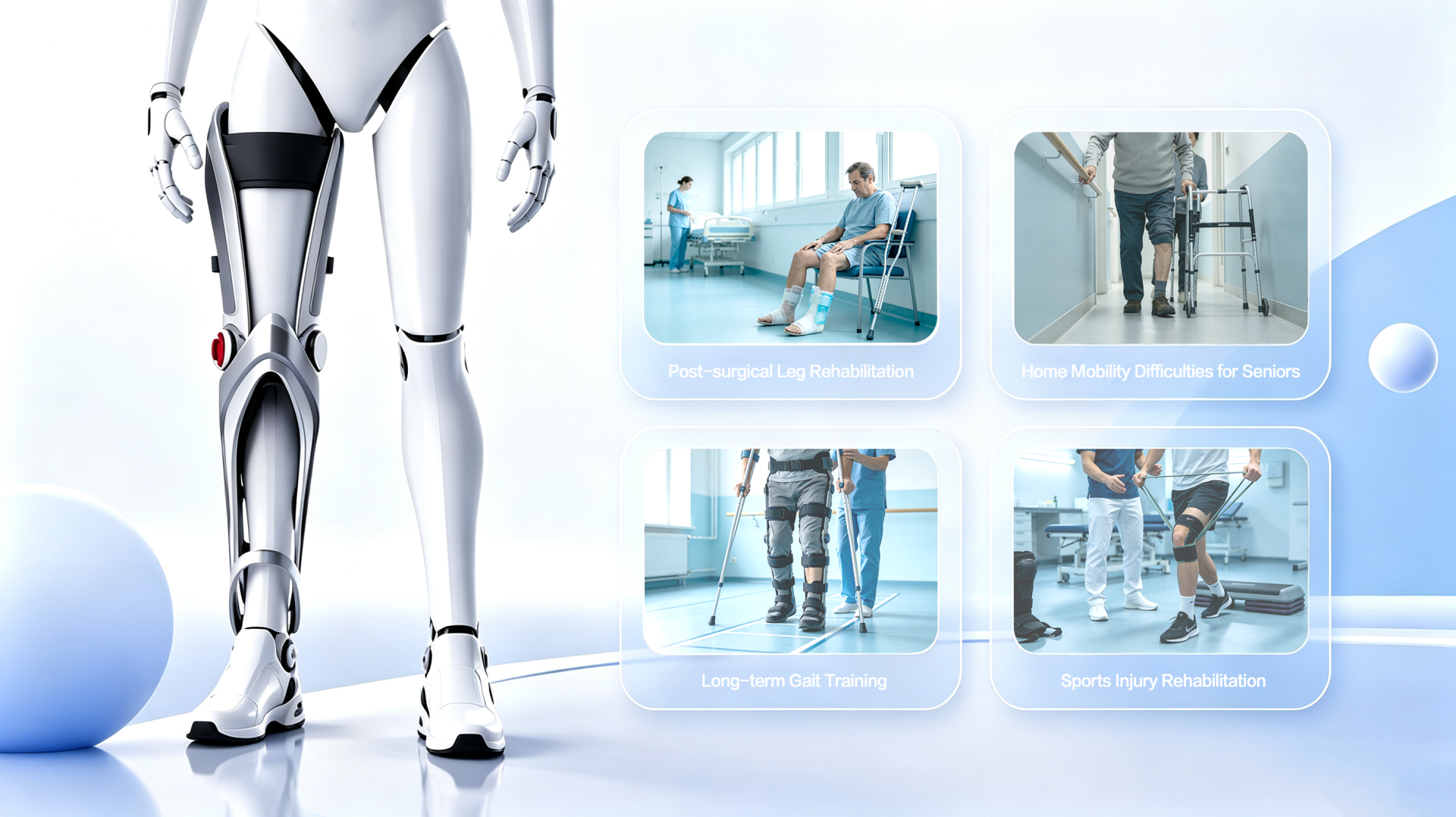
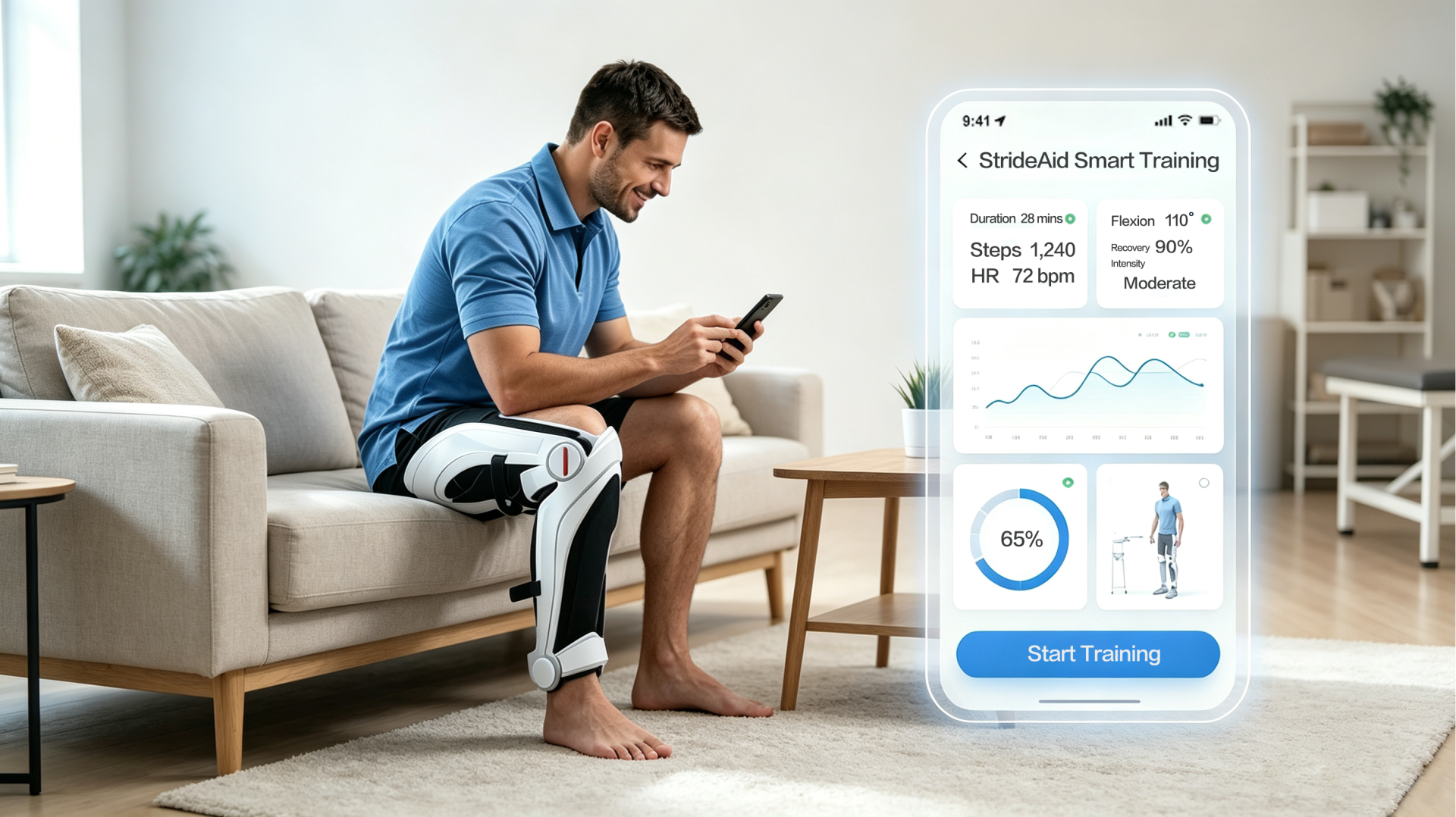
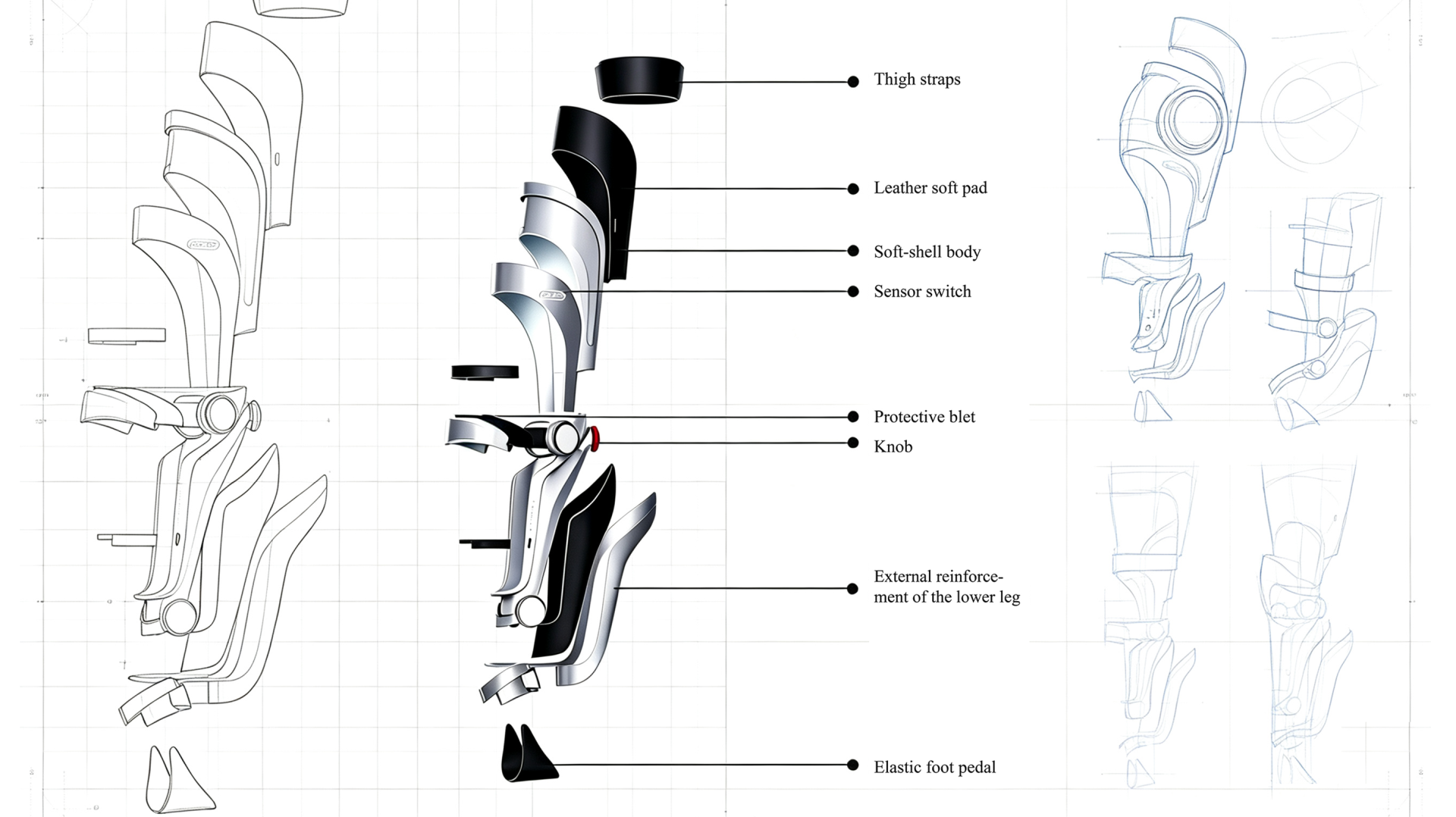
Global aging is accelerating, and more people now face lower limb mobility impairments. In response, A Smart Assistive Exoskeleton for Mobility was created around the philosophy of "Human-Machine Symbiosis and Natural Mobility." The design targets everyday challenges such as muscle weakness, joint discomfort, and post-operative gait instability. Rather than acting as a cold, bulky mechanical aid, it focuses on synergistic human-machine movement. The device seamlessly integrates dynamic support, intuitive adjustment, and all-day comfort. It brings assistive technology directly into daily walking, bridging the gap between rehabilitation equipment and everyday life. Structurally, the exoskeleton adopts a modular rigid-flexible composite system tailored to lower-limb biomechanics. The bionic thigh frame and the external reinforcement of the lower leg work together to guide and distribute gait loads effectively. For user comfort, direct-contact areas feature breathable soft-shell bodies and skin-friendly leather soft pads. These components prevent localized pressure sores and skin chafing during prolonged wear. An integrated manual knob allows easy, millimeter-level adjustments with one hand, adapting quickly to limb swelling or activity changes. At the base, the elastic foot pedal delivers lightweight support while storing and releasing energy upon ground contact. Together, they achieve an optimal balance of stability, freedom of motion, and comfort. The device achieves a complete rehabilitation loop through its integrated hardware and software architecture. A responsive bionic joint module senses gait intentions in real time and delivers precise assistive torque. It smoothly assists both level walking and stair climbing. To overcome the monotony of traditional recovery, the companion StrideAid app provides diverse training modes, including large-range, small-range, gait detection, and interactive entertainment. A real-time 3D digital twin displays posture status clearly, supported by long-lasting battery life. The platform also links user profiles, gait history, and clinician communication channels. This builds a reliable continuum of care between clinical therapy and home rehabilitation. The design pays close attention to the user's psychological well-being through a thoughtful "de-medicalized" aesthetic. It removes the exposed mechanical clutter and clinical feel common to conventional orthoses. Instead, the design adopts dynamic streamlined contours, a modern silver-gray palette, and a distinctive red joint accent.
Credits

Entrant
brandston partnership inc.
Category
Lighting Design - Architectural Lighting

Entrant
Shanghai Jingqiao Intelligent Technology Co., Ltd.
Category
Product Design - Baby, Kids & Children Products

Entrant
Limnage
Category
Packaging Design - Wine, Beer & Liquor
Entrant
Jinmao Puyi Pinju (Shanghai) Technology Co., Ltd.
Category
Interior Design - Residential