2025 | Student

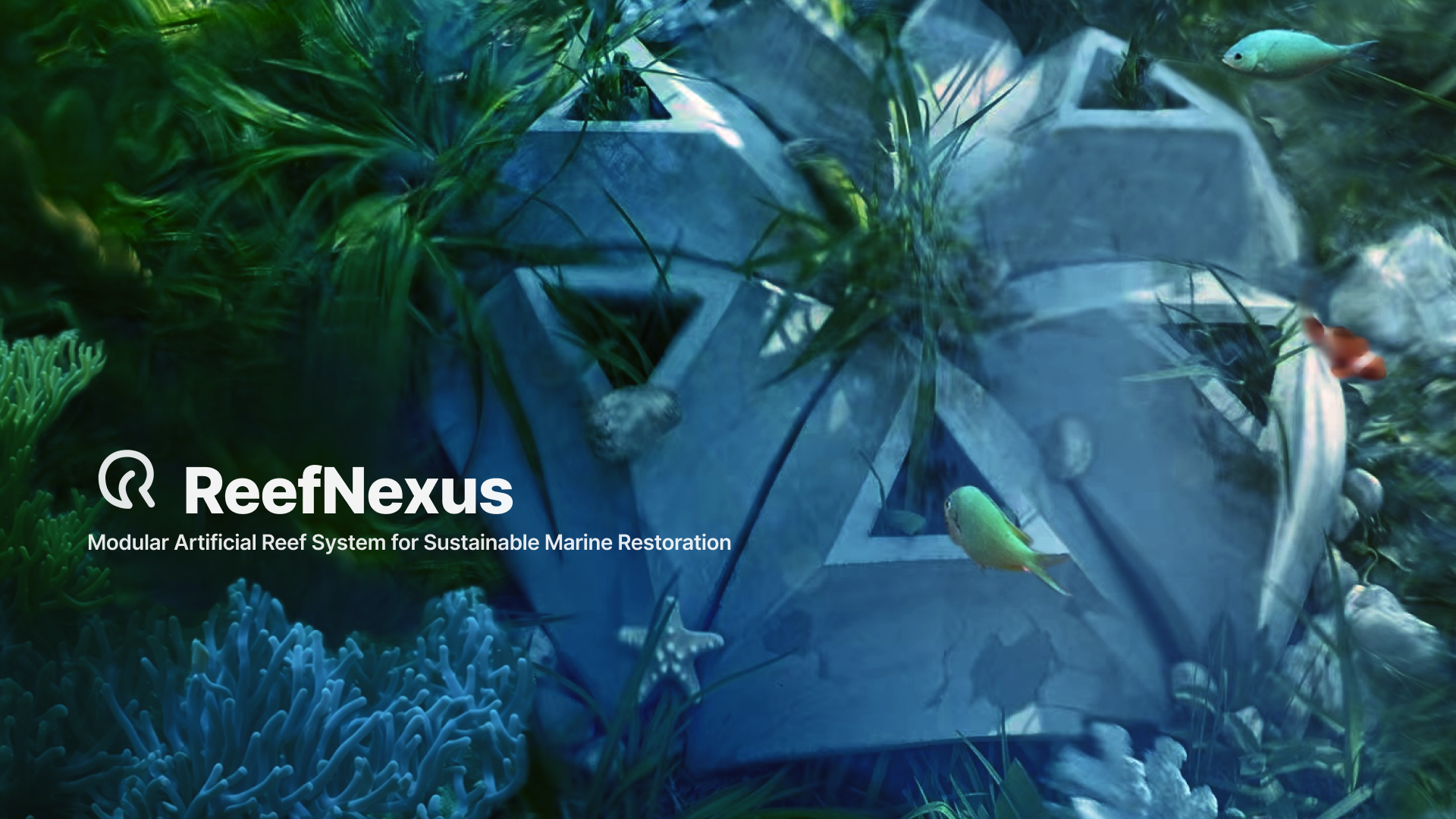
ReefNexus: Modular Artificial Reef System
Entrant Company
Xi'an Jiaotong University, Politecnico di Milano
Category
Conceptual Design - Green
Client's Name
Country / Region
China
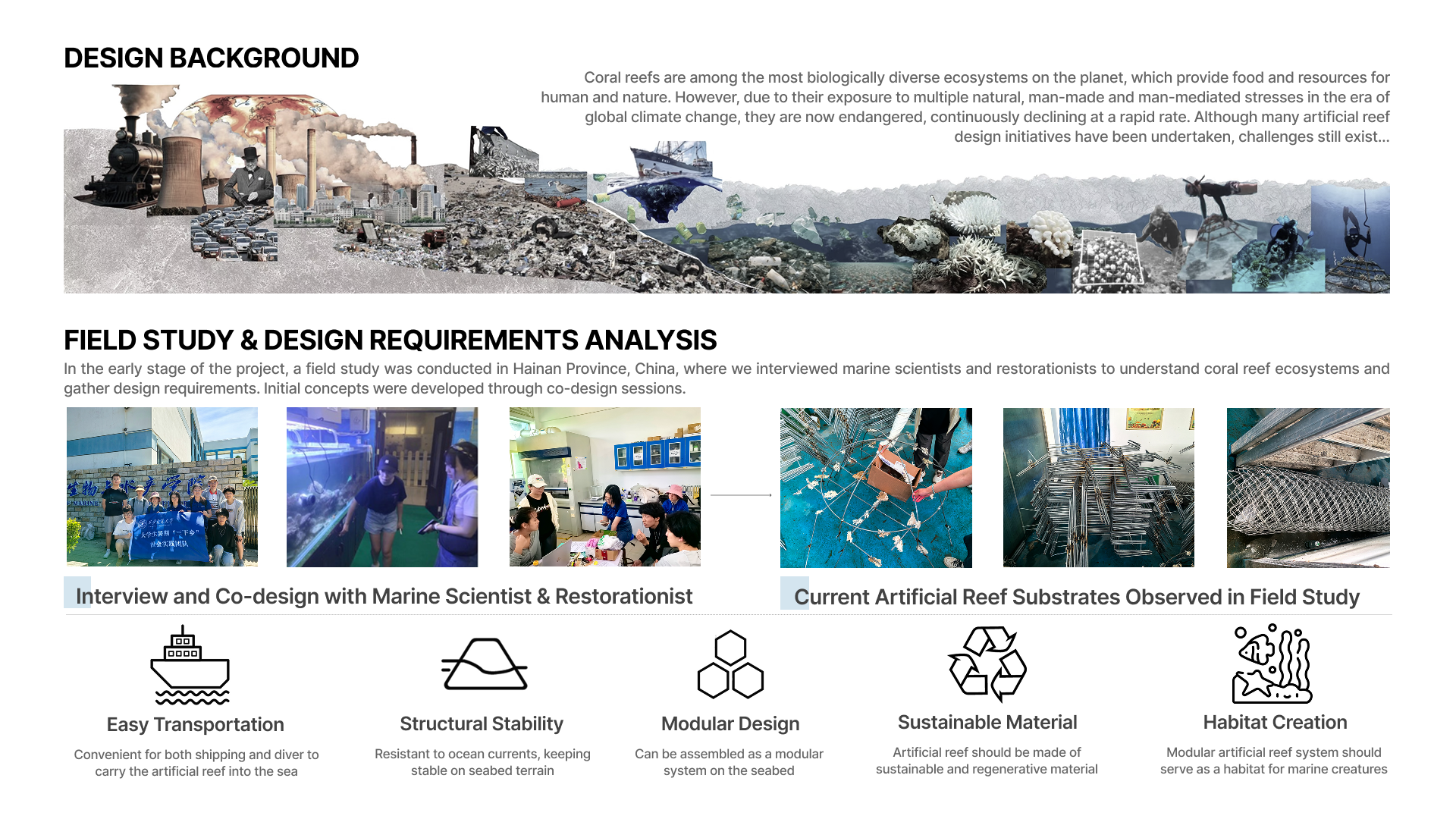
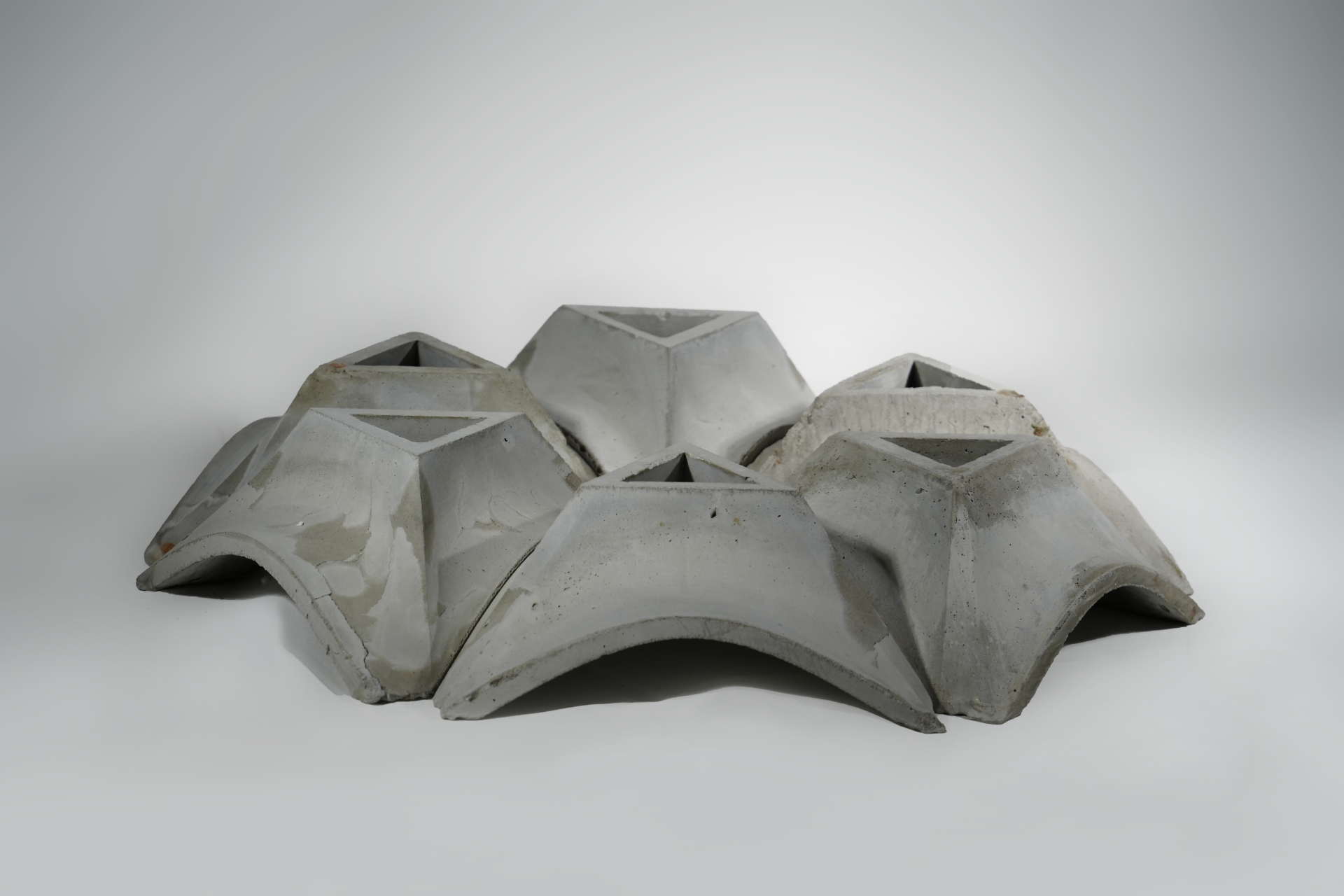
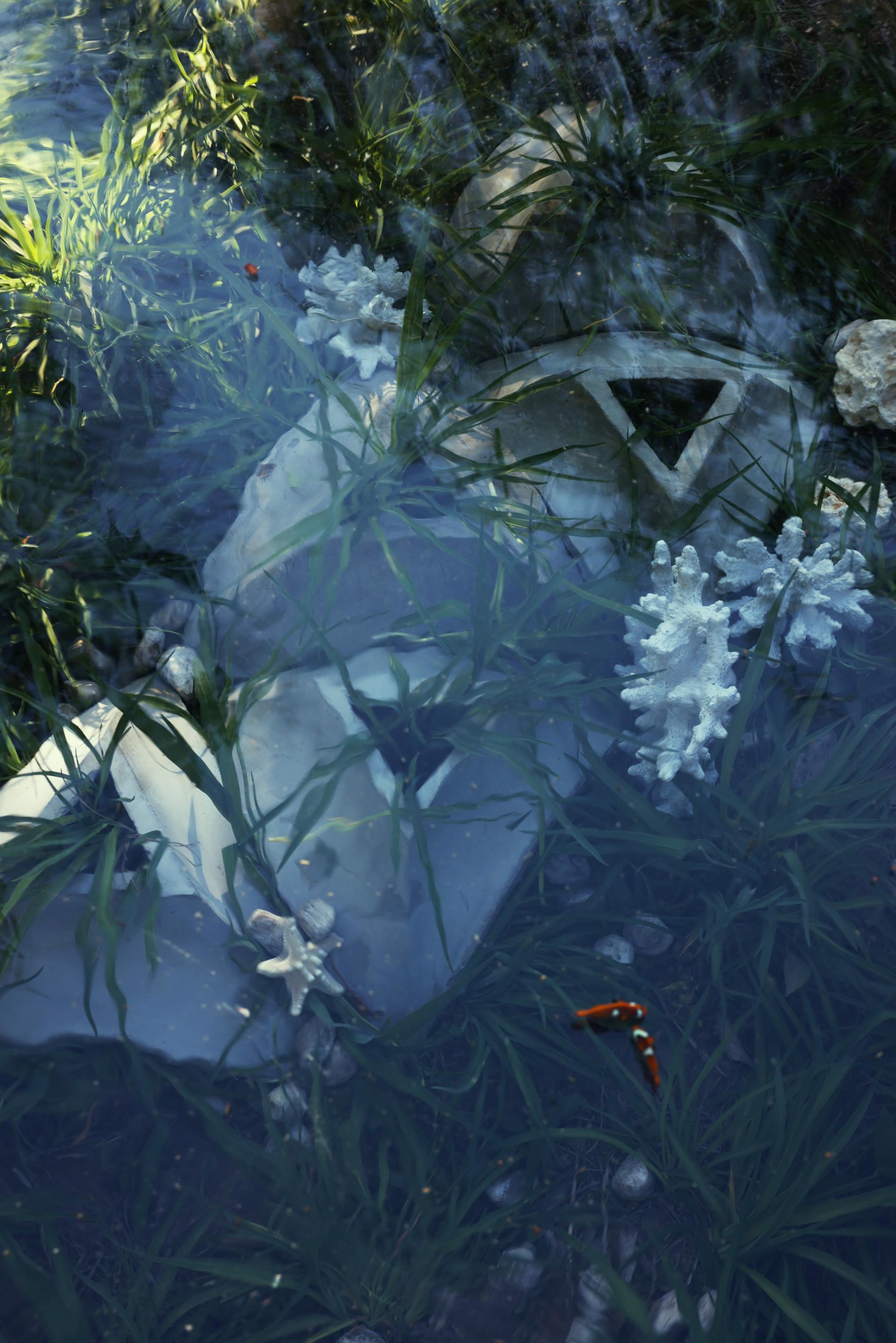
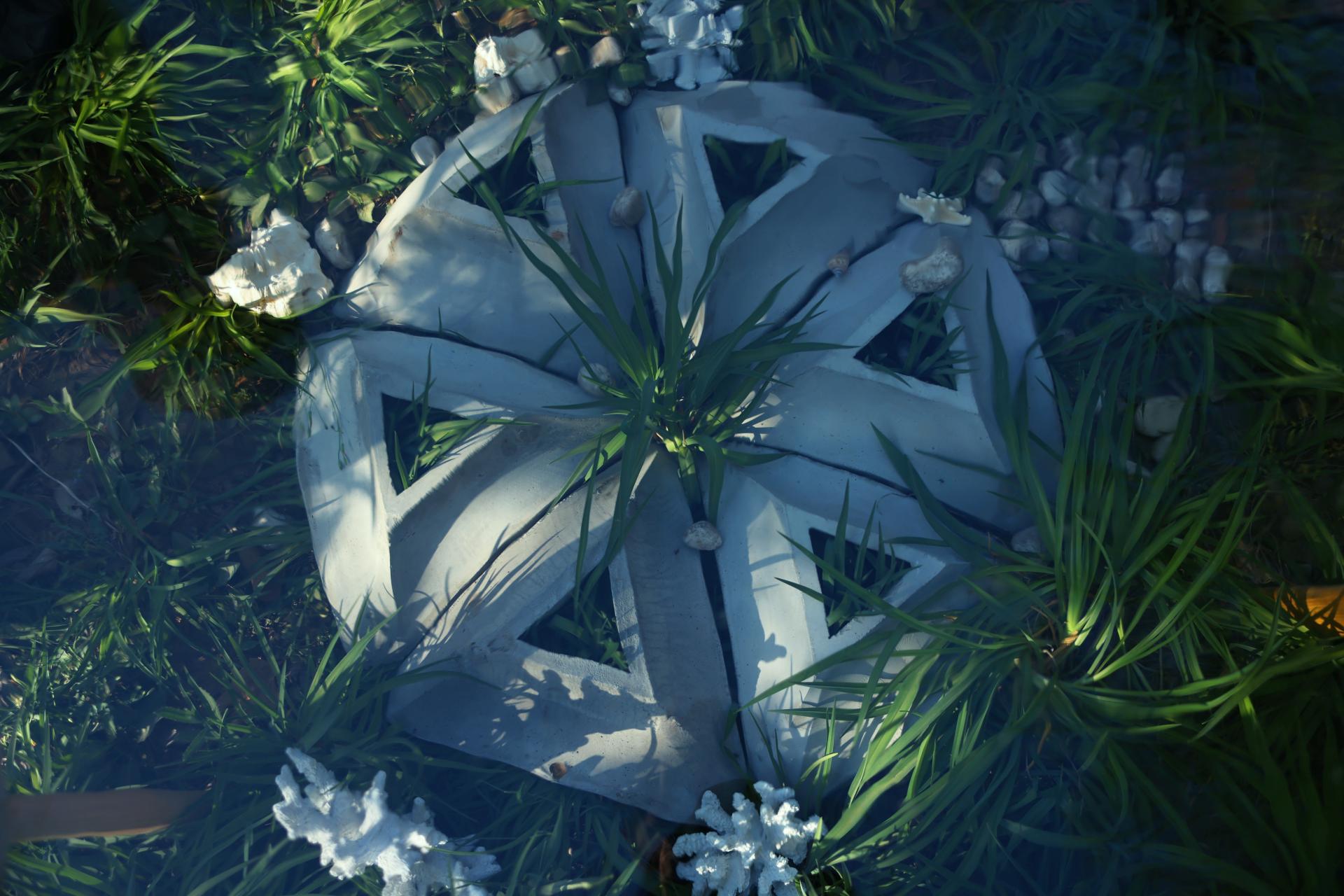
ReefNexus is a modular artificial reef system that merges ecological engineering with parametric design to support sustainable marine restoration. In response to the escalating threats facing coral reefs due to climate change and human activities, this project seeks to provide a scalable, efficient, and ecologically beneficial solution to underwater habitat loss.
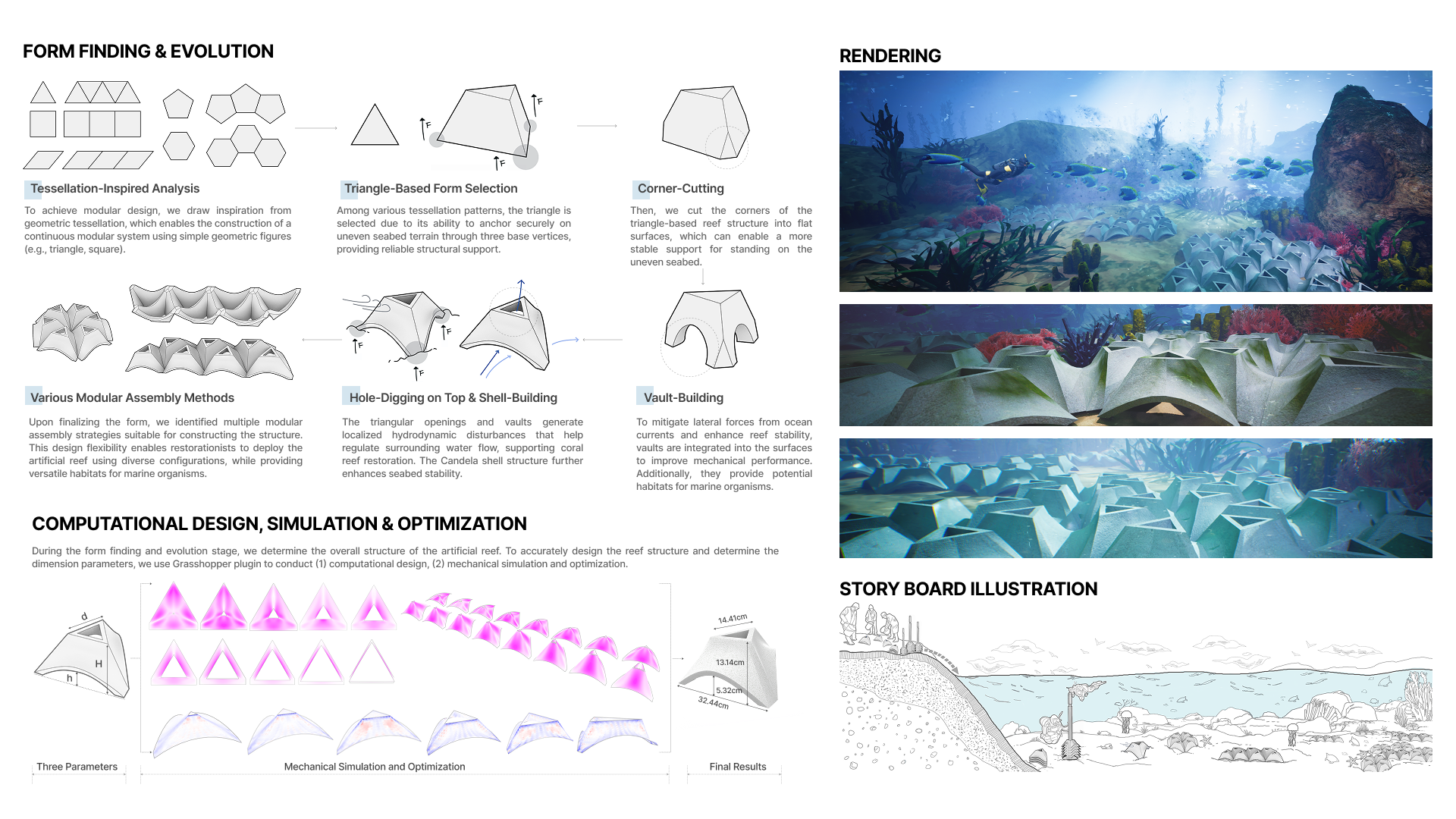
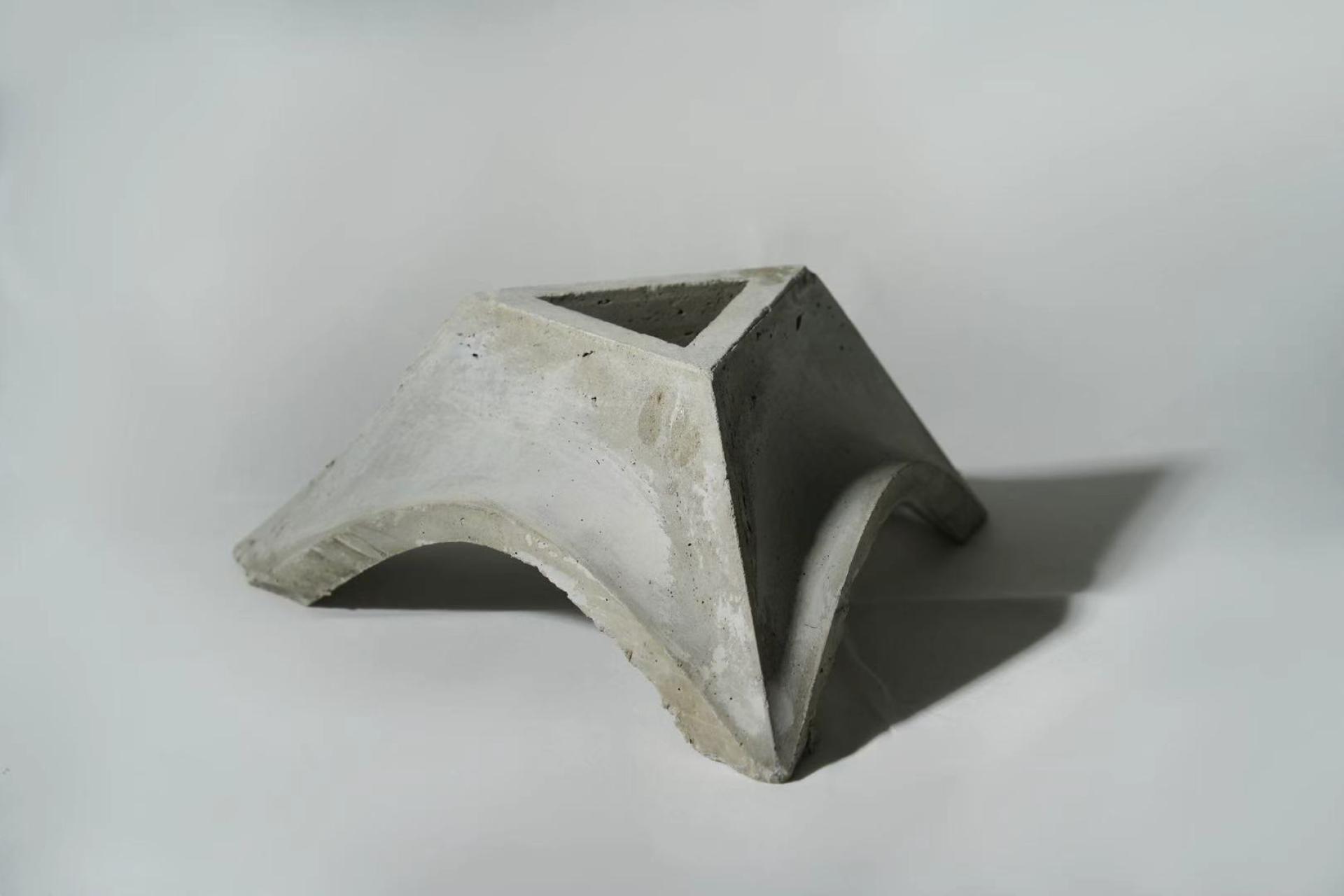
We conducted a field study through interviewing marine scientists, while observing existing artificial reef structures to define the design requirements: (1) easy transportation, (2) structural stability, (3) modular design, (4) sustainable material, and (5) habitat creation. And the Geometric Mosaic patterns provide us with crucial design inspirations because of its ingenious spatial division and tight interlocking features.The modules feature a Candela shell vault design that disperses oceanic impact forces while providing topological interlocking, making them resilient against strong currents. Using computational tools such as Grasshopper, the design team optimized key structural parameters (vault height, overall height, and triangle edge lengths) to balance fluid dynamics and ecological integration.
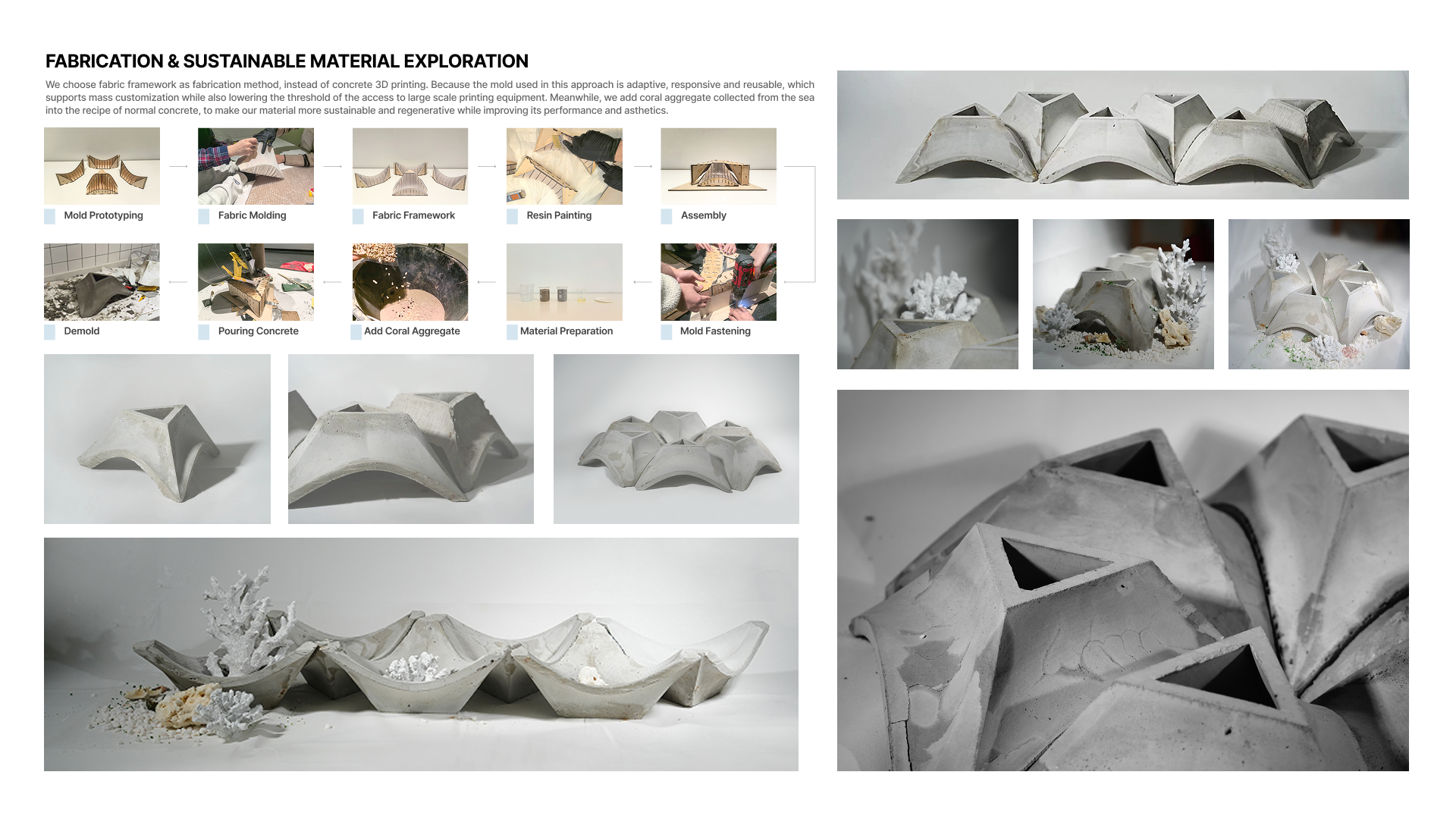
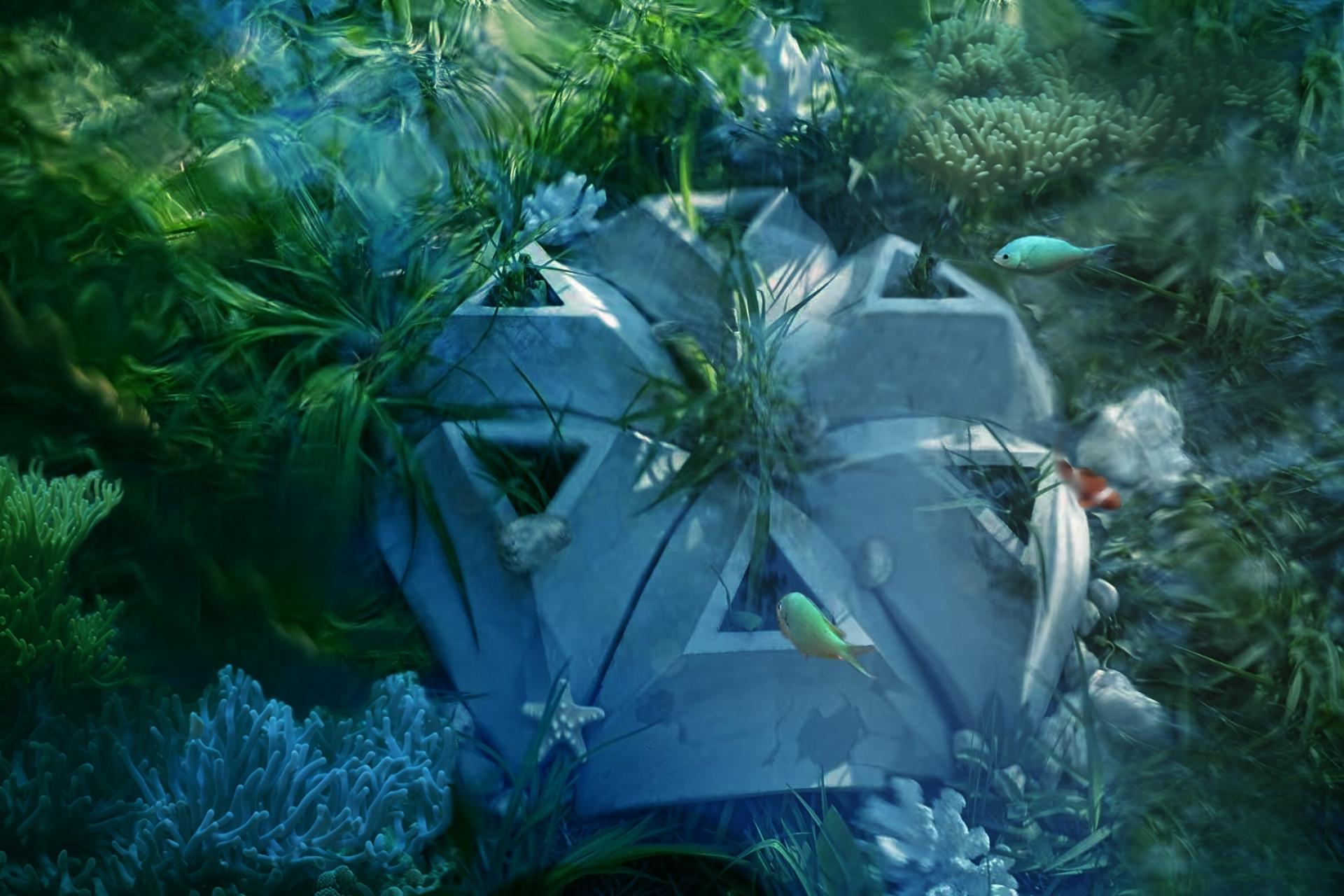
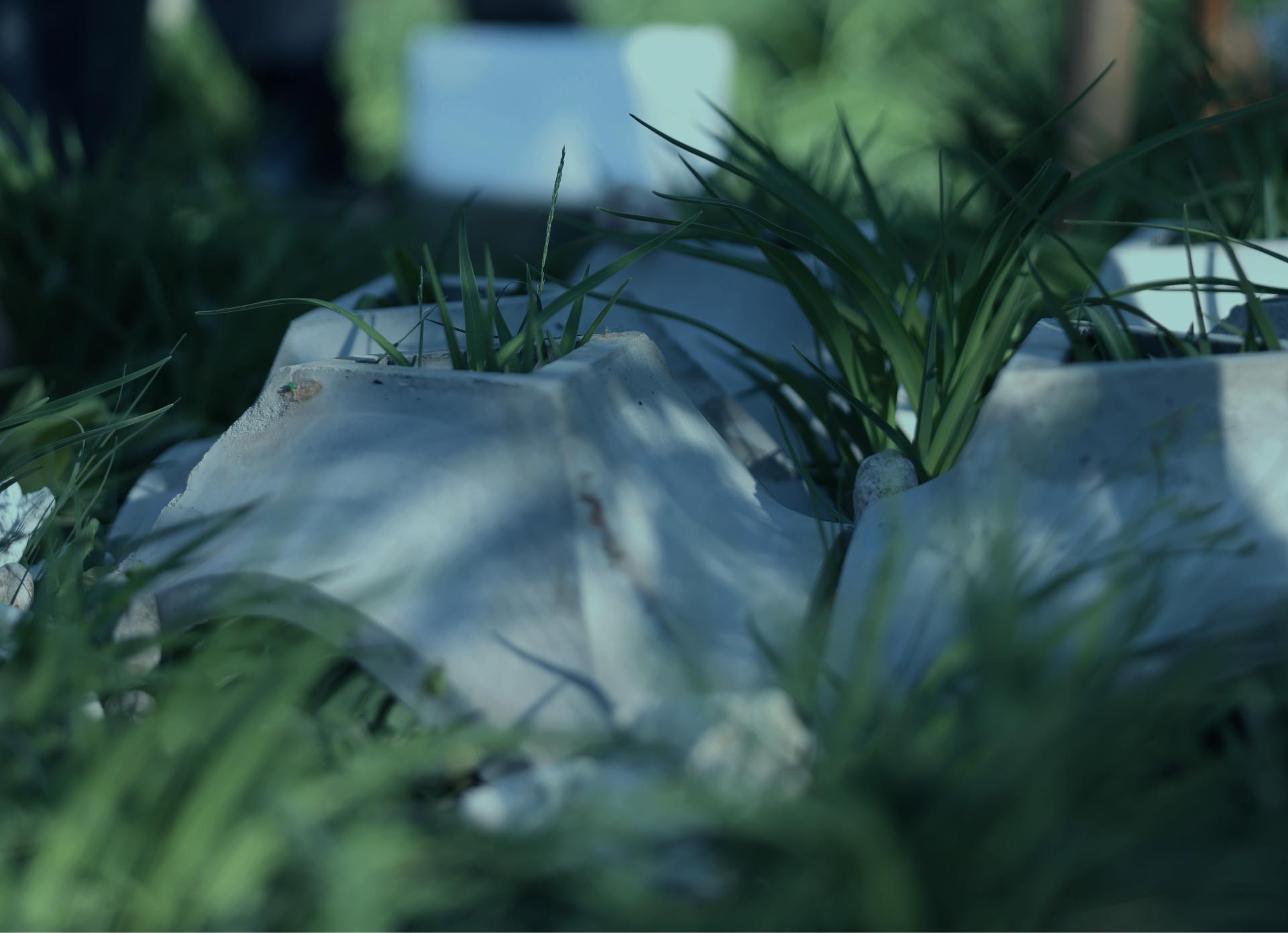
Technologically, ReefNexus leverages a sustainable fabrication strategy using fabric-based concrete casting, bypassing the energy-intensive and equipment-heavy 3D printing methods. Coral aggregates collected from marine environments are integrated into the concrete mixture, enhancing both biological attachment and material compressive strength. These bio-receptive surfaces accelerate biofilm formation and calcification, ultimately enabling the reef to become a self-sustaining ecosystem that boosts marine biodiversity.
In terms of deployment, ReefNexus modules are disassembled and stacked for compact transport using a buoyancy-assisted frame, enabling high-efficiency marine installation. Once submerged, 3–6 modules form current-resistant reef clusters, adaptable to depths ranging from 5 to 30 meters.
What sets ReefNexus apart is its hybrid focus on ecological compatibility and manufacturing accessibility. The system’s distributed fabrication approach allows for on-site production with minimal energy use—just 17% of traditional 3D printing—and lower costs. Additionally, the modularity enables dynamic scalability and customizability, addressing diverse environmental needs across regions.
By realizing “structure as ecosystem,” ReefNexus pioneers a new paradigm in marine infrastructure design—one that is environmentally regenerative, economically feasible, and technologically forward-looking.
Credits

Entrant Company
SHENZHEN ORACLE CREATIVE DESIGN CO.,LTD.
Category
Packaging Design - Non-Alcoholic Beverages
Entrant Company
Bao Xueshi
Category
Interior Design - Restaurants & Bars

Entrant Company
Pinjyu Decoration
Category
Interior Design - Living Spaces
Entrant Company
Nobuaki Miyashita / MR STUDIO Co., Ltd.
Category
Interior Design - Office