2026 | Professional

Adjusted Health + Performance
Entrant Company
Perpetuum Designs
Category
Interior Design - Clinic / Hospital Rooms
Client's Name
Dr. Jawad Salman
Country / Region
United States
Adjusted Health + Performance
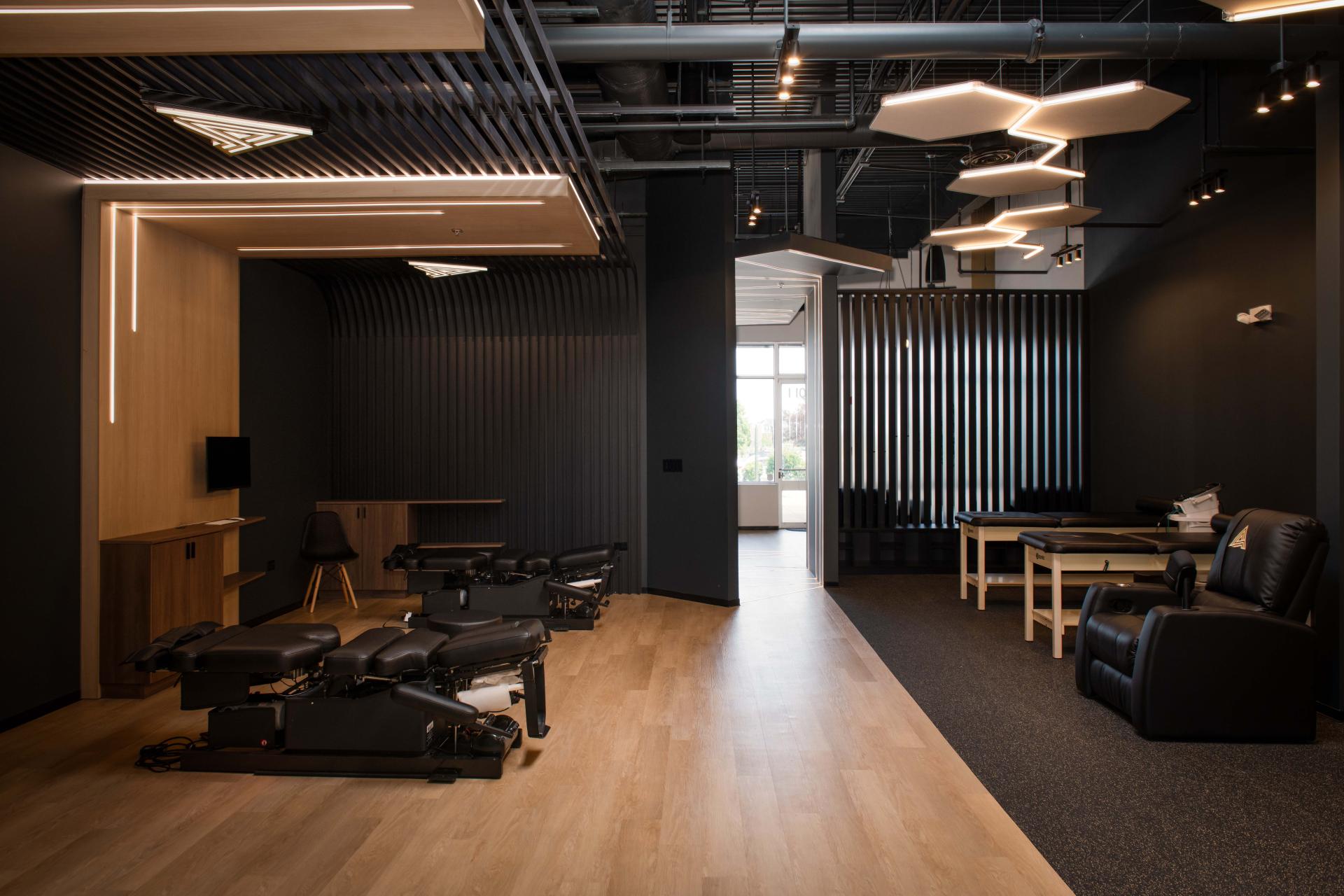
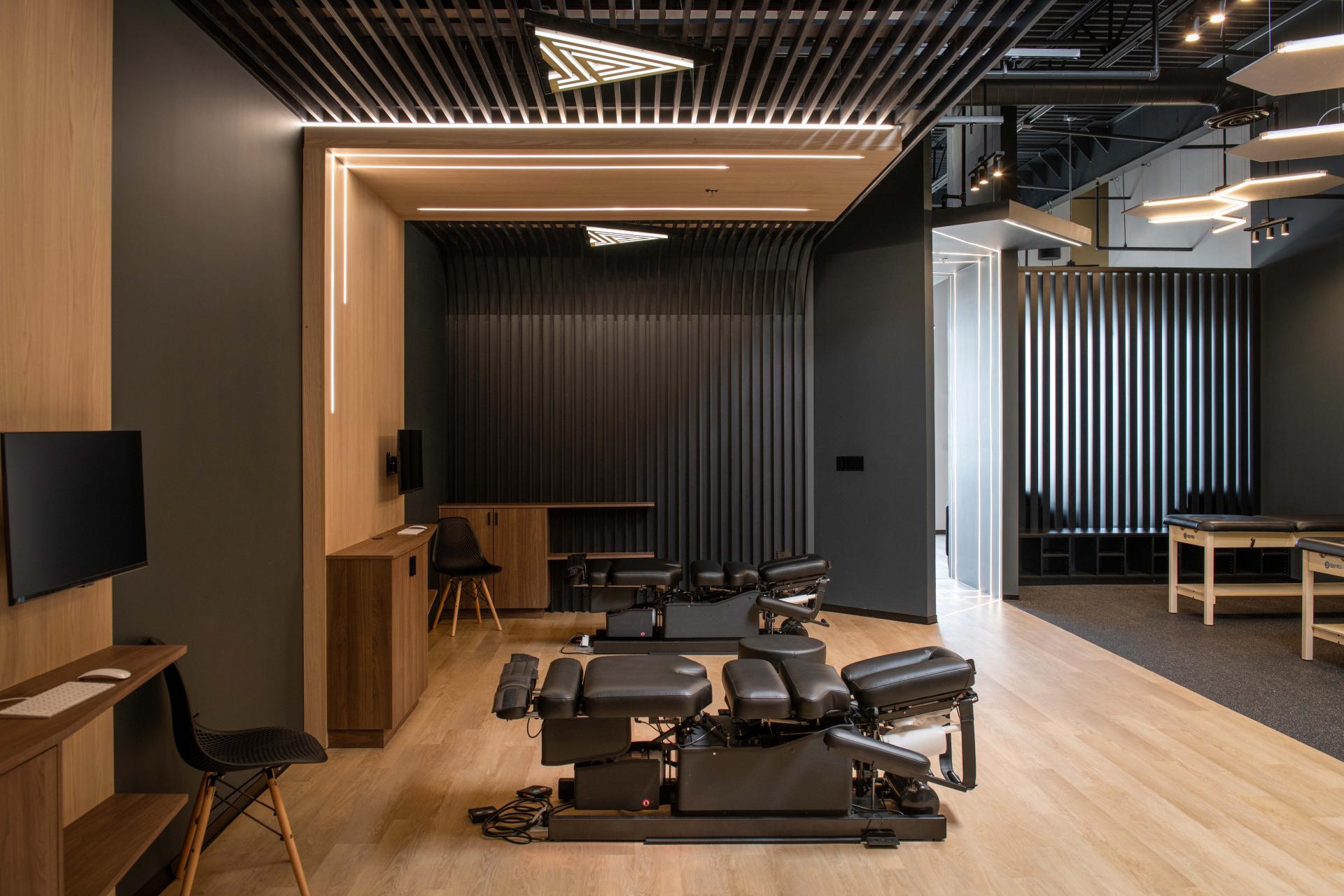
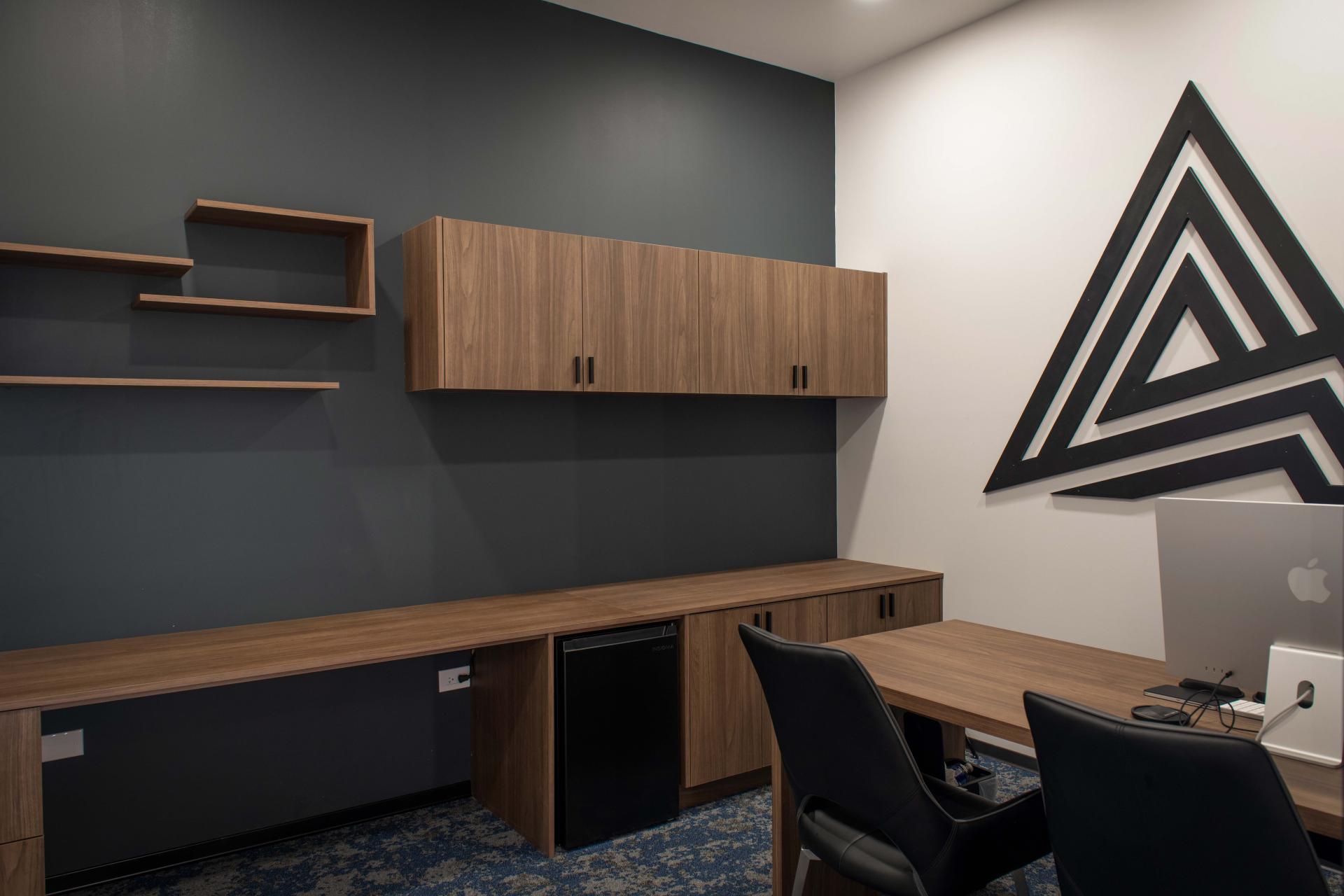
Adjusted Health + Performance redefines the spatial language of healthcare by shifting it from neutrality to intention. Rather than designing a conventional clinic, the project was conceived as a spatial experience—where architecture, light, and materiality actively shape perception, movement, and emotion.
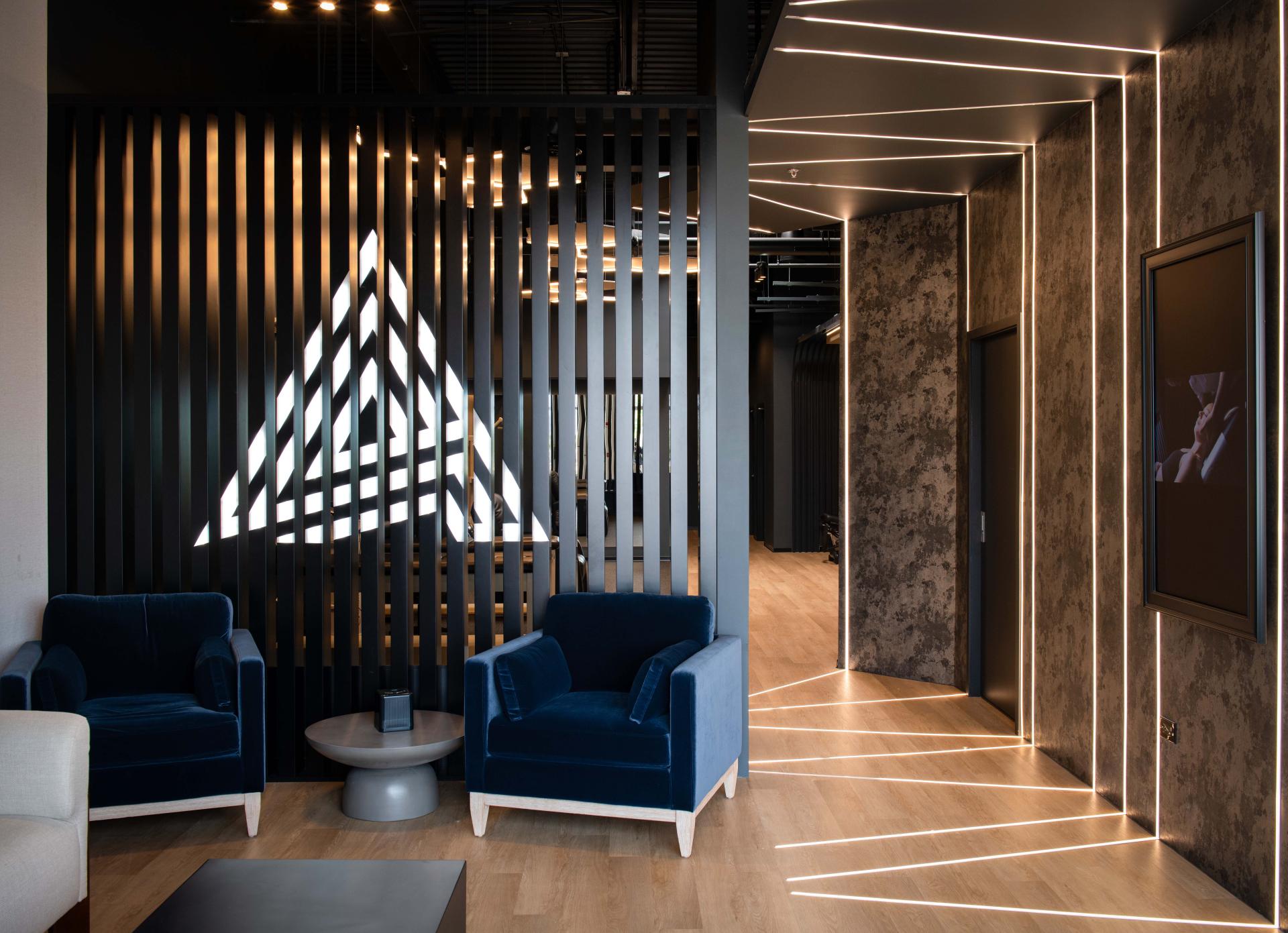
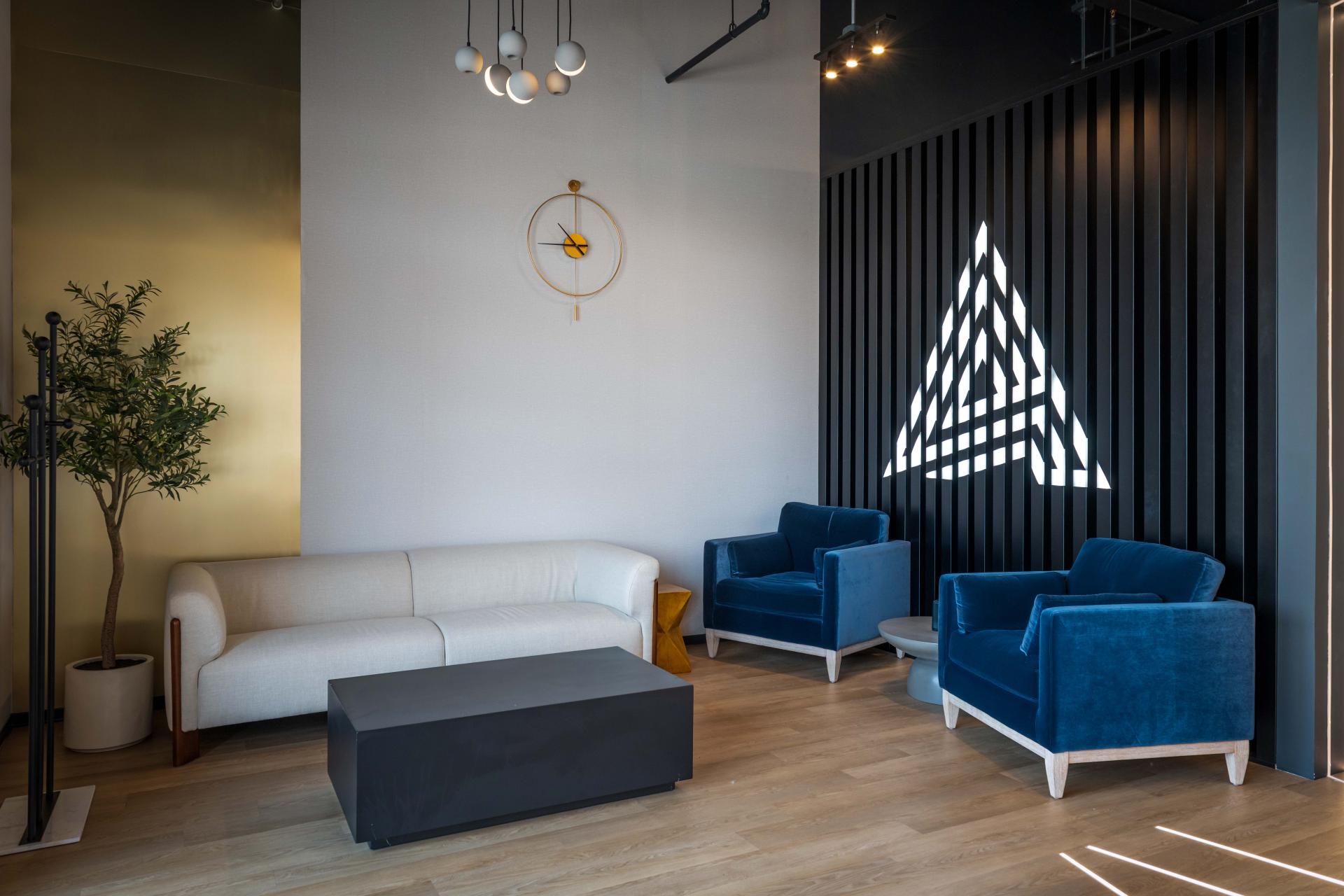
The design is structured around a sequence of transitions. Upon entry, the reception zone establishes a strong identity through custom millwork, sculptural geometries, and controlled contrasts between dark surfaces and warm wood tones. This space is not merely functional; it acts as a threshold between the external world and an interior environment dedicated to focus, recovery, and performance.
A defining element of the project is the LED corridor—a linear architectural gesture that guides visitors deeper into the space. More than circulation, the corridor operates as a spatial narrative: light becomes structure, and movement becomes choreography. The corridor frames the progression toward the treatment area, gradually revealing the clinical functions while maintaining a sense of intrigue and continuity.
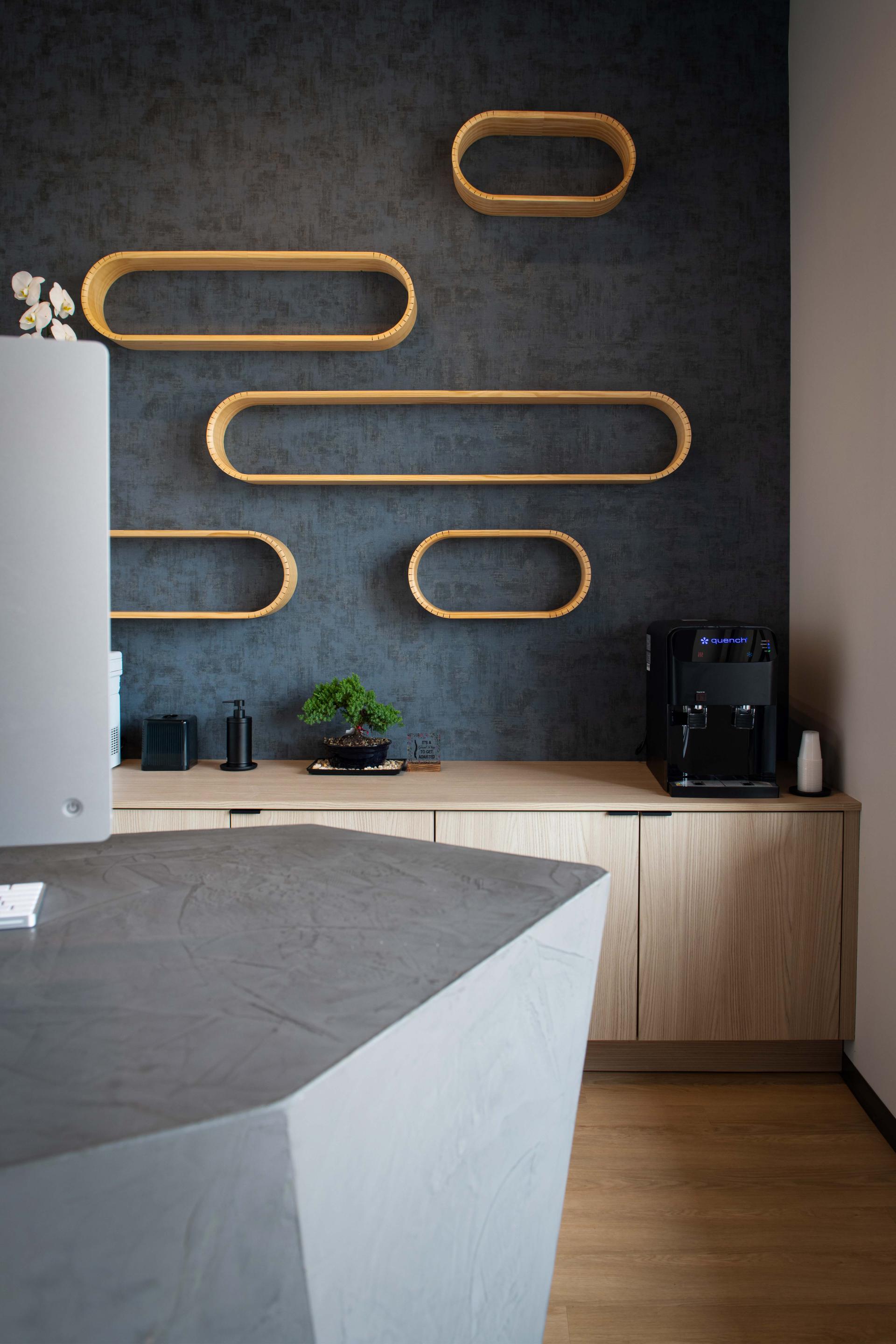
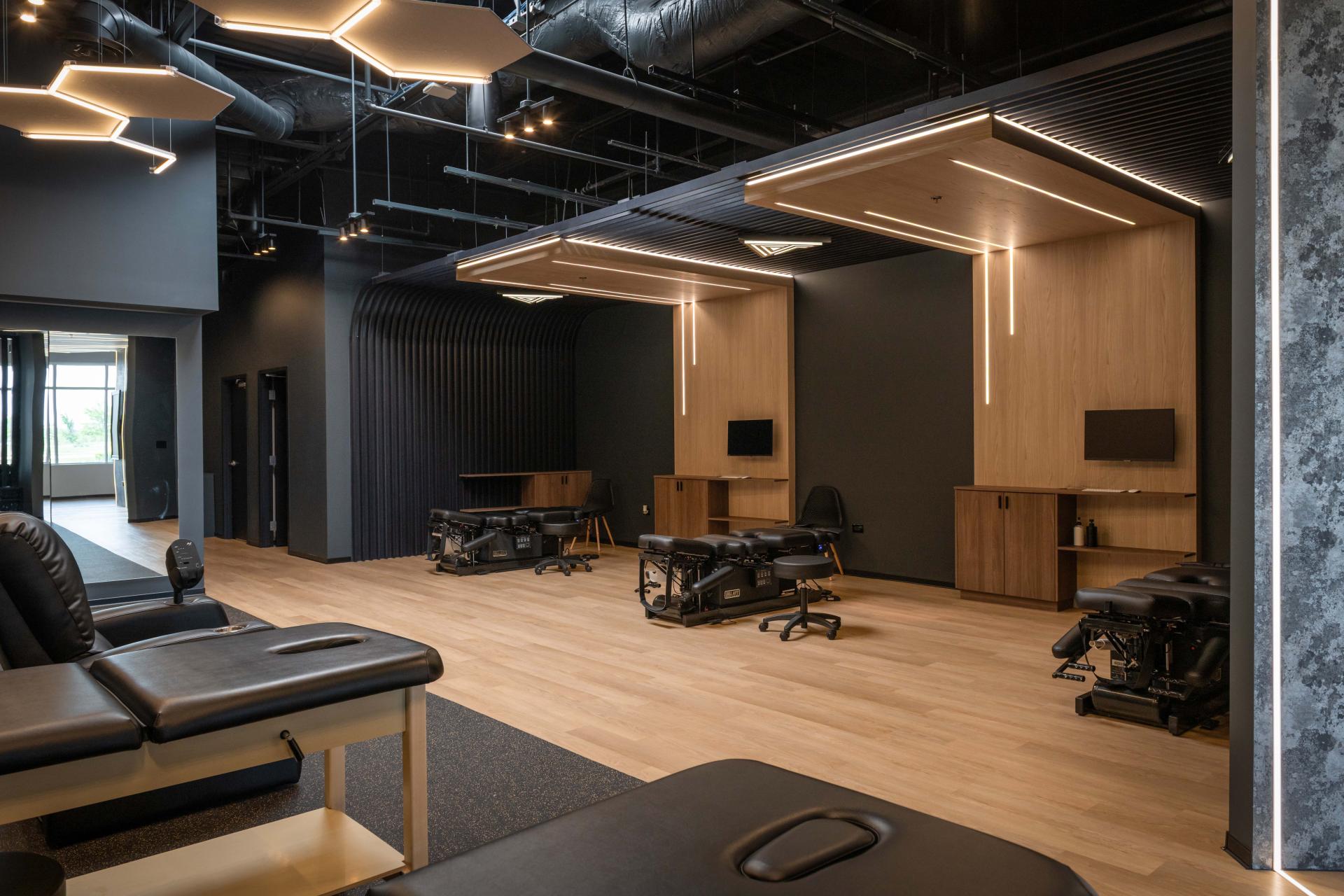
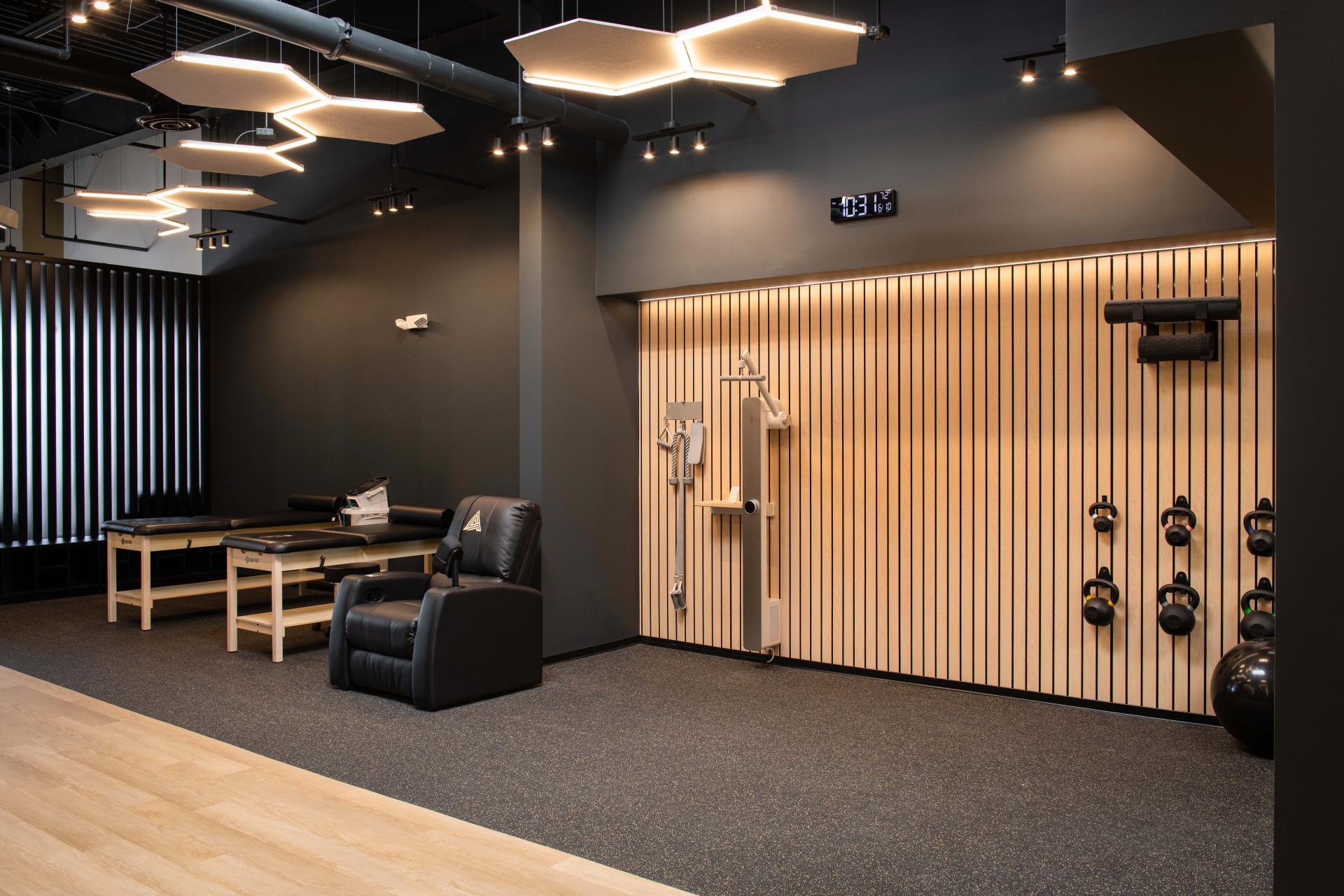
Materiality plays a central conceptual role. Vertical slatted surfaces, integrated lighting systems, and bespoke wall features establish rhythm and depth, while natural wood introduces warmth and tactility. The interplay between precision and softness reflects the dual identity of the brand: technical performance balanced by human experience.
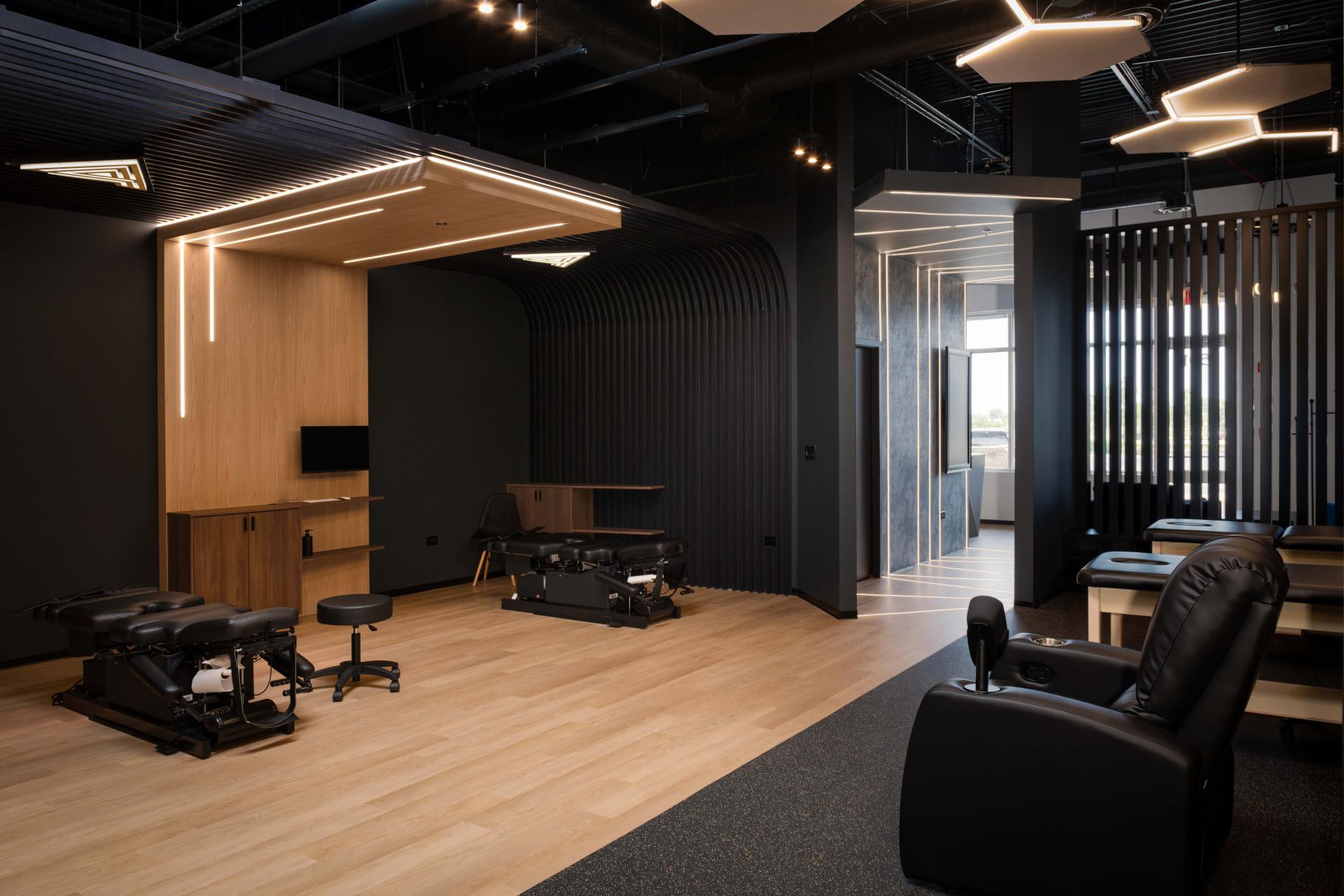
The treatment area continues the architectural language of the front-of-house spaces. Rather than isolating clinical zones, the design maintains visual and material continuity, reinforcing the idea that functionality and atmosphere are not opposites, but partners. Every custom element—from millwork to lighting—was designed to support both operational efficiency and emotional comfort.
Adjusted Health + Performance ultimately positions healthcare within the logic of hospitality. The project challenges the expectation that medical environments must feel sterile or anonymous. Instead, it proposes a new typology: a place where people are not only treated, but welcomed—where architecture becomes an active participant in wellbeing.

Credits

Entrant Company
Tsinghua University
Category
Product Design - Educational Tools / Teaching Aids / Learning Devices

Entrant Company
MORIYUKI OCHIAI ARCHITECTS
Category
Interior Design - Office

Entrant Company
Hello-Tech
Category
Packaging Design - Redesign / Refresh (NEW)

Entrant Company
A.S. SKARAKI & Co. LP
Category
Packaging Design - Beauty & Personal Care