Interview
Kejia Yu
1 Congratulations on winning the MUSE Design Awards! Can you introduce yourself and share about what inspired you to pursue design as a career?
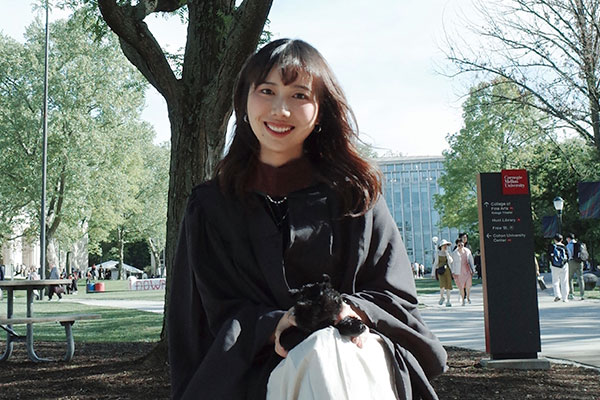
Thank you so much! I’m Kejia Yu, a scenic designer working across theater, live events, and film. For me, design is a way to understand and communicate human emotion. Empathy guides my creative choices and helps me create spaces that evoke meaning and connection. My inspiration often begins with observation—studying life, behavior, and culture. These details form the foundation of my work, helping me translate what I experience into visual storytelling. Ultimately, I’m driven by the desire to craft environments that feel alive, allowing the story to breathe through space and linger in the audience’s mind.
2 What does being recognized in the MUSE Design Awards mean to you?
It’s truly an honor to be recognized by the MUSE Design Awards. For me, this award is a meaningful acknowledgment of my design vision and creative approach. It validates the thought and care I put into Armida’s scenic design and inspires me to continue exploring how scenic design can shape visual storytelling.
3 How has this achievement impacted your career, team, or agency, and what opportunities has it brought so far?
Winning the MUSE Design Awards has brought greater visibility and recognition to my work within the design community. It has opened new conversations and collaborations, continually pushing my artistic boundaries and inspiring me to grow further as a designer.
4 What role does experimentation play in your creative process? Can you share an example?
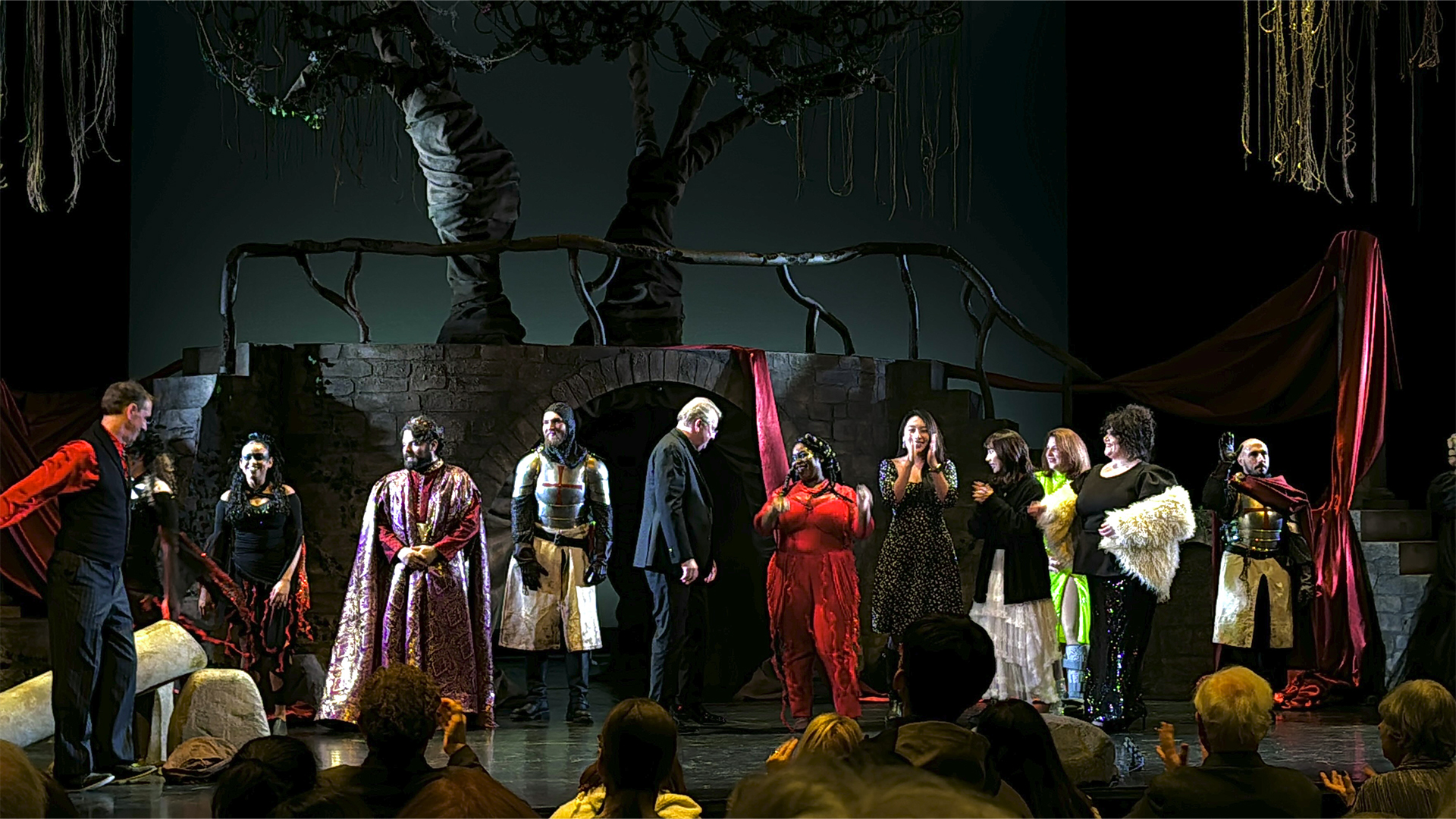
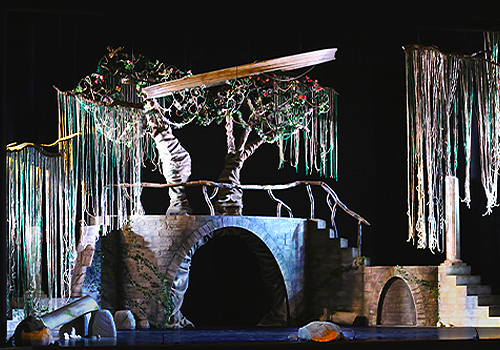
Experimentation plays a vital role in my creative process. It allows me to step outside my comfort zone and discover new possibilities in design. In my scenic design for Armida, budget limitations encouraged me to think more creatively. To achieve the vision I had in mind, I used unconventional and sustainable materials—ropes to form the tree canopy and linen fabric for the trunks. This approach not only reduced cost and waste but also allowed us to integrate lighting fixtures inside the trunks, creating a soft glow in specific scenes. I believe experimentation is essential to design. It’s through taking risks and challenging boundaries that new ideas and unexpected beauty emerge.
5 What's the most unusual source of inspiration you've ever drawn from for a project?
When designing Naked Mole Rat at the Hangar Theatre, I had to create an underground tunnel world for the mole characters. My inspiration surprisingly came from a video game I played when I was six years old, featuring a little mole who slowly built her home tunnel. That memory resurfaced while I was designing, shaping how I imagined the space and its sense of warmth and growth. I find it fascinating that as designers, we never know which past experiences will return to inspire us. A childhood moment, a feeling, or even a small detail can become the seed of a design. I believe good designers need both a sharp eye for observation and a deep sense of empathy, transforming lived experiences into tangible ideas.
6 What’s one thing you wish more people understood about the design process?
I wish more people understood that scenic design isn’t just about creating a beautiful picture. It’s about how the set works together with lighting, costume, sound, media, and performance to tell a compelling story. A successful design is one that truly serves the script and helps the audience connect with the performance. The true measure of a set’s success lies in how effectively it supports the storytelling.
7 How do you navigate the balance between meeting client expectations and staying true to your ideas?
I believe the key lies in finding balance through collaboration. Listening closely to the intentions and needs of directors and other collaborators is essential—there’s always a reason behind their ideas. Design is a process of give and take; it’s rarely about achieving absolute perfection. By understanding each other’s perspectives and staying open to adaptation, we can create work that honors the shared vision of the entire team.
8 What were the challenges you faced while working on your award-winning design, and how did you overcome them?
One of the biggest challenges was working within a limited budget. To overcome this, I experimented with more affordable and sustainable materials, such as using ropes for branches and linen for tree trunks, which also allowed us to integrate lighting in creative ways. Finding inventive solutions within constraints ultimately strengthened both the design and the storytelling.
9 How do you recharge your creativity when you hit a creative block?
When I hit a creative block, I like to talk with other creative people. Sharing ideas and perspectives often sparks new inspiration. I also take time to step away and do something unrelated to design—like sitting in a park or walking by the river—to let my mind clear and reset. These moments of pause often lead to fresh ideas and renewed creativity.
10 What personal values or experiences do you infuse into your designs?
Coming from China and now designing in the United States, I bring a multicultural perspective that continually offers new ways of seeing and interpreting the world. My background in furniture and interior design provides a strong foundation in spatial thinking and practical problem-solving. I strive to transform these experiences into immersive environments that serve the story.
11 What is an advice that you would you give to aspiring designers aiming for success?
My advice is simple: be yourself. Stay true to your perspective and voice, because your unique experiences and way of seeing the world are what make your designs stand out.
12 If you could collaborate with any designer, past or present, who would it be and why?
There are so many designers I would love to collaborate with. Right now, I’m especially interested in exploring the intersection of media and scenic design, and experimenting with the possibilities of VR stage design. Collaborating across disciplines excites me because it allows me to push the boundaries of storytelling and discover new ways to engage audiences.
13 What's one question you wish people would ask you about your work, and what's your answer?
I wish people would ask, “How do you make your scenic designs serve the story?” My answer is that every choice I make—from space to texture—is driven by the story and the audience’s experience. As I often say, scenic design isn’t just about creating something visually striking; it’s about shaping an environment that deepens the narrative and helps the audience connect emotionally.