Interview
CSLAB
1 Congratulations on winning the MUSE Design Awards! Can you introduce yourself and share about what inspired you to pursue design as a career?
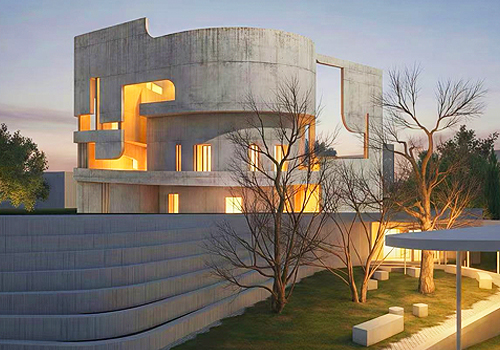
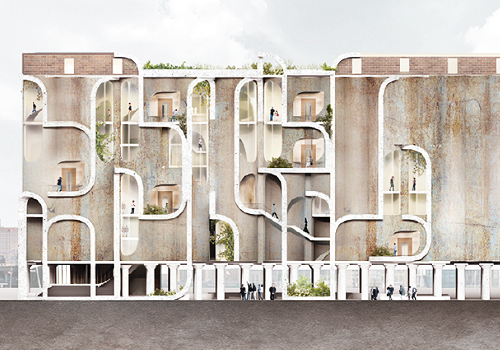
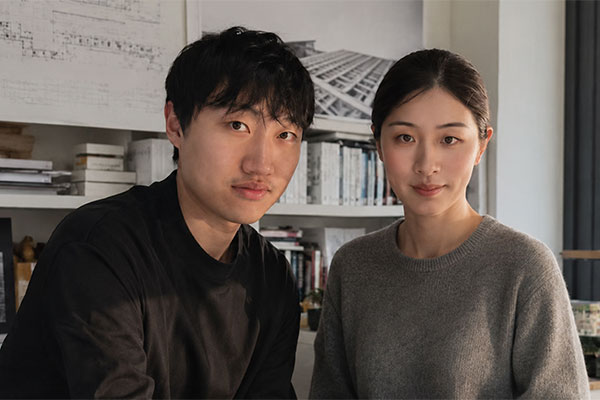
We are Cen Shen and Changsong Li, architectural designers based in New York. Our work explores the intersection of architecture, environmental systems, emerging technologies, and human experience. Through professional practice and independent design research, we have developed a shared interest in how architecture can respond to challenges such as climate change, ecological resilience, public health, and evolving urban environments. Our interest in architecture grew from realizing that buildings are never isolated objects. They constantly interact with climate, landscape, materials, infrastructure, and the people who use them. This led us to see architecture as a field where creative thinking and technical knowledge can come together to address real-world problems. Over time, we became increasingly interested in projects that go beyond conventional building programs. We began asking how architecture could actively participate in environmental and social systems. Can a healthcare space use landscape as part of the healing experience? Can emergency infrastructure help prevent and respond to environmental disasters rather than simply react to them? These questions have shaped our design approach and are reflected in projects such as Garden Clinic and Sentinel Ring. Although they address very different issues, both explore architecture as an active system connecting people, nature, and technology. This possibility of using architecture to respond to future challenges continues to inspire our work.
2 What does being recognized in the MUSE Design Awards mean to you?
Being recognized by the MUSE Design Awards is especially meaningful to us because both Garden Clinic and Sentinel Ring began with questions about real environmental and social challenges. One explores how architecture and landscape can reshape the healthcare experience, while the other investigates how architecture can respond to increasing wildfire risks. Having these ideas recognized on an international platform gives us confidence that architecture addressing health, climate, and resilience can also contribute to a broader design conversation. It encourages us to continue developing research-driven ideas into architectural solutions with real relevance.
3 How has this achievement impacted your career, team, or agency, and what opportunities has it brought so far?
The recognition has helped bring our work to a wider international audience and has created opportunities for our projects and ideas to be presented in publications, exhibitions, and other professional platforms. It has also allowed us to become more involved in the design community beyond our own projects, including opportunities to participate in design juries and evaluate the work of other designers. These experiences have expanded our perspective and encouraged us to continue developing our own architectural research.
4 What role does experimentation play in your creative process? Can you share an example?
Experimentation is an essential part of our process. We often begin by questioning whether a familiar building type can perform differently when environmental conditions become part of the design itself. In Sentinel Ring, for example, we reconsidered the conventional fire station in the context of wildfire-prone landscapes. Instead of designing only a place for emergency response, we explored a larger system combining observation, prevention, firefighting infrastructure, ecological restoration, and public education. Testing how these different functions could work together eventually shaped both the organization and architectural form of the project.
5 What's the most unusual source of inspiration you've ever drawn from for a project?
One unusual source of inspiration for us has been the way natural systems recover after disturbance. Instead of looking only at architectural precedents, we often study how landscapes adapt, regenerate, and change over time. This became particularly important in Garden Clinic. We looked at nature not simply as landscaping around a healthcare building, but as part of the healing environment itself. Gardens, vegetation, daylight, circulation, and architecture were considered together to create a more restorative experience for patients and visitors.
6 What’s one thing you wish more people understood about the design process?
We wish more people understood how much iteration happens behind a seemingly simple architectural idea. A concept rarely moves directly from sketch to final design. We constantly test circulation, program, environmental conditions, structure, materiality, and human experience against each other. Sometimes a strong visual idea has to change completely because it does not perform well. For us, good design comes from this process of testing and refinement rather than protecting the first idea.
7 How do you navigate the balance between meeting client expectations and staying true to your ideas?
We usually begin by identifying what is essential to the client and what is essential to the architectural idea. In many cases, these are not actually in conflict. Practical requirements such as budget, program, constructability, maintenance, and user needs can become productive design constraints. Rather than protecting a specific form, we try to protect the core idea of the project and allow its architectural expression to evolve as we respond to real conditions.
8 What were the challenges you faced while working on your award-winning design, and how did you overcome them?
The two projects presented very different challenges. In Garden Clinic, the challenge was to integrate landscape and healthcare functions without treating nature as decoration. The spatial organization needed to make greenery, daylight, movement, and moments of rest part of the actual healing experience. For Sentinel Ring, the challenge was much larger in scale. We had to think simultaneously about architecture, wildfire response, landscape, infrastructure, and community use. In both projects, repeated testing helped us turn complex systems into clear architectural strategies.
9 How do you recharge your creativity when you hit a creative block?
When we feel stuck, we usually stop looking at architecture for a while. We might look at landscapes, photography, films, engineering systems, ecological research, or simply observe how people interact with spaces in everyday life. Changing the scale of the problem also helps. If we are stuck on the overall form, we may focus on a small detail or user experience instead. Very often, solving that smaller question gives us a new way to understand the entire project.
10 What personal values or experiences do you infuse into your designs?
One value we consistently bring into our work is the belief that architecture should respond to its environment rather than simply occupy it. We are interested in how buildings can interact with climate, landscape, infrastructure, and human activity over time. This is why environmental thinking appears differently across our projects. In Garden Clinic, it becomes part of healing and everyday experience. In Sentinel Ring, it becomes a strategy for resilience and disaster response. We want sustainability to shape the architecture itself rather than remain an added feature.
11 What is an advice that you would you give to aspiring designers aiming for success?
We would encourage young designers to develop a point of view rather than focus too heavily on developing a recognizable style. Learn the technical side of architecture, but also remain curious about subjects outside the profession. Some of our most important ideas have come from environmental science, technology, landscape, and observations of everyday life. A strong designer is not only someone who can create an interesting form, but someone who can identify an important question and develop a convincing architectural response to it.
12 If you could collaborate with any designer, past or present, who would it be and why?
We would choose Buckminster Fuller because he approached design as a much larger system connecting architecture, engineering, technology, resources, and the environment. What interests us most is not a particular formal language, but his willingness to question basic assumptions about how buildings should work. That way of thinking relates closely to our own interest in projects such as Sentinel Ring, where architecture extends beyond the conventional definition of a building and becomes part of a larger environmental system.
13 What's one question you wish people would ask you about your work, and what's your answer?
**I wish people would ask us what problem we are actually trying to solve through architecture.** For us, this question is more important than asking what a building should look like. We usually begin with a specific condition that we believe architecture can improve. In Garden Clinic, that condition is the separation between healthcare spaces and nature. In Sentinel Ring, it is the need for architecture to take a more active role in wildfire prevention, response, and recovery. We hope our work demonstrates that architecture can do more than accommodate a program. It can connect people, technology, and environmental systems in new ways and offer practical responses to challenges that are becoming increasingly important.