Interview
Hiroaki Kajiura
1 Congratulations on winning the MUSE Design Awards! Can you introduce yourself and share about what inspired you to pursue design as a career?
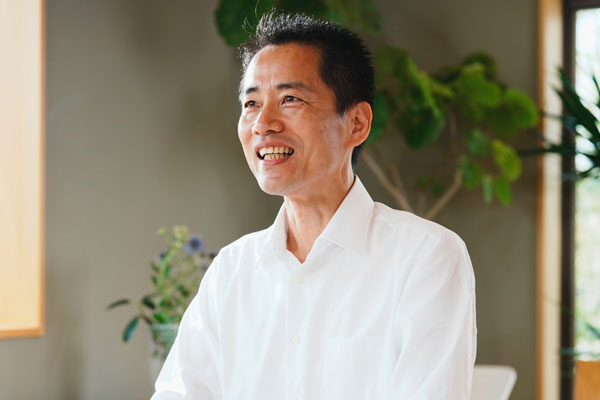
I am Hiroaki Kajiura, an architect based in Aichi, Japan, and the founder of Hiroaki Kajiura Environmental Architecture Design, established in 2001. Throughout my career, I have been interested not only in creating buildings, but in designing relationships: between people and place, architecture and nature, and everyday life and the passage of time. I came to see architecture as something that can quietly influence how people meet, work, live, and experience their surroundings. Later in my career, I returned to university to study art and design again. That experience encouraged me to question assumptions I had accumulated through professional practice and to think more freely and on a larger conceptual scale. Today, I approach each project by asking what kind of value architecture can create beyond function alone. For me, design is a continuous process of learning, questioning, and discovering new relationships through space.
2 What does being recognized in the MUSE Design Awards mean to you?
Receiving recognition from the MUSE Design Awards means a great deal to me because it suggests that the ideas I have developed through many years of practice in Japan can also be understood beyond cultural and national boundaries. Architecture is always rooted in a specific place, climate, material, culture, and way of life. At the same time, I believe that the fundamental questions of architecture—how people gather, how they relate to nature, and how space can enrich everyday life—are universal. For me, this award is not only recognition of a completed project. It is also encouragement to continue exploring these questions and to communicate the value of Japanese architecture and craftsmanship in a contemporary way to a wider international audience. Most importantly, it reminds me that continuing to learn, question, and refine one’s work can open new possibilities, regardless of age or stage of one’s career.
3 How has this achievement impacted your career, team, or agency, and what opportunities has it brought so far?
our work. It has also created an opportunity to share the value of our projects with clients, collaborators, and people who may not usually be familiar with architecture. An international award can make the ideas behind a project more visible and easier to communicate. For my practice, the recognition has strengthened my motivation to present our work more actively outside Japan. I hope it will lead to new conversations, collaborations, and projects with people who value architecture not only as a building, but as a way of creating long-term value for people, place, and community. Above all, the award has reminded our team that careful, patient work can reach further than we sometimes imagine.
4 What role does experimentation play in your creative process? Can you share an example?
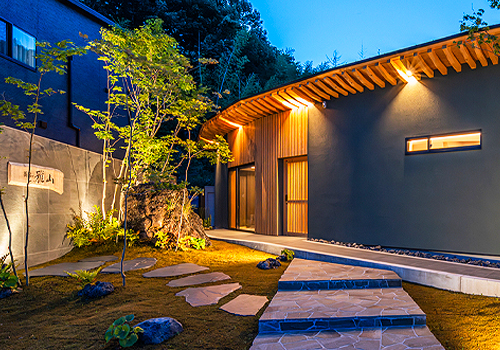
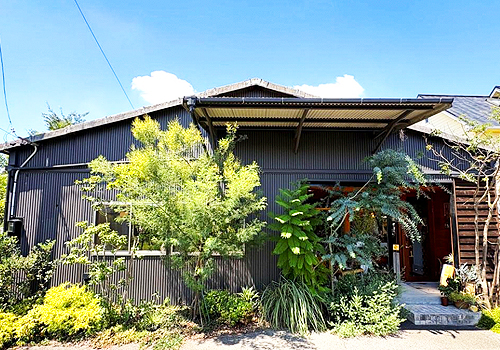
Experimentation plays an important role in my design process, but I do not see it as pursuing novelty for its own sake. For me, experimentation means questioning conventional solutions and testing whether architecture can create a richer relationship between people, nature, materials, and place. In GAZAN, for example, I explored how the dining experience could be shaped not only by the interior, but also by the approach, the garden, the deep eaves, and the surrounding landscape. The curved plan and the use of Tono cypress were developed as part of an effort to create a continuous relationship between architecture, movement, material, and nature. In Mori to Kawa ni Saku Hana, the experiment was different. Instead of replacing a roughly 70-year-old factory, we reused the existing structure and introduced multiple functions, including coworking, café, meeting, and exhibition spaces. The project became a test of how an old building could gain a new social role while retaining traces of its past. In both projects, experimentation was not an additional gesture. It was a way of discovering the most appropriate relationship between the existing conditions and a new way of living, gathering, or working.
5 What's the most unusual source of inspiration you've ever drawn from for a project?
One of the most unusual sources of inspiration for me is not another building, but the existing conditions that are already present in a place. In GAZAN, the surrounding landscape, the approach through the garden, and the relationship between the deep eaves and the view became important sources of inspiration. Rather than starting from an abstract form, I tried to discover the architecture that was already suggested by the site. In Mori to Kawa ni Saku Hana, the inspiration came from the traces left in a roughly 70-year-old factory. The old structure, materials, proportions, and imperfections were not obstacles to be erased. They became clues for deciding what should remain, what should be added, and how the building could take on a new social role. I am often inspired by what already exists but is easy to overlook: a shadow, a change in level, an old material, a view, or the way people naturally move through a place. These small observations often lead to the most meaningful design decisions.
6 What’s one thing you wish more people understood about the design process?
I wish more people understood that design is not simply the process of turning a client’s requests into form. A client may begin with specific needs, preferences, or images in mind, but I believe the designer’s responsibility is to look beyond those immediate requests and ask why they matter. What kind of experience is truly needed? What relationships should the space create? What value should remain decades later? In both GAZAN and Mori to Kawa ni Saku Hana, the design process involved understanding not only functional requirements, but also the character of the place, the way people would gather, and the long-term role of the architecture. For me, good design begins with listening, but it does not end there. It requires interpretation, questioning, and sometimes proposing something the client had not originally imagined. That is where architecture can create value beyond expectation.
7 How do you navigate the balance between meeting client expectations and staying true to your ideas?
I do not see the relationship between a client’s expectations and my own ideas as a conflict that must be balanced. The most important step is to identify a shared purpose. A client may begin with specific requests, while I may see possibilities that have not yet been articulated. Through dialogue, I try to understand what is truly important to them and then translate that into an architectural idea that can create greater value. In GAZAN, for example, the goal was not simply to create a beautiful restaurant, but to shape an experience in which the approach, garden, deep eaves, materials, and surrounding landscape all contribute to the act of dining. In Mori to Kawa ni Saku Hana, the challenge was to create a new place for gathering while respecting the character and memory of an existing factory. When the client and architect share the same deeper objective, design becomes less about compromise and more about discovering a solution that neither side could have reached alone.
8 What were the challenges you faced while working on your award-winning design, and how did you overcome them?
The challenges were very different in the two projects. In GAZAN, the challenge was to create a strong architectural identity without separating the building from its landscape. The curved plan, deep eaves, garden, borrowed scenery, and extensive use of Tono cypress all had to work together as one continuous experience rather than as individual design elements. We overcame this by repeatedly examining the relationship between movement, view, material, light, and distance. Instead of treating the building, garden, and dining space separately, we designed them as parts of a single sequence. In Mori to Kawa ni Saku Hana, the challenge was almost the opposite. We were working with a roughly 70-year-old factory whose existing structure and character already had a strong presence. The question was how to introduce new functions without erasing the memory of the building. We approached this by carefully deciding what should remain, what should be removed, and what should be newly added. Rather than making the old building look new, we allowed the existing and the new to coexist. In both projects, the solution came not from simplifying the conditions, but from accepting their complexity and turning it into the architecture itself.
9 How do you recharge your creativity when you hit a creative block?
When I reach a creative block, I try not to force an answer immediately. Sometimes the best way forward is to step away from the drawing for a while. I walk through a place, look at architecture or art, read books, or simply observe how people move and behave in everyday environments. Experiences outside the immediate project often allow me to see the problem from a different angle. I also return to very basic tools such as sketches and physical models. Working with my hands often reveals relationships of scale, light, distance, and proportion that are difficult to understand only on a screen. Most importantly, I try to return to the original question of the project: What does this place really need? When I can rediscover that question, rather than searching desperately for a form, the next idea often begins to emerge naturally.
10 What personal values or experiences do you infuse into your designs?
I bring several personal values into my work: respect for nature, sensitivity to time, honesty toward materials, and a belief in the importance of places where people can gather. I am particularly interested in how architecture can age well rather than simply remain visually new. Materials change, light shifts, trees grow, and people develop new relationships with a place. I believe architecture should be able to accept these changes and gain depth over time. This way of thinking can be seen in both GAZAN and Mori to Kawa ni Saku Hana. In GAZAN, natural materials, the garden, deep eaves, and surrounding landscape are part of the architectural experience. In Mori to Kawa ni Saku Hana, the traces of a roughly 70-year-old factory were preserved rather than erased, allowing its past and present to coexist. Another important value for me is continuing to learn. Returning to university later in my career reminded me that experience is valuable, but it can also create assumptions. I try to remain open, question what I already know, and continue discovering new possibilities through architecture.
11 What is an advice that you would you give to aspiring designers aiming for success?
If I could share one thought with designers who are still finding their own direction, it would be to stay curious and keep questioning what feels obvious. I do not think there is a single path to becoming a good designer. Everyone develops through different experiences, encounters, failures, and discoveries. In my own case, returning to university later in my career reminded me how important it is to remain open to learning, even after many years of practice. Recognition is encouraging, but I believe the more lasting value comes from continuing to ask meaningful questions through one’s work and developing a way of thinking that feels genuinely one’s own. I am still learning this myself.
12 If you could collaborate with any designer, past or present, who would it be and why?
If I could collaborate with one architect from the past, I would choose Louis Kahn. I have always been drawn to the way he treated light, material, structure, and silence as fundamental elements of architecture. His buildings do not seem to pursue novelty for its own sake; instead, they ask very basic questions about what a place should be and how people should experience it. I would be interested not only in designing something together, but in experiencing the conversations and questions that might emerge during the process. I imagine that such a collaboration would challenge many of my own assumptions and help me reconsider the relationship between material, time, human presence, and space. Perhaps the most valuable part would not be the final building itself, but the process of thinking together.
13 What's one question you wish people would ask you about your work, and what's your answer?
The question I would like people to ask is: “What do you hope your architecture will leave behind?” My answer would be that I hope it leaves more than a physical form. I hope it leaves memories, relationships, and ways of using a place that continue to evolve over time. I hope it creates a reason for people to gather, gives value to the character of a site, and allows materials, nature, and human activity to become part of the same experience. In GAZAN, that means creating a place where architecture, garden, material, and dining become inseparable. In Mori to Kawa ni Saku Hana, it means allowing the memory of an old factory to remain while giving it a new social life. Ultimately, I hope the architecture can continue to be meaningful even after the original designer is no longer present.