2026 | Professional

Module Kitchen Systems-NEX·US
Entrant
Guangdong SALOLEA Architecture Technology Co., Ltd.
Category
Furniture Design - Home
Client's Name
-
Country / Region
China
Gallery




About The Entry
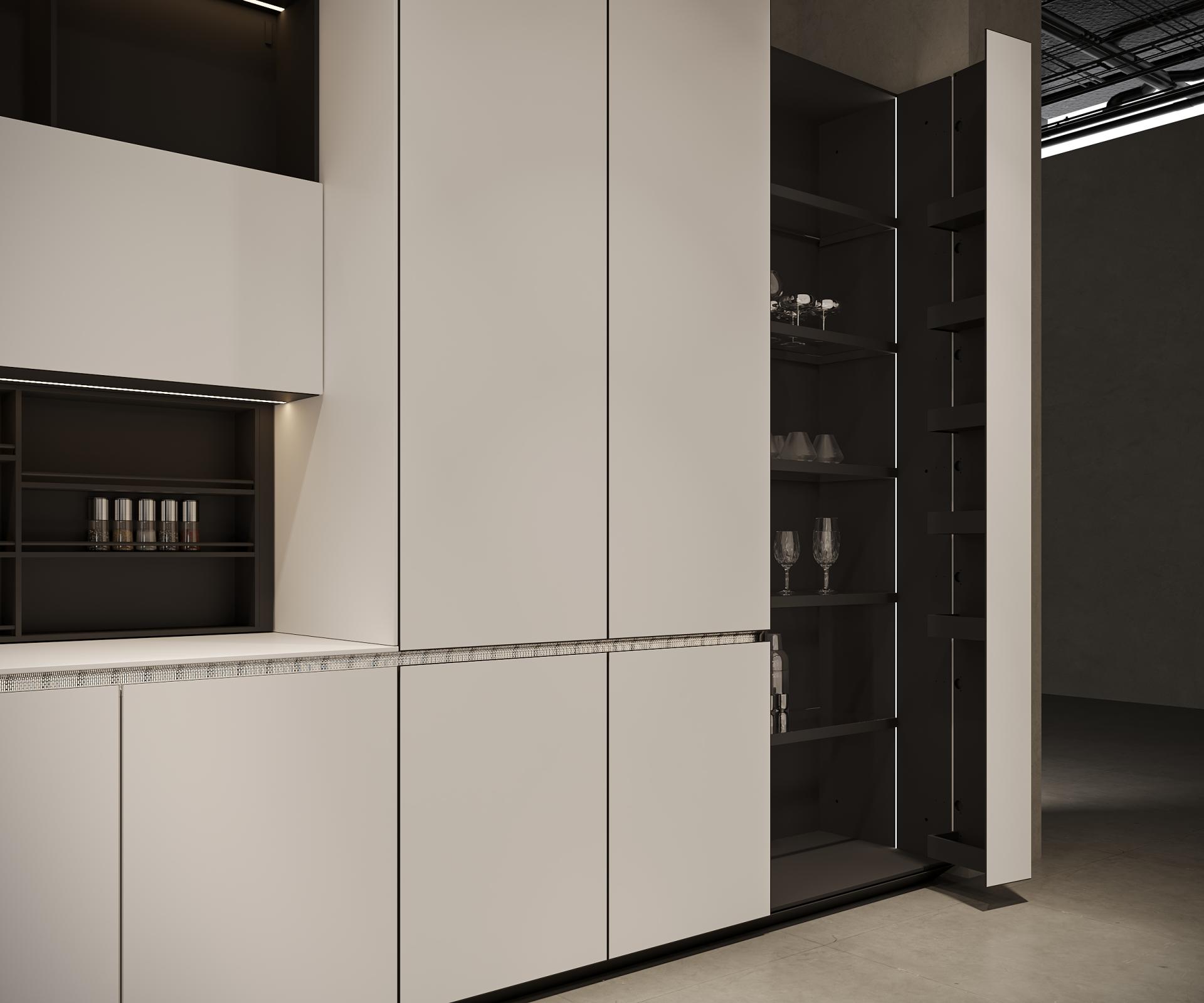
NEX·US is developed through a systematic rethinking of the kitchen’s role in contemporary living. Rather than functioning as a fixed, task-driven workspace, the kitchen is reimagined as a modular, adaptive environment—one that evolves with changing lifestyles, rhythms, and life stages. The design integrates structure, material, technology, and human behavior into a coherent spatial system that prioritizes longevity, flexibility, and experience.
At its core, NEX·US challenges the conventional typology of kitchen cabinetry. The kitchen is no longer an enclosed functional zone, but an open and connective space where cooking, dining, working, and social interaction coexist naturally. Through open layouts, an integrated island, and fluid spatial transitions, NEX·US dissolves the boundary between kitchen and living areas. Daily activities flow seamlessly, allowing the kitchen to emerge as the emotional and social center of the home.
The system is built on a fully modular linear structure made from aerospace-grade recycled aluminum. This lightweight yet high-strength framework ensures long-term stability while supporting sustainable manufacturing principles. Each module can be independently installed, replaced, or upgraded, enabling configurations ranging from compact linear kitchens to socially oriented island layouts. Without major renovation, the space can adapt to new needs, significantly extending its usable life and overall value.
Material selection emphasizes durability, performance, and everyday comfort. High-performance surfaces such as Lapitec, Fenix, and graphene-enhanced glass offer heat resistance, scratch resistance, antibacterial properties, and low-maintenance use, balancing refined aesthetics with practical longevity. Technology is deliberately recessed into the background. Lighting and intelligent systems respond intuitively to human presence and daily rhythms, while interfaces remain hidden until needed, preserving visual calm and spatial clarity.
An integrated hydroponic planting module reconnects daily life with nature. Automated lighting, irrigation, and nutrient control allow herbs and plants to grow effortlessly within the kitchen, transforming food preparation into a more tangible and sensory experience.
Guided by a full lifecycle design philosophy, NEX·US minimizes waste through modular replacement, recyclable materials, and energy-efficient systems. It is not a trend-driven product, but a timeless, evolving domestic ecosystem—designed to grow with its users and serve as a long-term investment in comfort, sustainability, and quality of life.
Credits

Entrant
SitDown Studio
Category
Interior Design - Office
Entrant
Deng Yangjuntian (Lead), Wang Jingyuan, Xia Jiayan, Ma Tianyu
Category
Conceptual Design - Futuristic

Entrant
Wata Ltd.
Category
Conceptual Design - Exhibition & Events
Entrant
Nuon Medical
Category
Packaging Design - Beauty & Personal Care