2026 | Student

Heart of Bashu — Rongchang Ceramic Culture Center
Entrant
Chongqing Vocational College of Art and Engineering
Category
Architectural Design - Museum, Exhibits, Pavilions
Client's Name
Chongqing Vocational College of Art and Engineering
Country / Region
China
Gallery

About The Entry
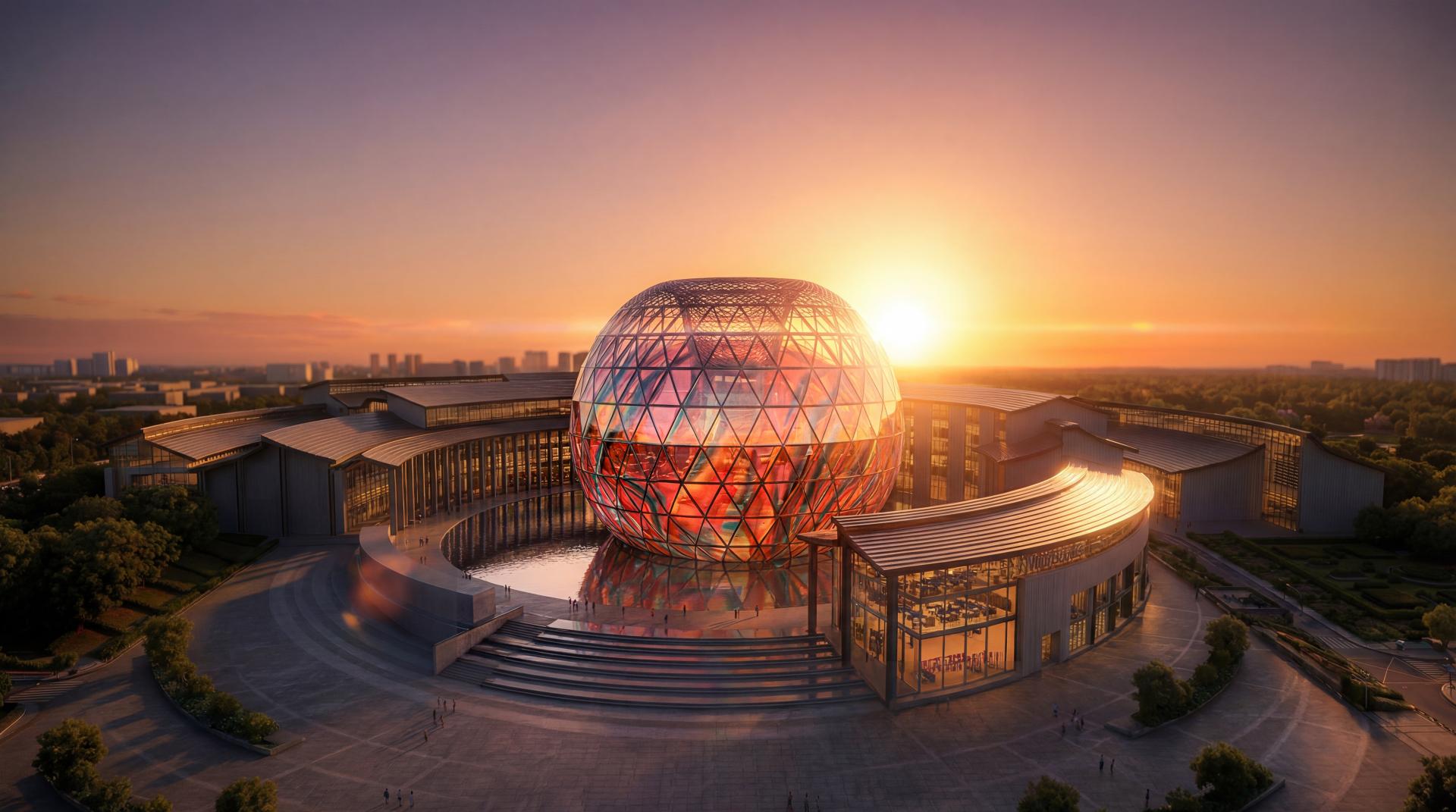
Rongchang, situated at the geographic and economic heart of the Chengdu–Chongqing Twin-City Economic Circle, has fired ceramics for over two thousand years. Its distinctive stoneware — one of China's Four Great Named Ceramics — is described by an ancient canon: red as jujube, thin as paper, bright as mirror, resonant as a bell. The "Heart of Bashu" Ceramic Culture Core District reinterprets this living heritage as architecture itself.
Design concept: "The kiln fire of Bashu — eternal, reborn, containing all things." The building is conceived not as a container for ceramic art, but as the most monumental ceramic artwork ever made.
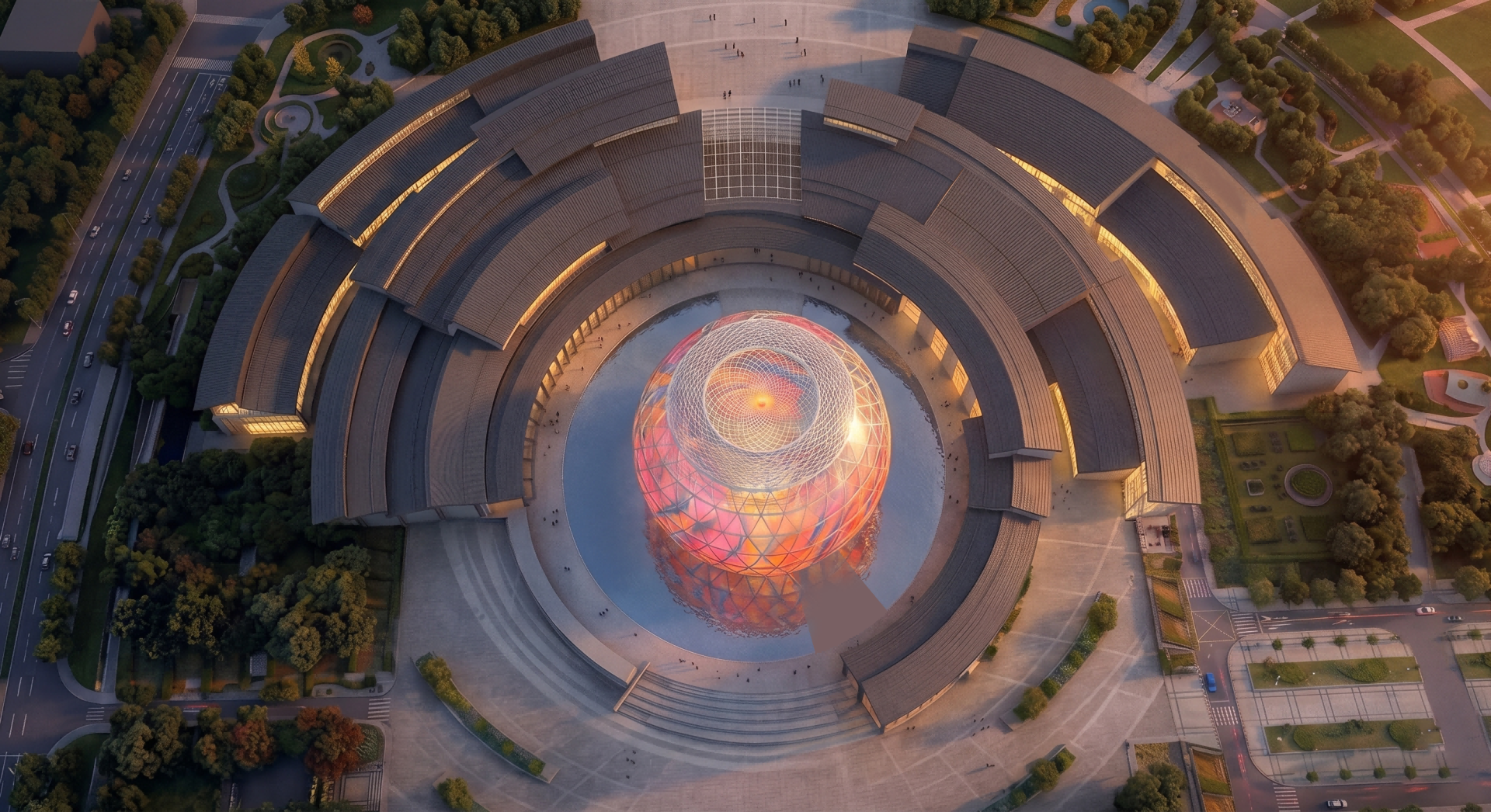
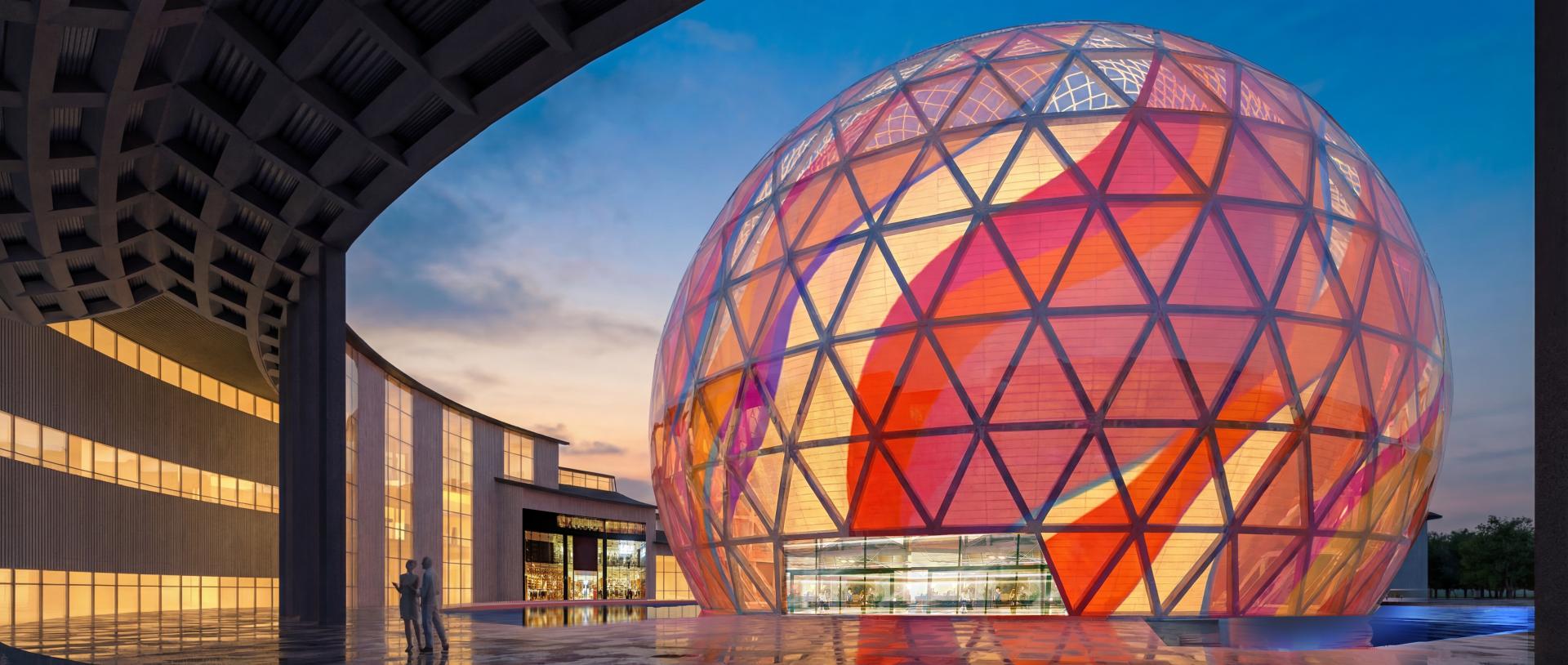
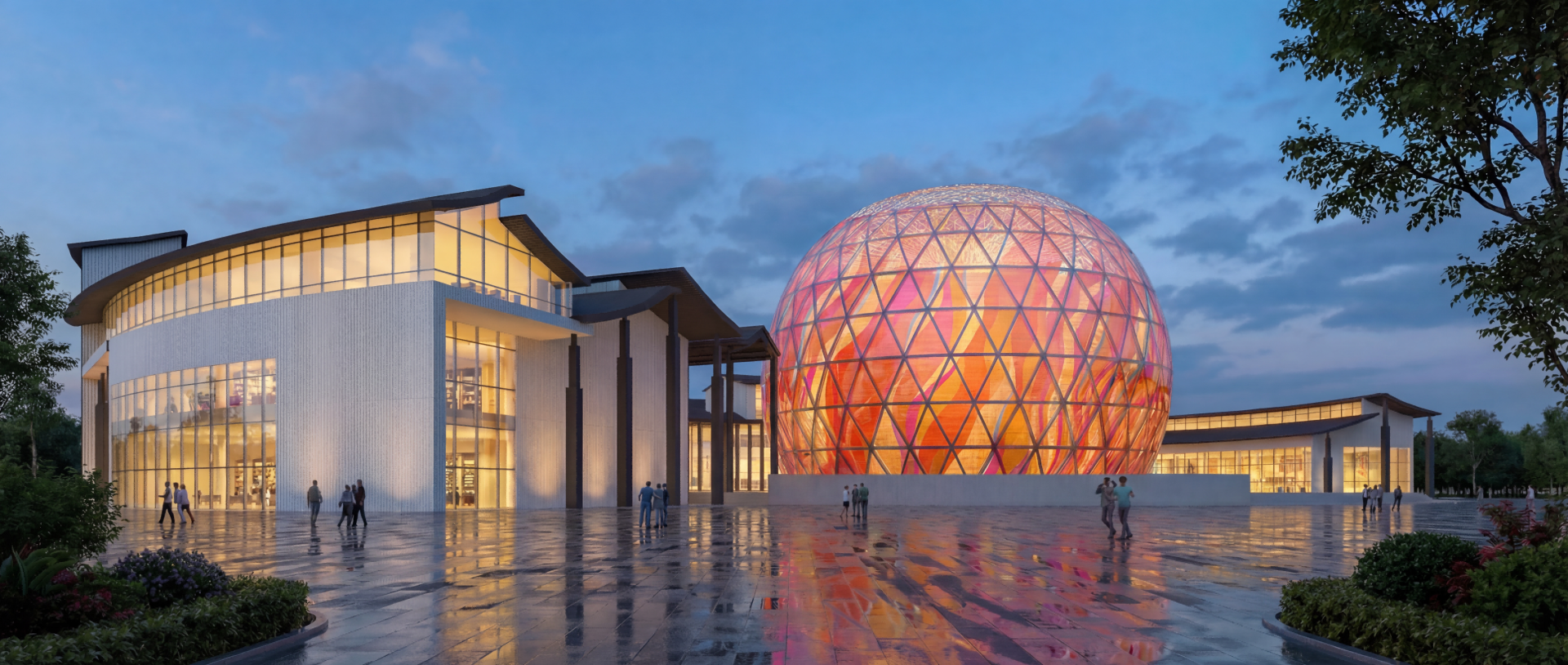
The project's formal centerpiece is a near-perfect sphere — the "Cosmic Vessel" — rising from an open mirror-water plaza. Its geodesic exoskeleton is clad in a parametric, flame-patterned curtain wall of coloured silk-interlayer glass (referencing Rongchang Xiab — another UNESCO intangible heritage of the city). By day the panels mirror sky and cloud; by night, interior illumination transforms the building into a blazing sacred fire visible across the city. Encircling this sphere is a serpentine cultural complex whose undulating roofline evokes the ancient dragon-kiln form, housing a ceramic museum, performing-arts theatre, research institute, creative studios, and a public cultural market.
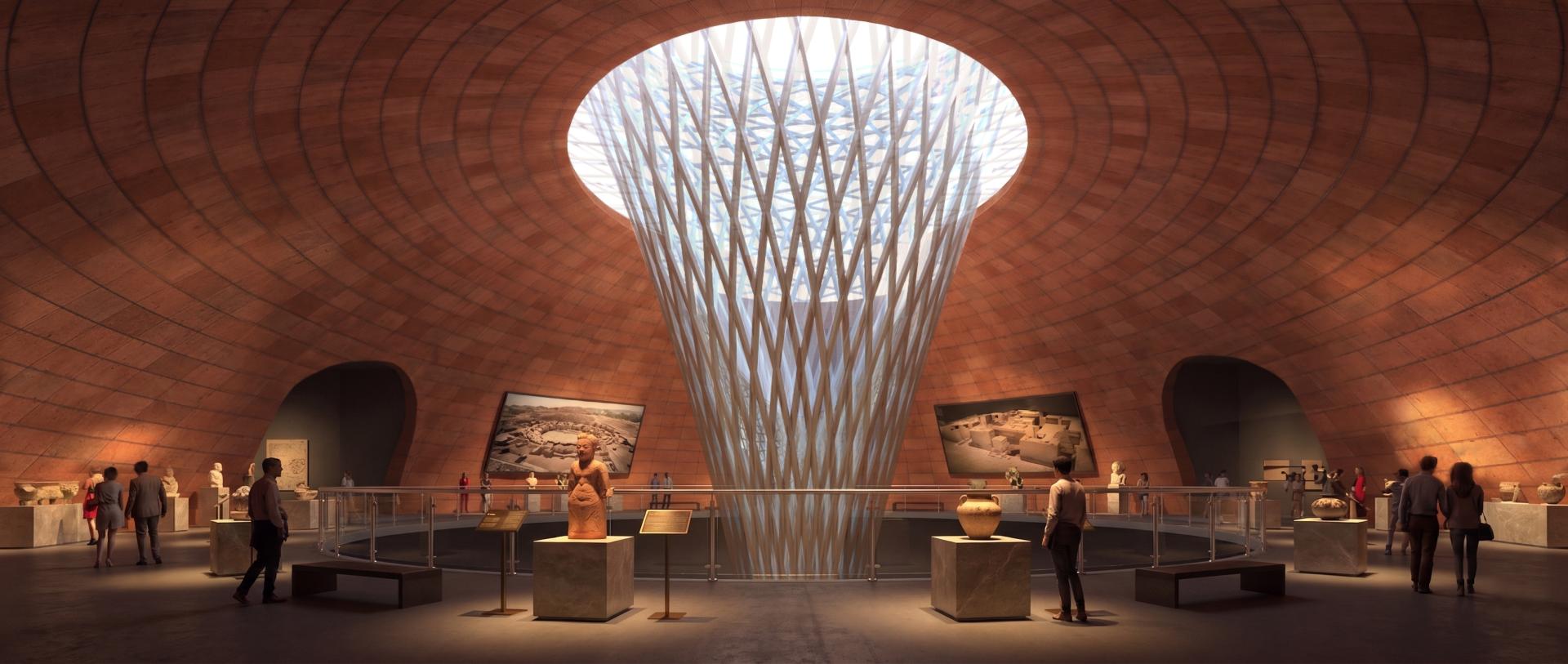
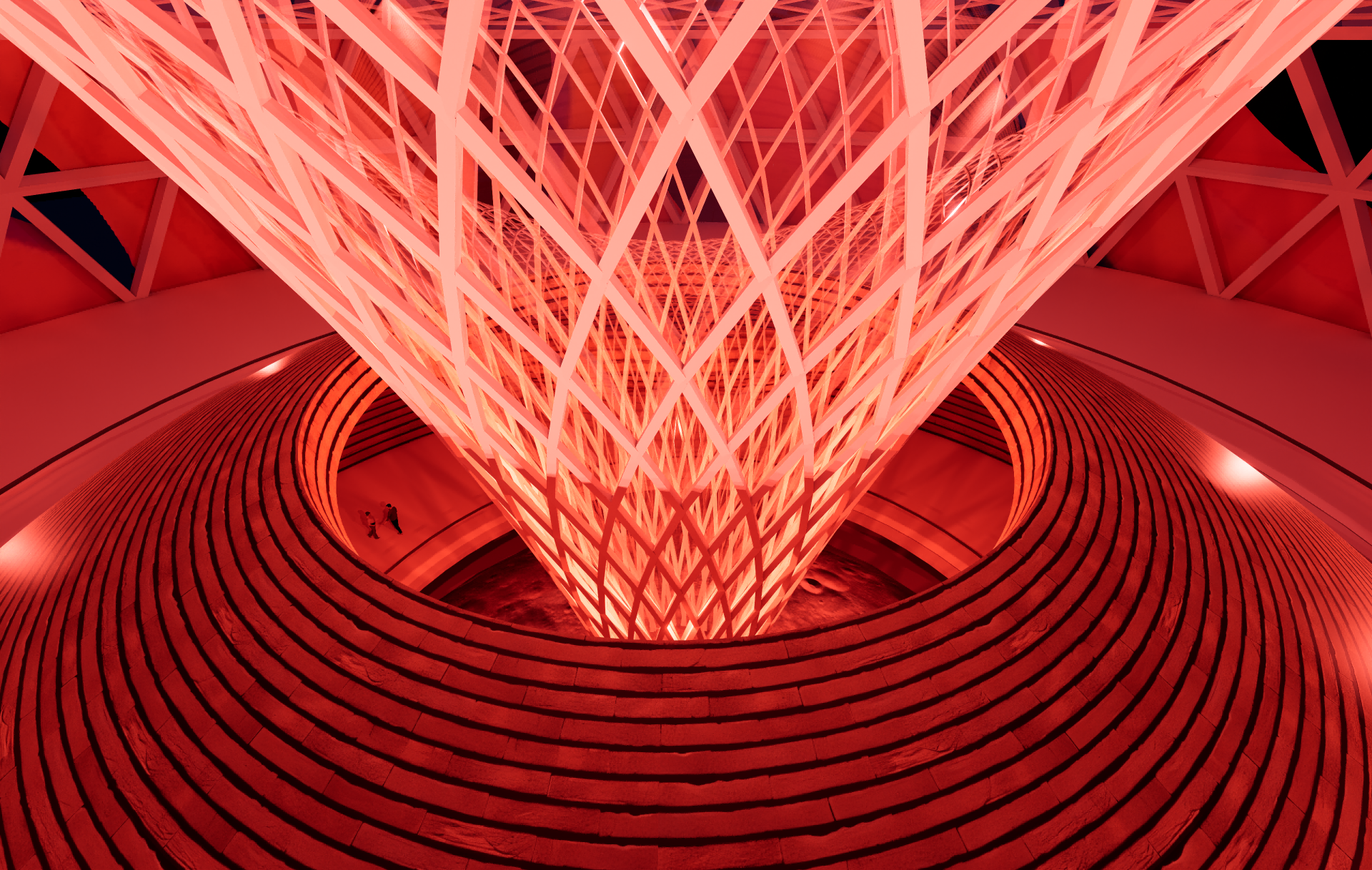
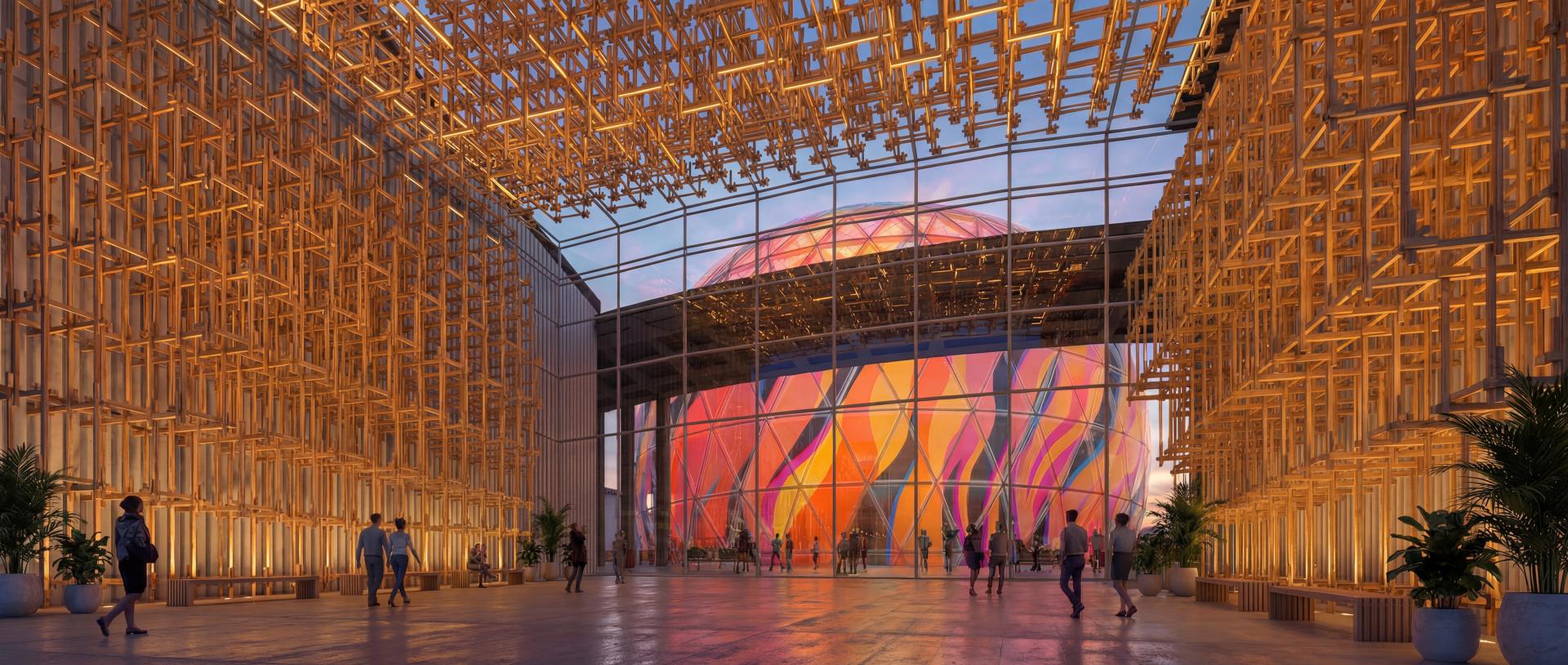
Inside, the visitor journey traces a "Silk Road of the Earth": spiral ramps inspired by Rongchang's woven Xiab cloth guide guests through exhibition halls lined with hand-fired local terracotta panels. The transition hall — "Grain of the Kiln Wood" — suspends massive timber scaffolding overhead, recalling the ancient symbiosis of fuel and clay. The spherical theatre uses acoustic-optimised geometry and a chandelier of interlocking ceramic rods to deliver a synesthetic experience of fire, sound, and form.
Materially, the project fuses high-performance parametric glass engineering with locally sourced Rongchang clay tiles, achieving a rare synthesis of global technology and regional identity. Geothermal heat exchange, rainwater recovery, and passive solar design target low-carbon operation. The result transcends the museum typology: an active cultural ecosystem that bridges two-thousand years of craft with the ambitions of a world-class cultural landmark.
Credits
Entrant
Cheng Chung Design (HK) Ltd.
Category
Interior Design - Hospitality

Entrant
AnLan Design (Shenzhen) Co., Ltd.
Category
Interior Design - Leisure & Wellness
Entrant
Zhoyu Technology Group Co., Ltd.
Category
Architectural Design - Residential

Entrant
Beijing De Fang Yuan
Category
Interior Design - Mix Use Building: Residential & Commercial