2026 | Professional

From Force to Form
Entrant
sky&snow design, AF International Art
Category
Architectural Design - Small Scale & Installation
Client's Name
AF International Art
Country / Region
China
Gallery


About The Entry
Wind has no visible form.
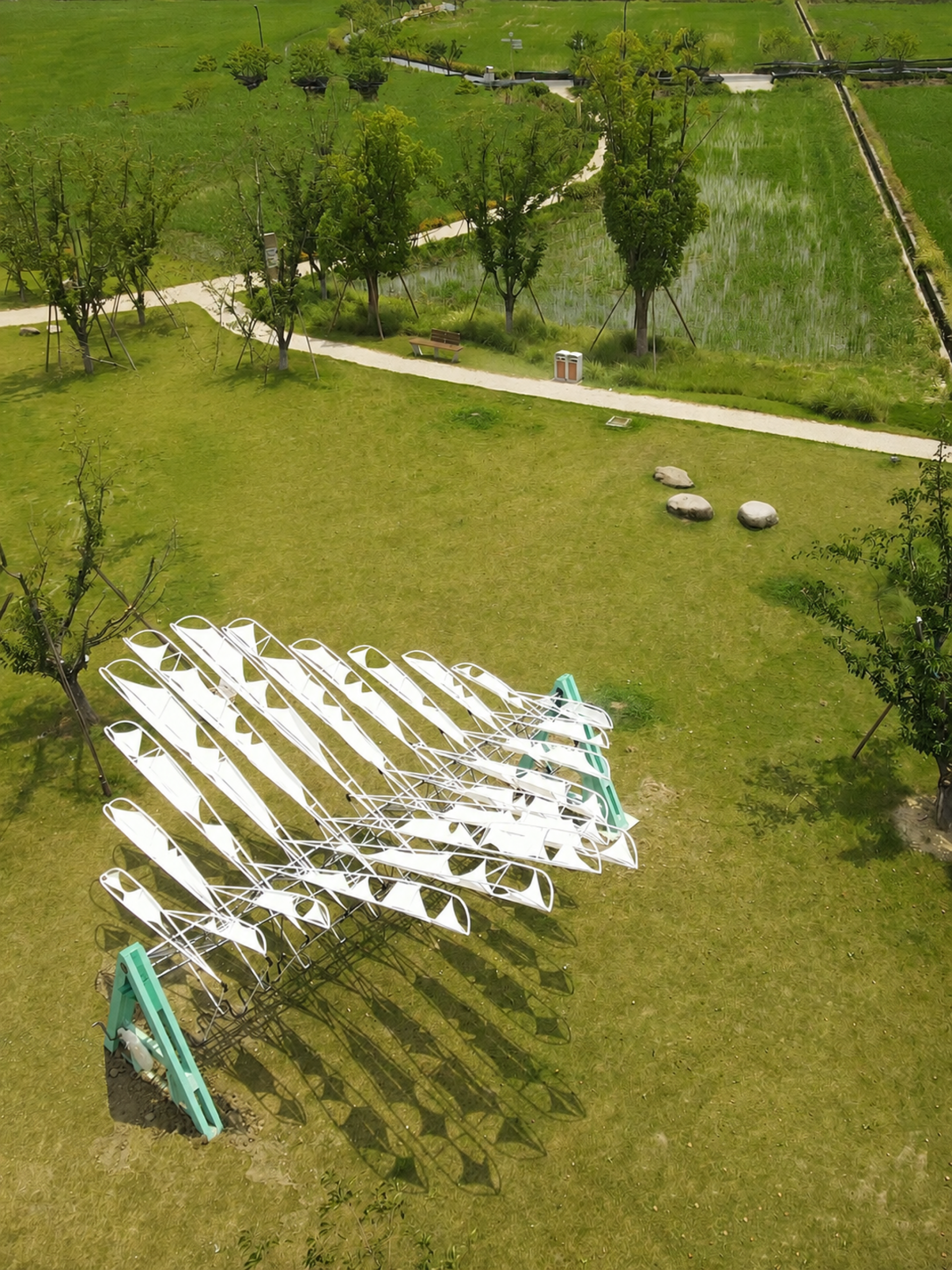
We sense its presence, yet rarely see it. This project explores how an invisible environmental force can be captured, translated, and transformed into a visible spatial experience through a kinetic structure.
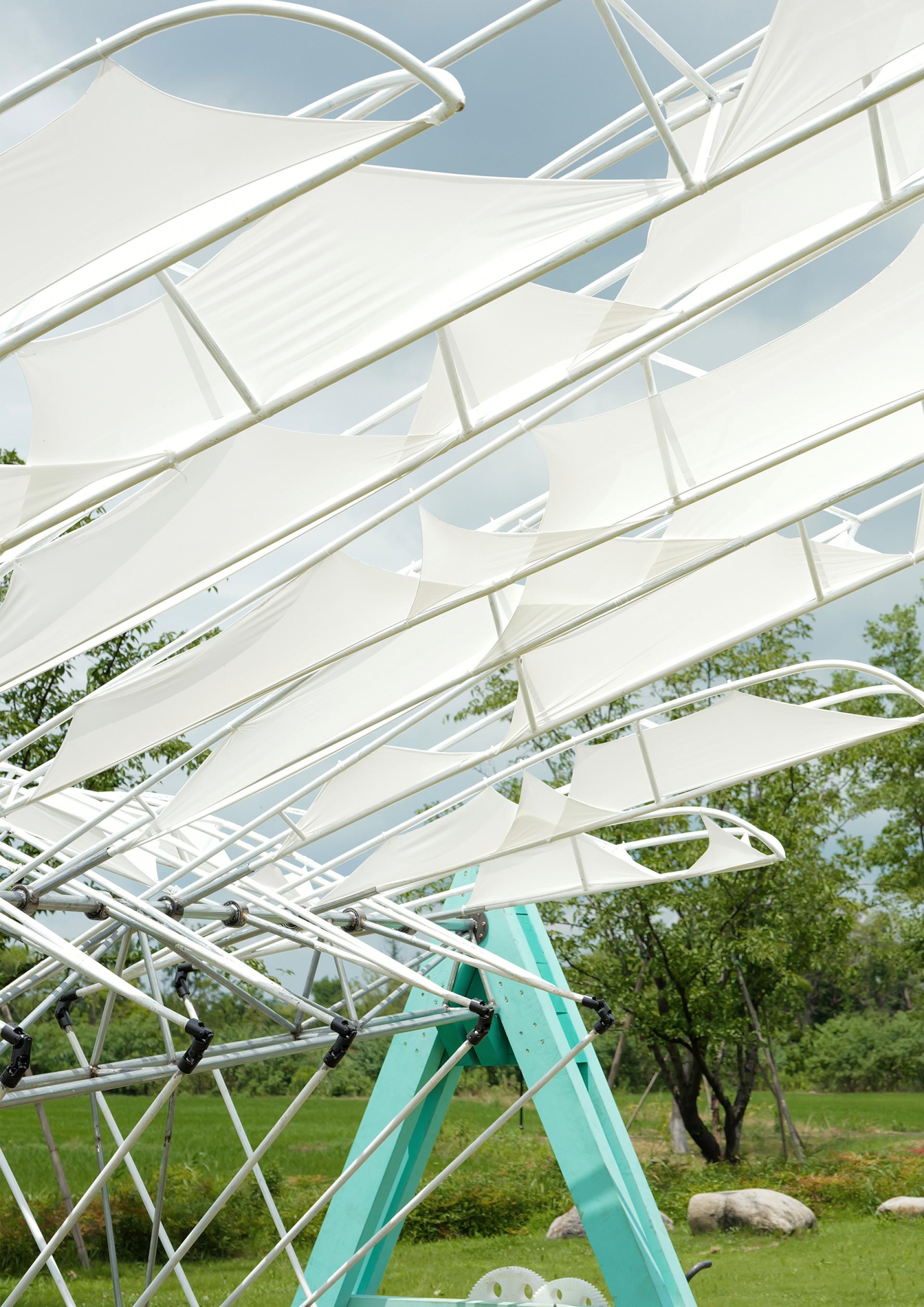
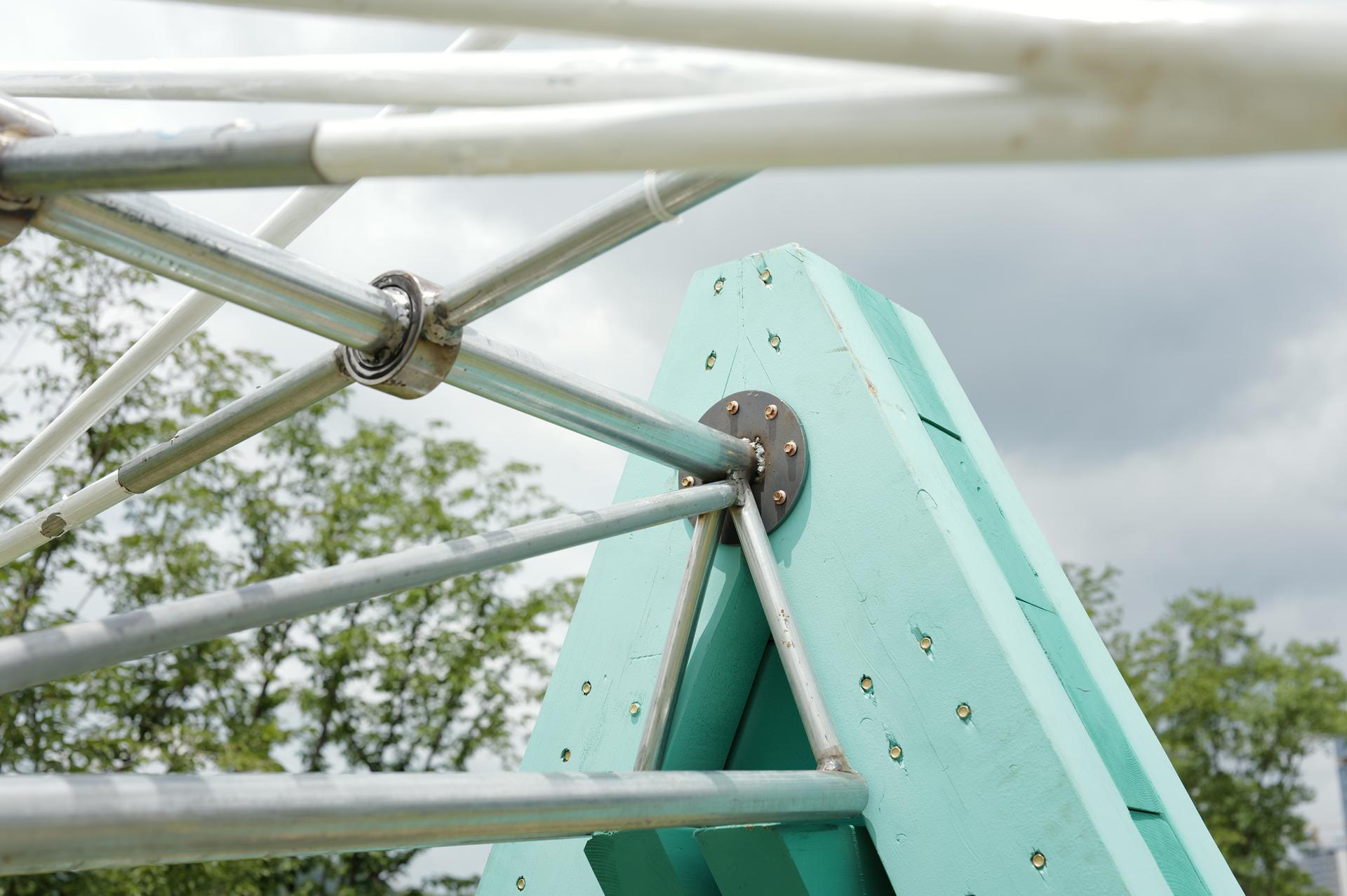
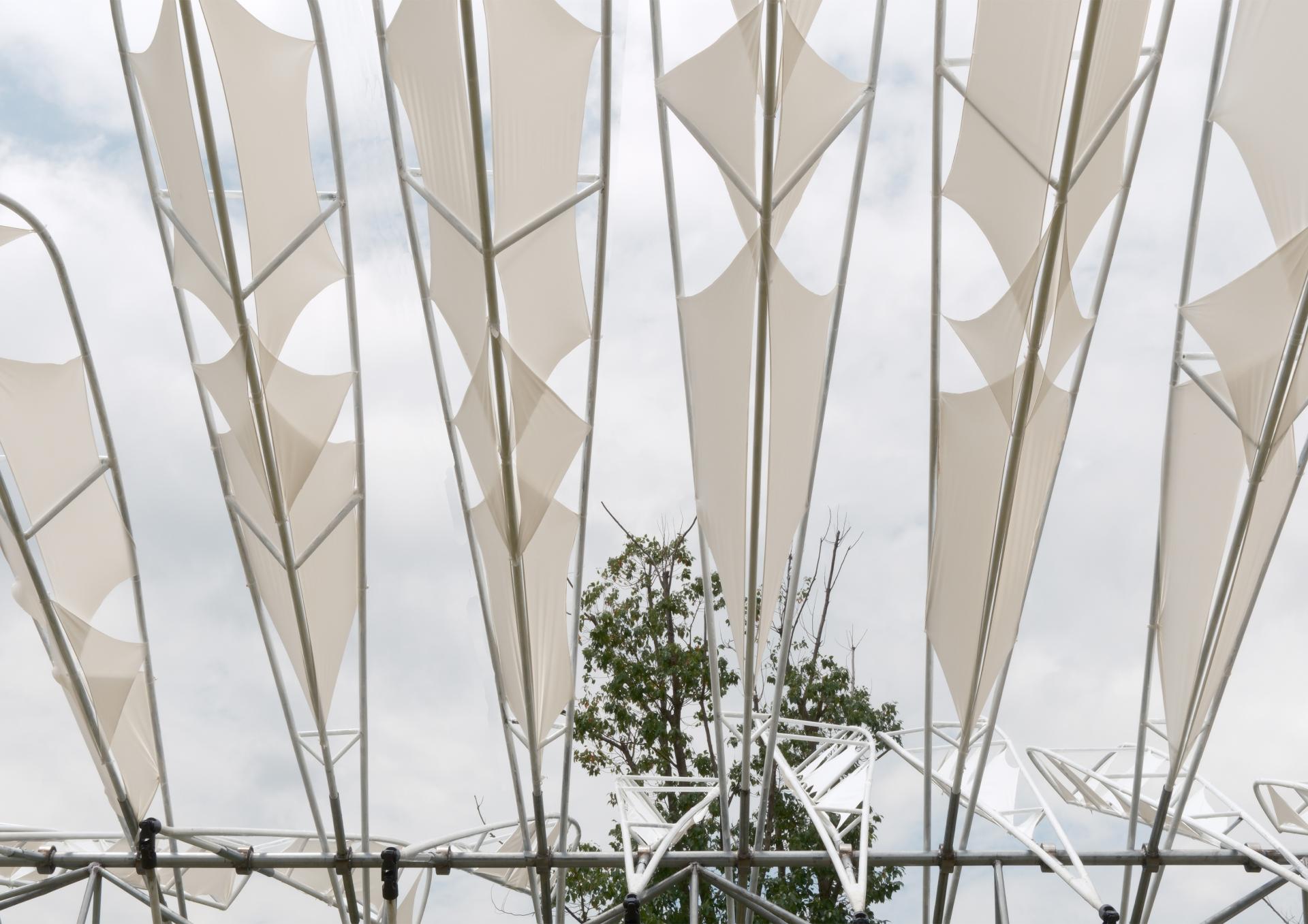
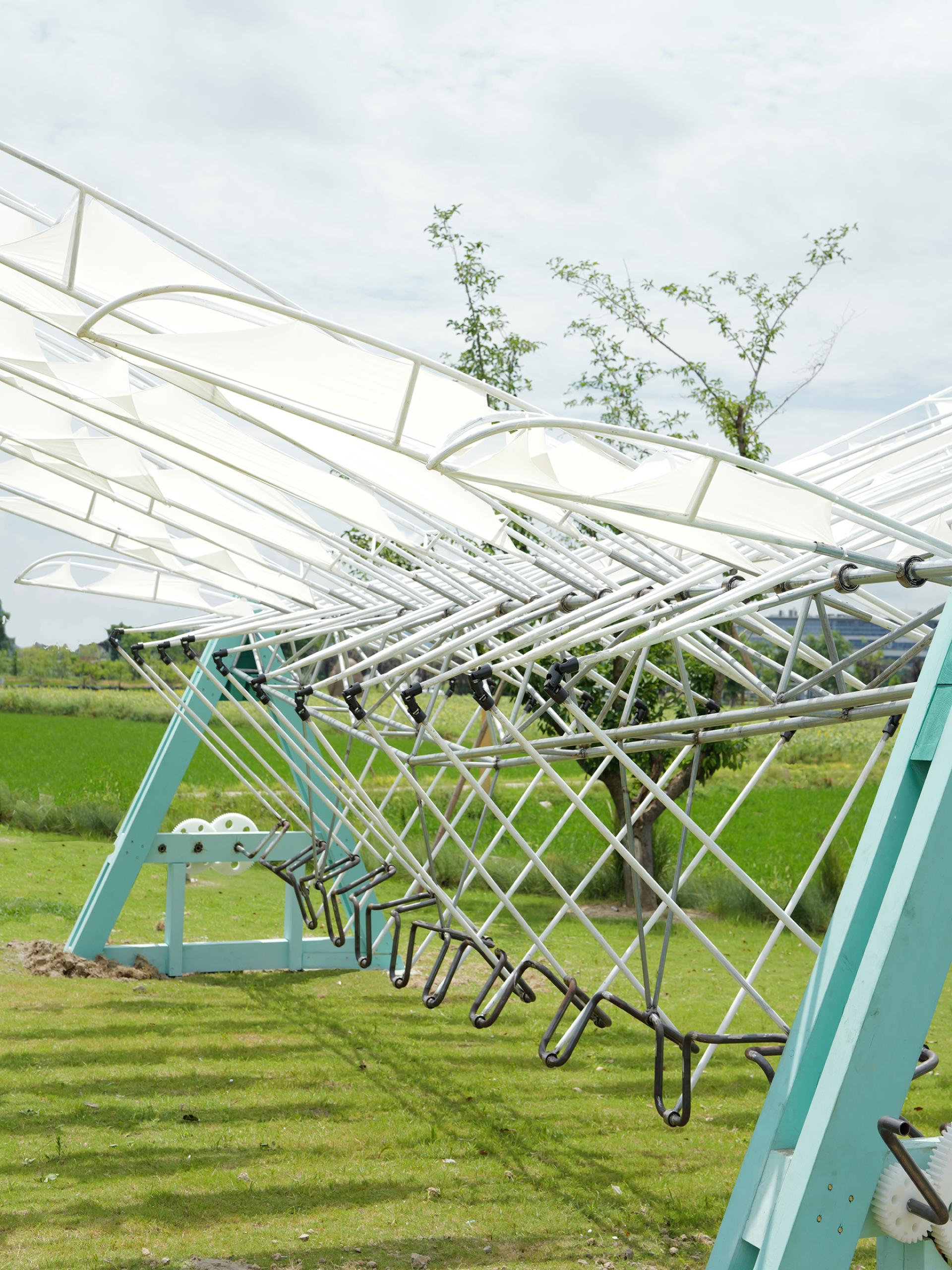
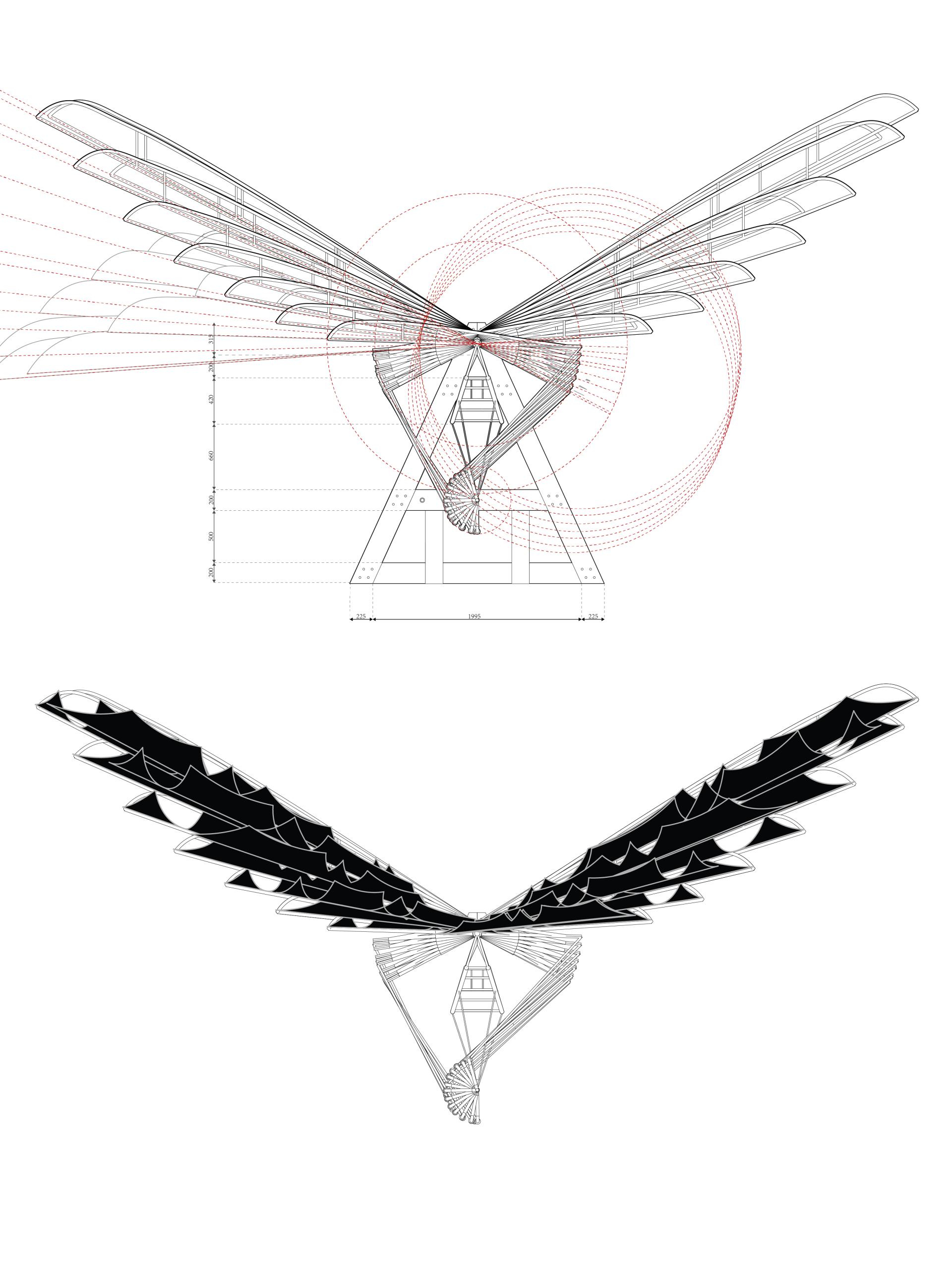
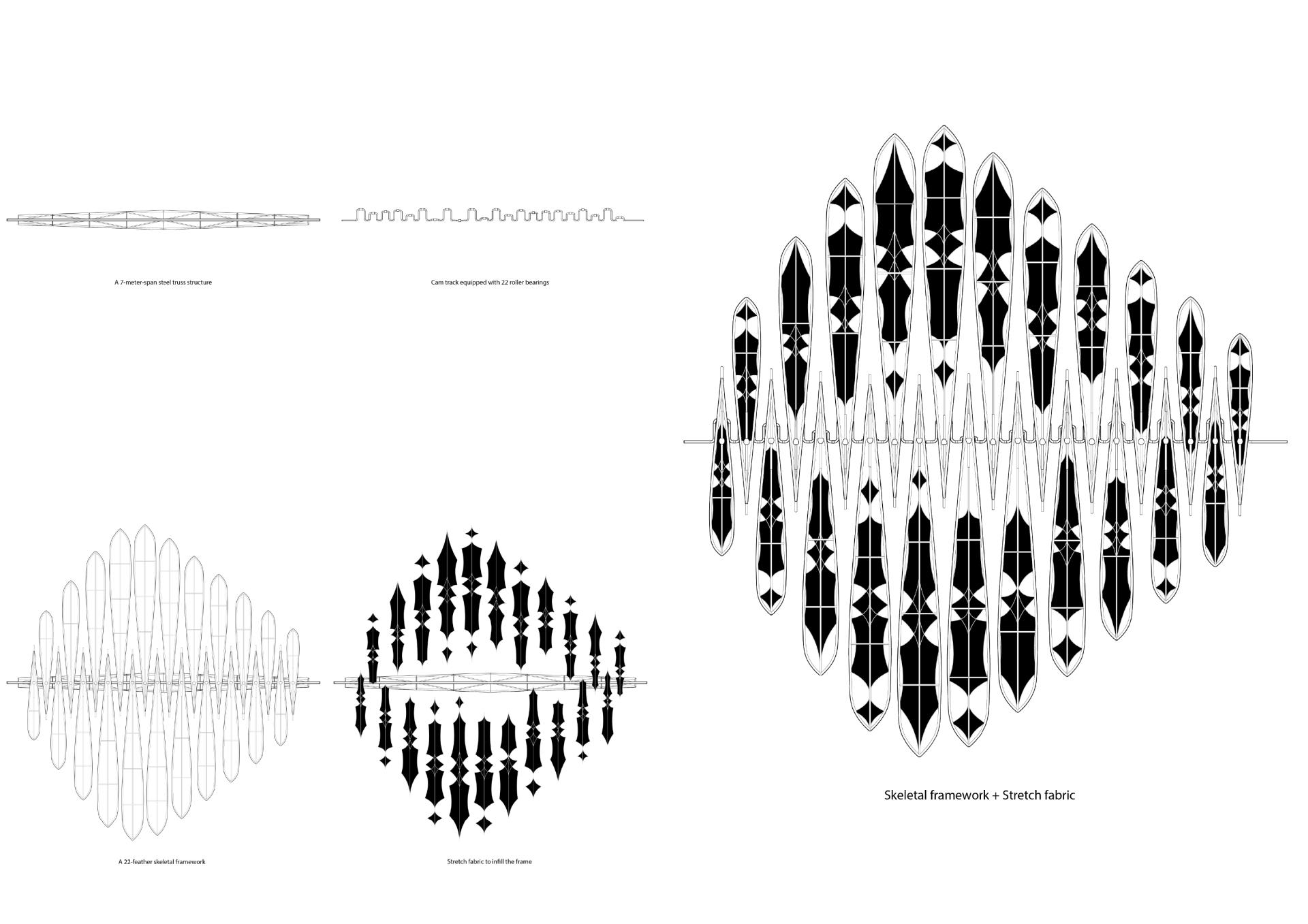
The installation comprises wing-like dynamic components of lightweight frames and stretched fabric surfaces. Similar to the sails of a boat, the fabric becomes a responsive interface between air and structure. Wind moving across the surface generates distributed forces, captured and transmitted through a mechanical network of bearings, cables, linkages, articulated joints, universal joints, and cam-driven mechanisms. These subtle and continuously changing forces are transferred, redirected, and amplified through the system, transforming environmental energy into controlled structural movement.
The mechanical system acts as a translator between natural forces and spatial expression. A single bearing’s rotation, a cable’s tension, or a linkage’s movement can influence the entire structure. Through carefully calibrated relationships between components, local movements are connected into a larger choreography, allowing the wings to expand, contract, and glide along precisely defined trajectories.
Wind is no longer an external environmental load, but an active participant in shaping space. Variations in speed, direction, and pressure generate different mechanical responses: joints rotate, components shift, and the wings continuously search for new states of equilibrium. The installation is not a fixed form but an evolving system shaped by natural forces, material behavior, and mechanical logic.
The project is guided by the principle of From Force to Form—transforming invisible forces into a tangible spatial language. Through parametric design and digital simulation, the positions of structural nodes, the geometry of cam tracks, and the relationships between bearings, linkage lengths, and connection points are precisely calculated. These computations define each wing's movement logic and support fabrication. Inspired by kinetic explorations like Theo Jansen’s Strandbeest, this project treats mechanics not as a tool to resist nature, but as a mediator between humans and the environment. The designer does not create a fixed shape, but establishes a responsive system of rules.
The installation has no final form. It continuously evolves—
from wind, to force;
from force, to motion;
from motion, to form.
Credits

Entrant
Hsu Wen An、 Tsai Cheng-Lin Architects
Category
Interior Design - Hotels & Resorts
Entrant
Chang Jung Christian University
Category
Conceptual Design - New Category
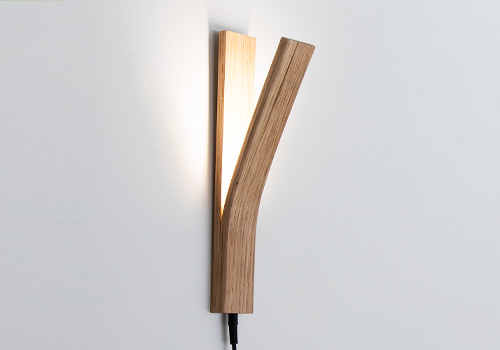
Entrant
YrLiDesign
Category
Lighting Design - Wall Lamps / Lighting
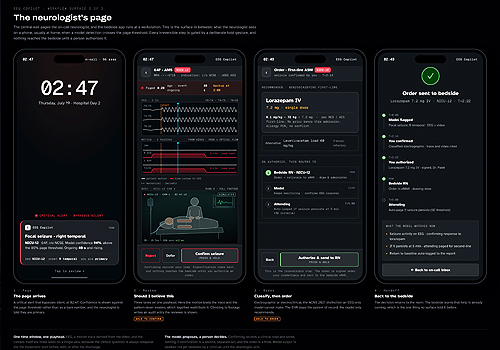
Entrant
Zhiyin Zhou Studio
Category
Product Design - UX / UI / IxD