2025 | Student

Void Connections-Synthetic Nature and Co-living Housing
Entrant Company
Studio of Zaiyang Tian
Category
Architectural Design - Adaptive Reuse
Client's Name
Country / Region
United States
Inclusionary housing—where developers are incentivized to provide a stipulated number of units at below-market rates in exchange for tax credits and relaxed zoning regulations—has had two primary benefits. First, it expands the issue of substandard living and income inequality from being strictly a governmental issue and opens it to private sector investment, where there is funding for large-scale housing and aggressive competition. Second, it moderates housing shortages onset by the rapid gentrification of traditionally low-income neighborhoods.
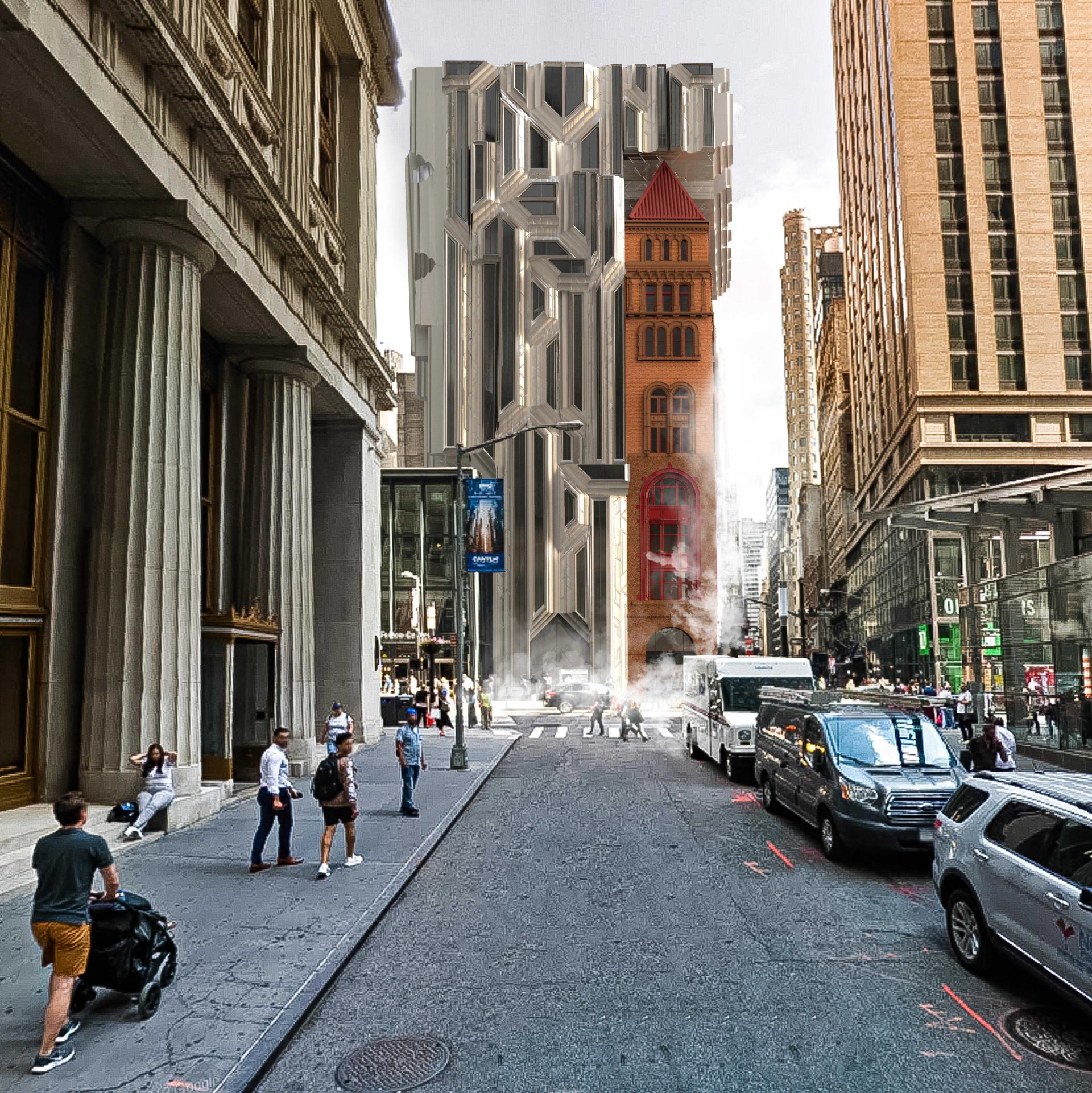
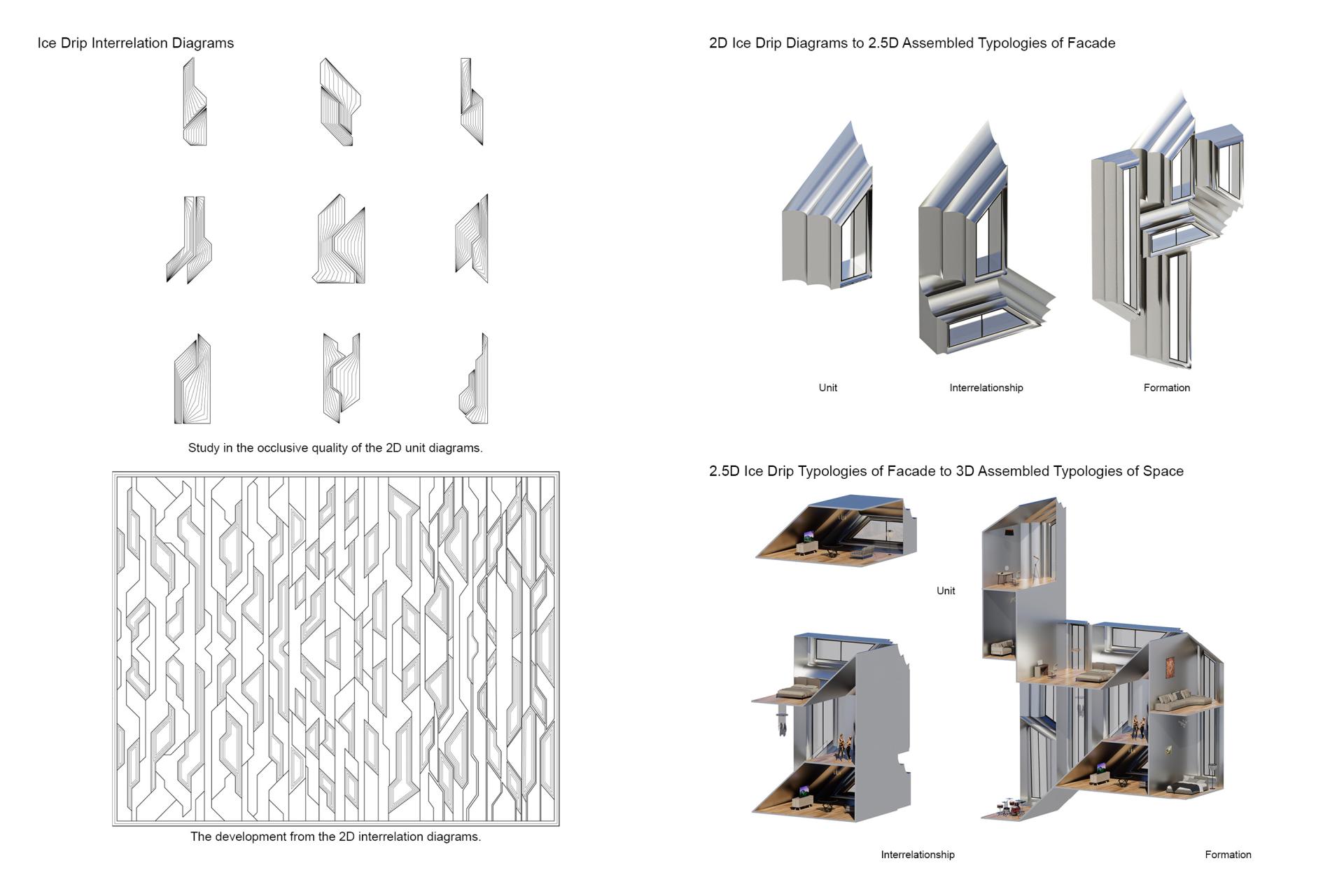
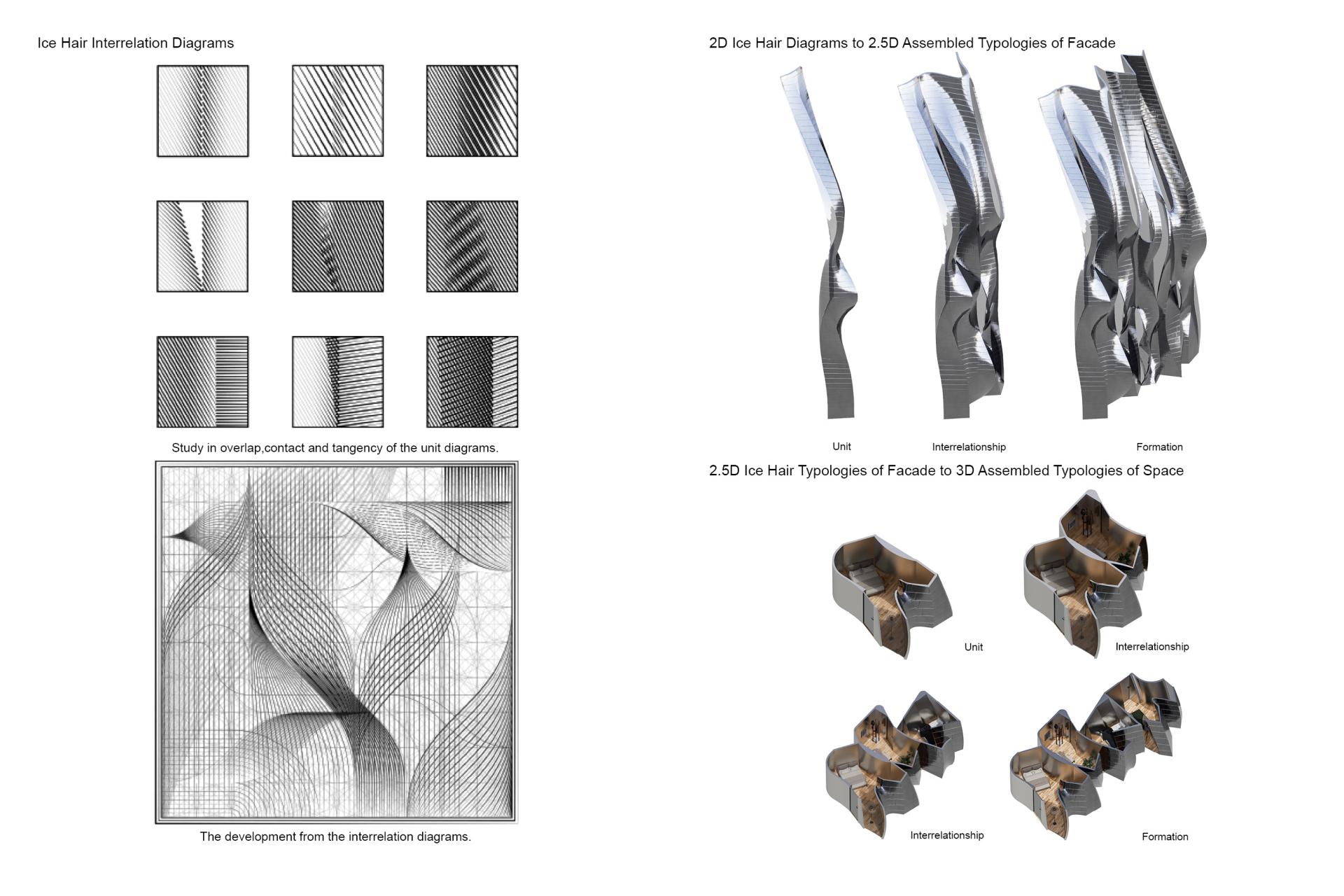
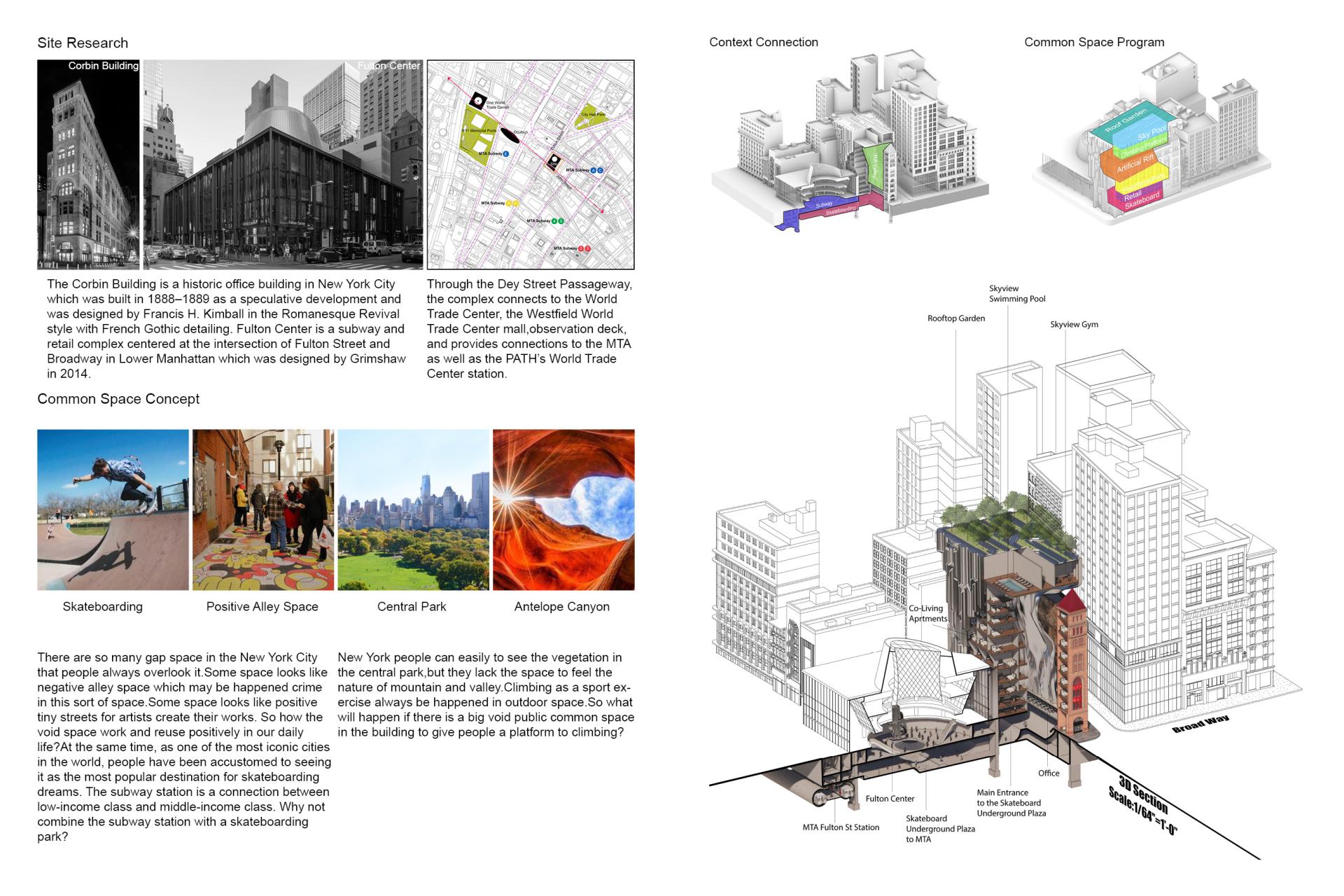
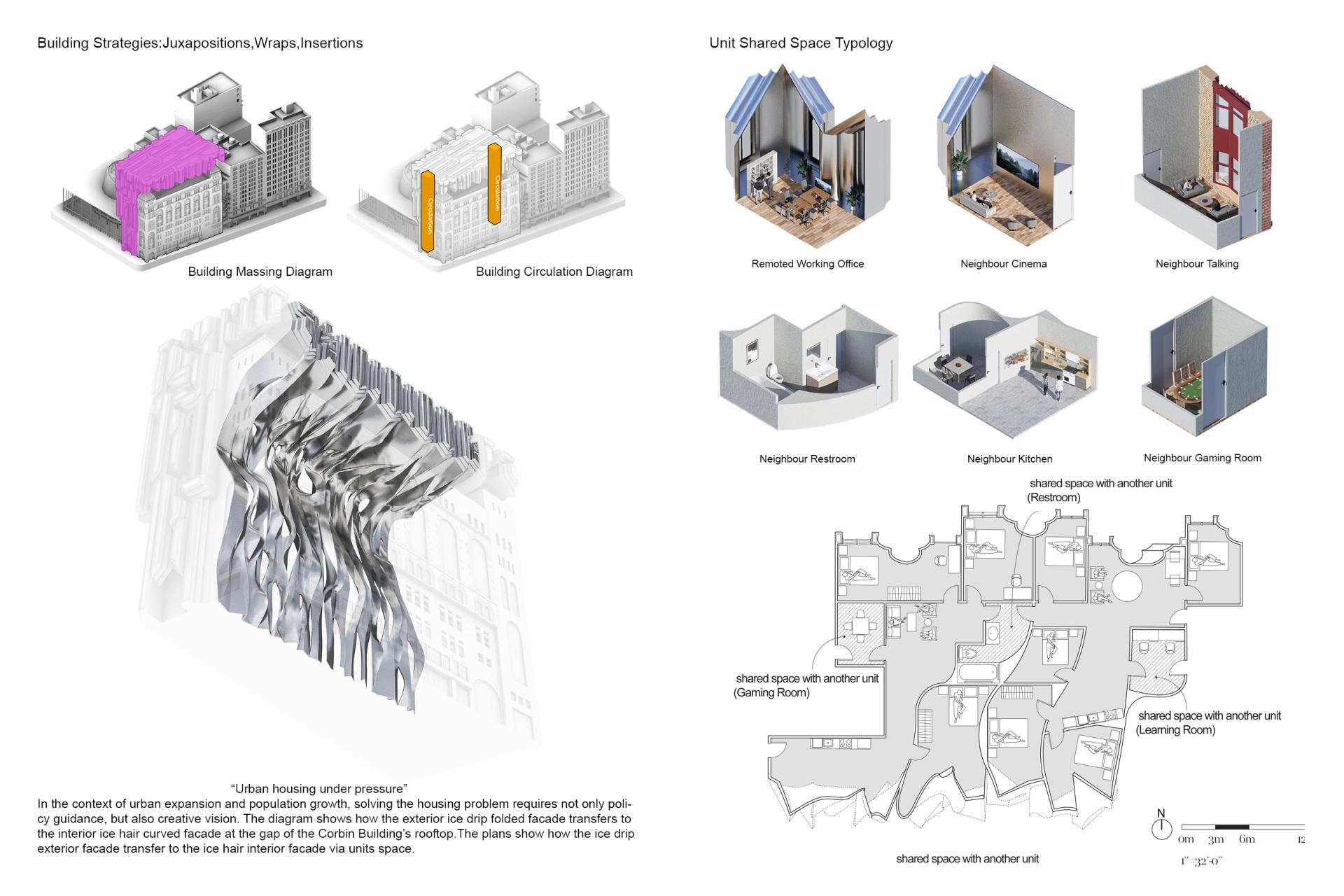
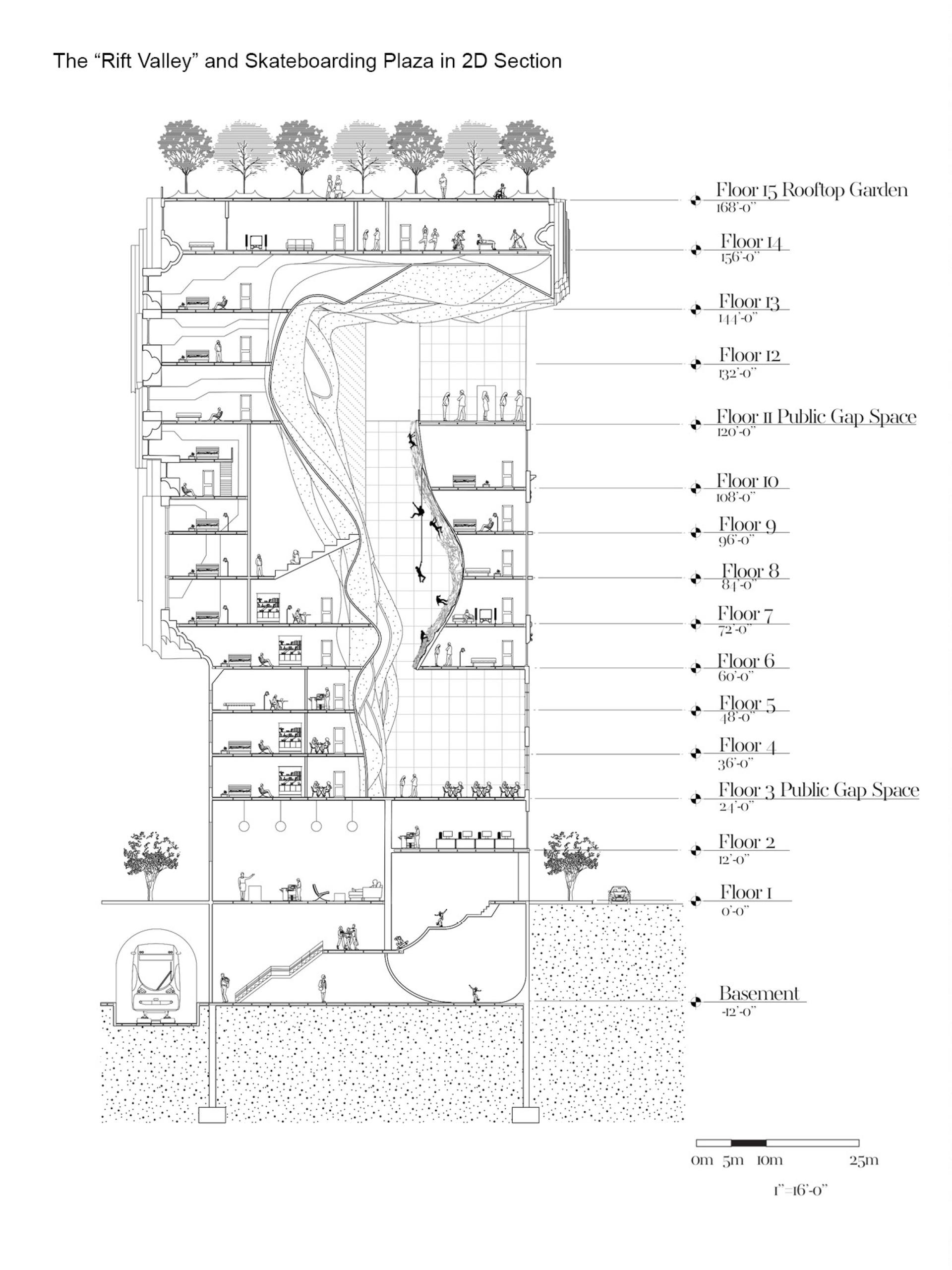
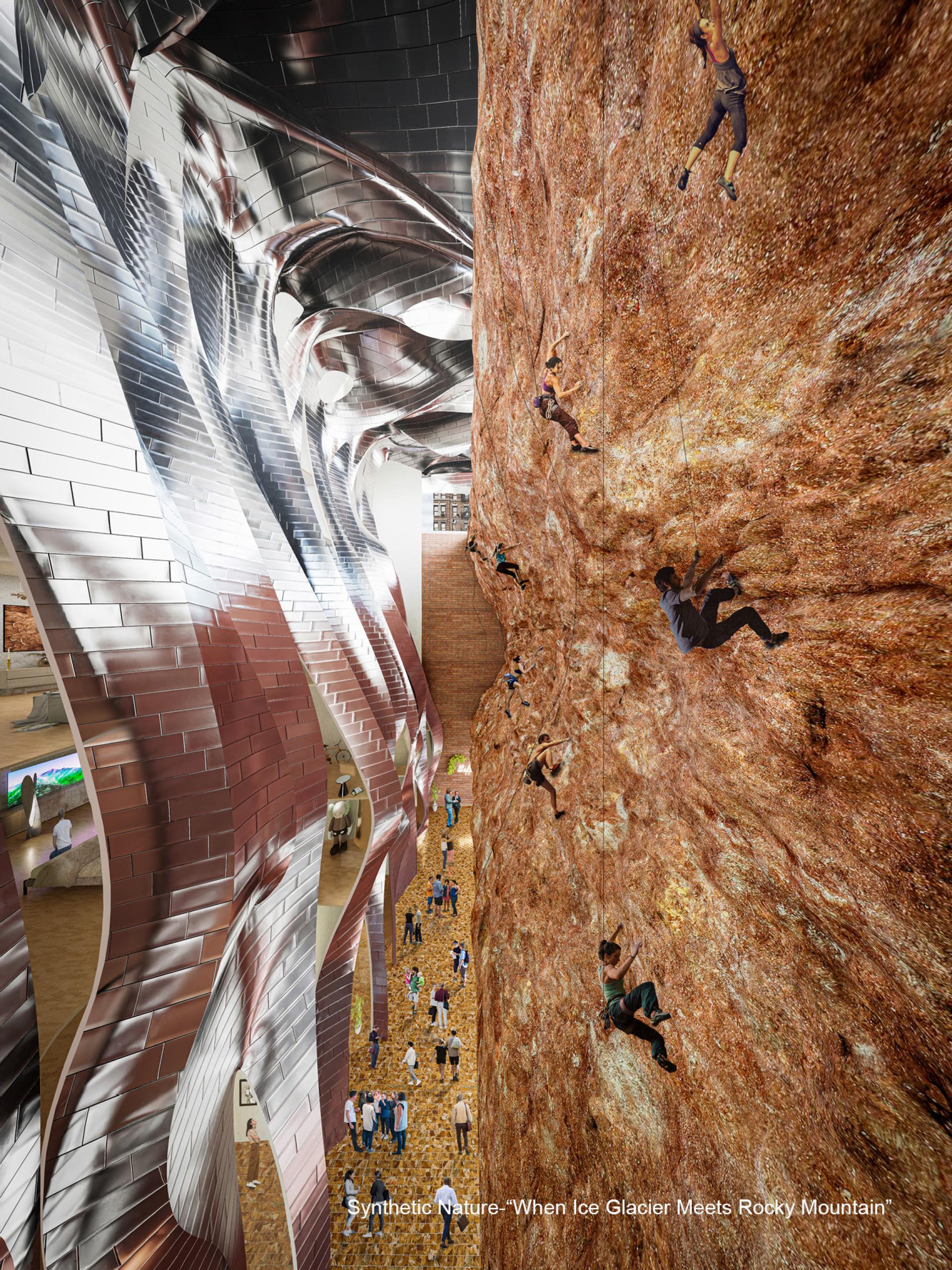
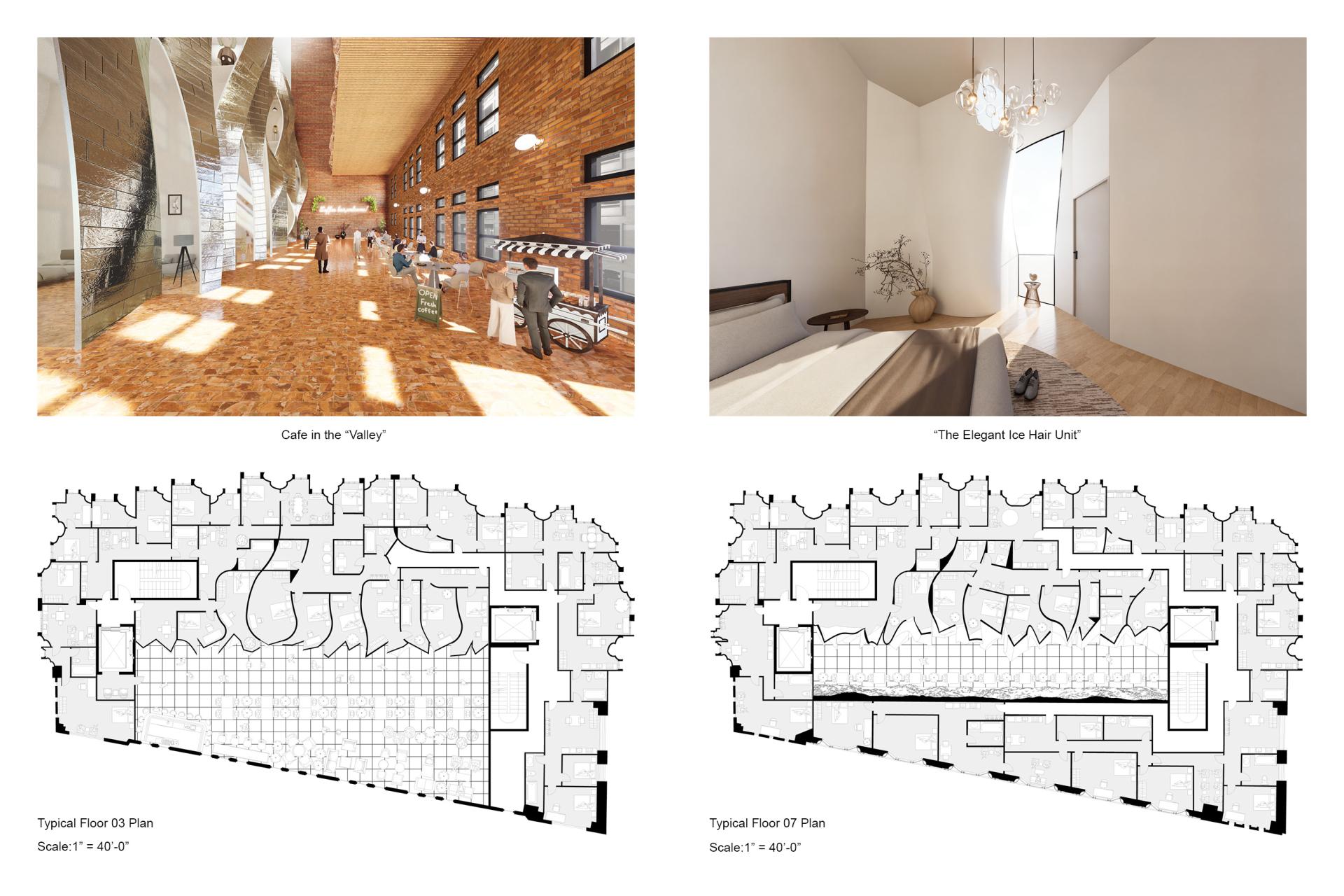
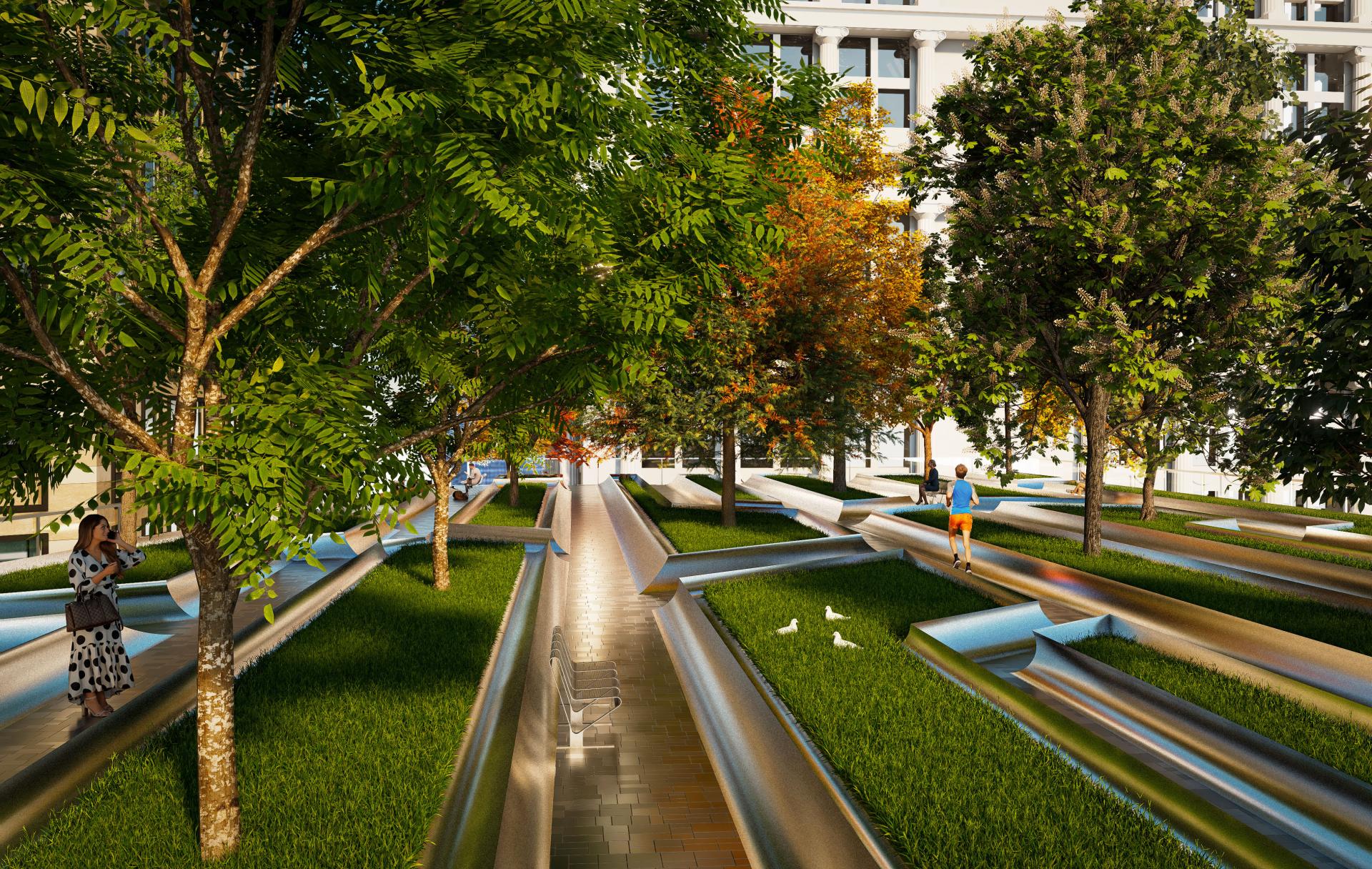
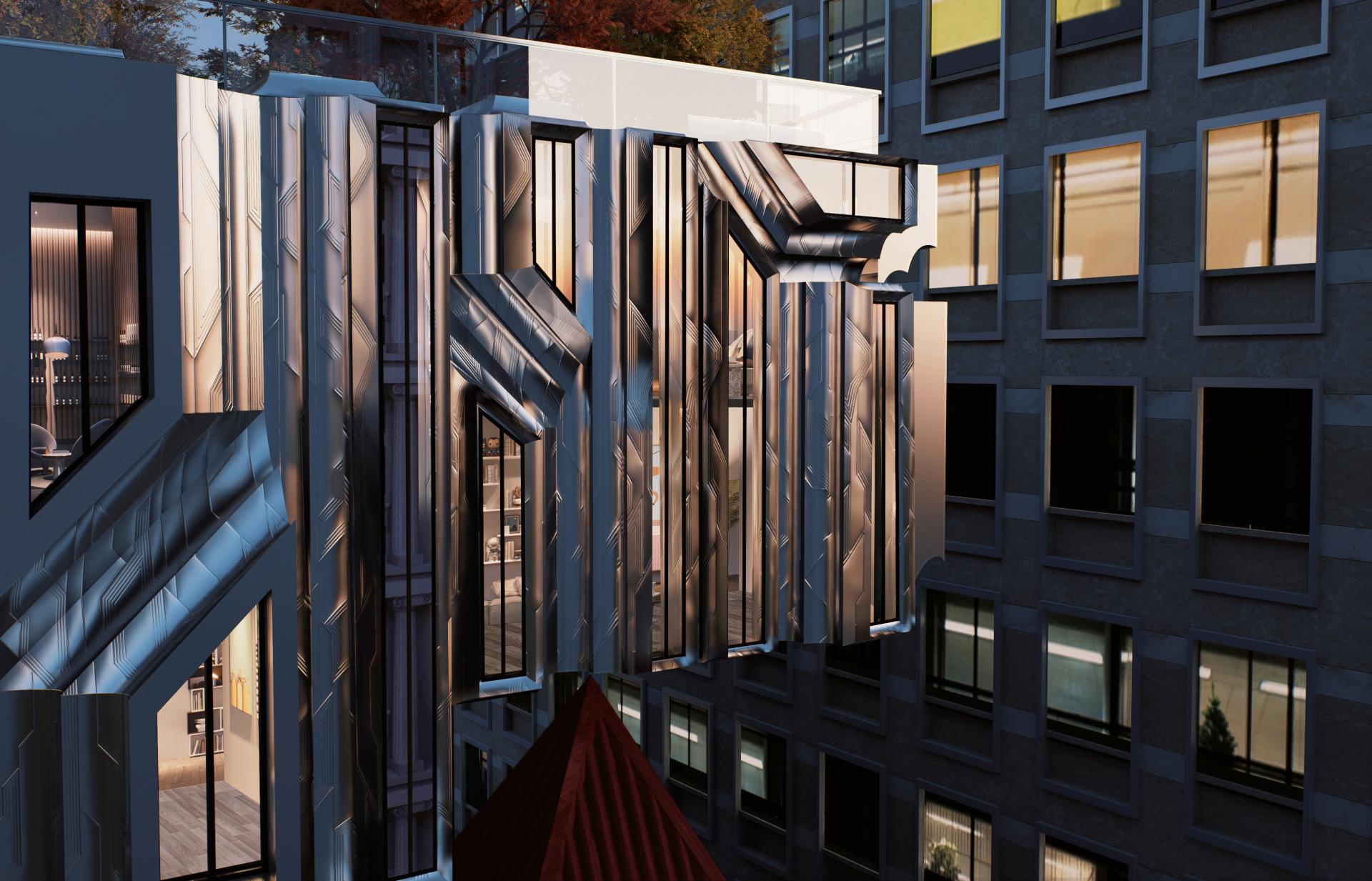
New York City is a pioneer city in housing policy. But governmental authorities are faced with shrinking budgets, which force them to figure out how to do more with limited vacant land and fewer capital resources. This project adaptively reuses the Corbin Building in downtown Manhattan as urban co-living housing in the social background. Different from those “hypocritical buildings” where different income classes’ units are superficially integrated into one building but separated by different circulations, not only does the project integrates different social classes’ cultures as different common programs in one building but also be considered to use suitable private programs to share in-between two adjacent units. The project organically integrates different cultures representing low-income and middle-class groups in the spatial design, like street skateboarding culture and rock climbing culture for the common space design, or a shared bathroom for two different classes’ units due to it reflecting the basic equal requirement of human.Synthetic nature is an artificial landscape. It has obvious traces of human creation to distinguish the real details of nature, but it is cleverly integrated with real nature. The project abstracted ice details for the form and spatial design as a response to New York’s climate. The design followed the principle “from unit to interrelation to formation” in different dimensions from 2D to 2.5D to 3D design contents.
Credits
Entrant Company
Genie Interior Decoration Design Engineering Co., Ltd.
Category
Interior Design - Renovation
Entrant Company
Hefei Shangshi Decoration Design Co., Ltd.
Category
Interior Design - Cultural
Entrant Company
OOKADA / MUMU interior design
Category
Interior Design - Residential
Entrant Company
China Express Airlines Exqusite Life E-Commerce Co. ,Ltd.
Category
Packaging Design - Limited Edition