2026 | Professional

Daqing Urban Renewal: Landsee
Entrant Company
Slow Coral Design
Category
Architectural Design - Adaptive Reuse
Client's Name
Daqing Urban Development Group Co., Ltd.
Country / Region
China
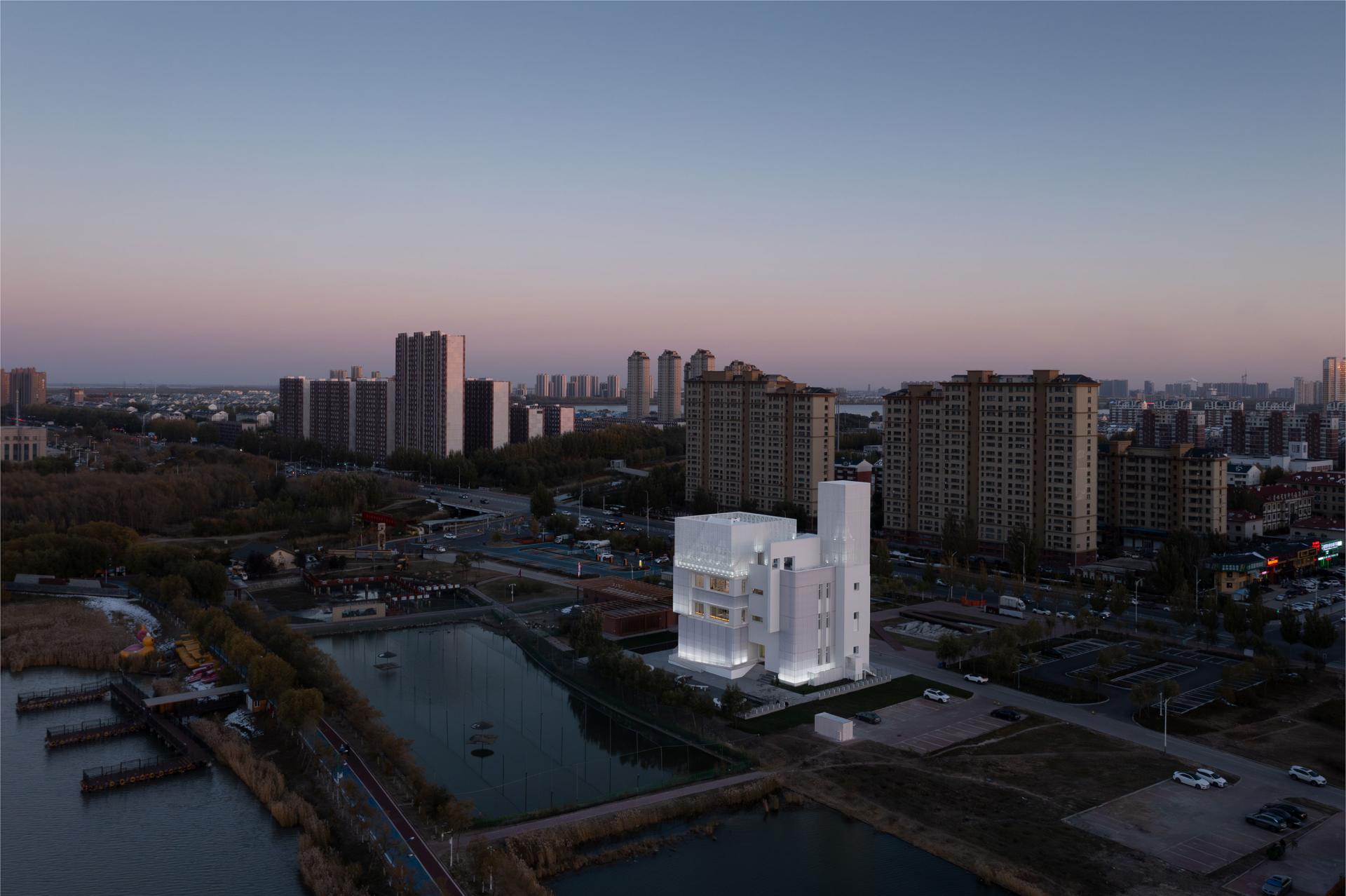
As the “City of a Hundred Lakes,” Daqing is at a critical turning point, transitioning from a petroleum-based industrial city toward a modern and livable urban environment. Within this context, the rational development of waterfront resources and the enhancement of public space quality have become central issues in the city’s urban regeneration agenda. Located on the shores of Lande Lake in the core of the eastern district, the project occupies one of the five European-style buildings originally developed as part of the “Red Wine Plaza.” Due to its outdated architectural expression, vast and inefficient interior spaces, and mono-functional program, the building had long remained underutilized, failing to realize its potential as a connective hub linking the city, nature, and community.
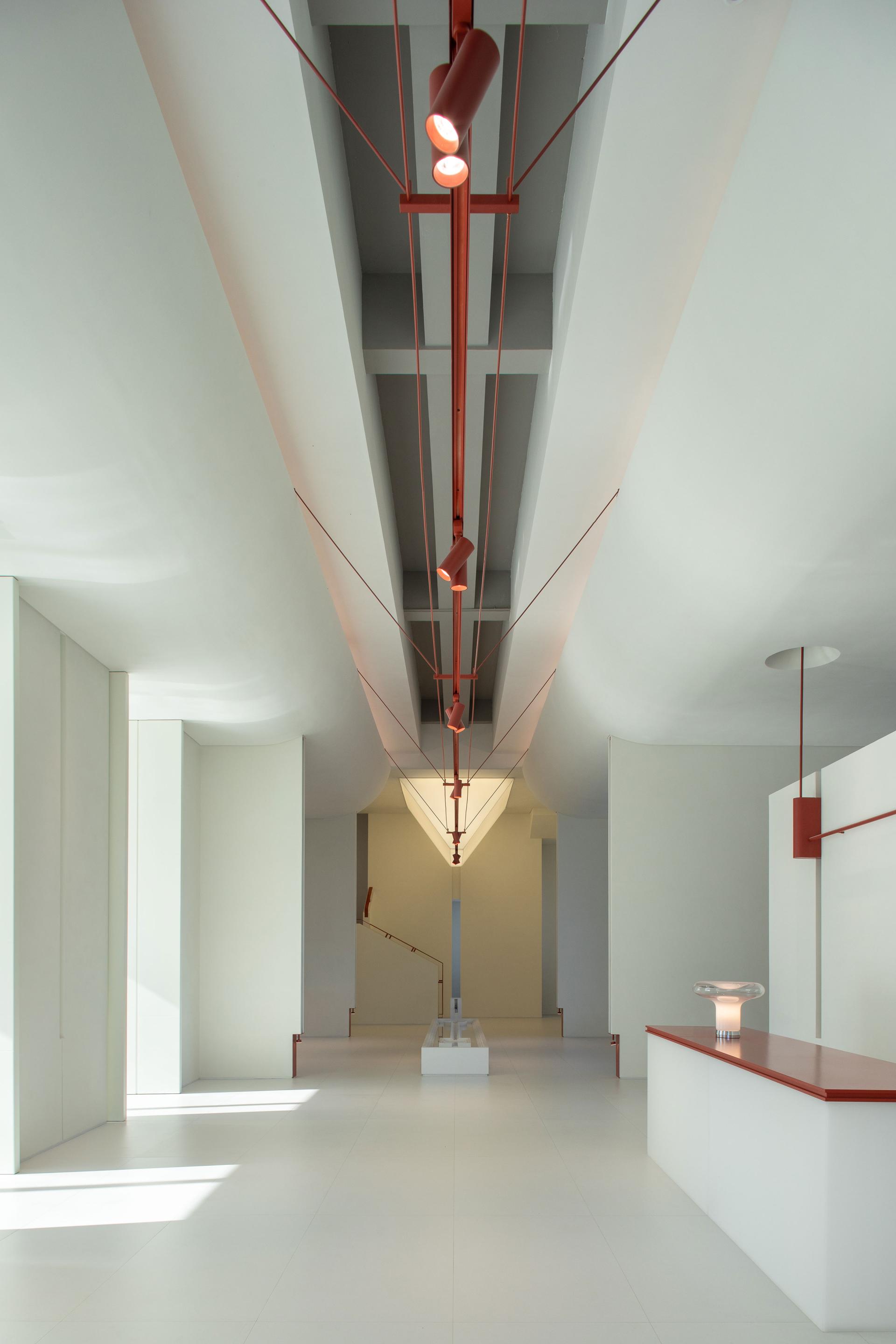
Guided by the principles of minimal intervention and structural preservation, the design fully retains the original structural system. A new envelope composed of lightweight white corrugated panels and perforated metal screens is applied to the exterior, subtly pixelating and visually dissolving the building’s mass. This restrained façade strategy not only responds, through a contemporary architectural language, to Daqing’s identity as an “Ice and Snow City,” but also creates the impression of a volume gently floating along the lakeside. Internally, the building is reprogrammed to better accommodate contemporary urban life, transforming a once vacant and single-purpose space into a hybrid “urban living room” that integrates an art exhibition hall, the local brand Meng Café, public reading areas, and spaces for cultural salons. As a unifying visual motif, red metal elements run through all levels of the interior, subtly translating and paying tribute to Daqing’s deep-rooted petroleum industrial heritage.
Since completion, the project has quickly become a social media landmark, transforming cultural value into sustained social and commercial vitality. It has reactivated a neglected lakeside zone, attracting youth engagement and serving as a daily gathering space for surrounding communities. Acting as precise "brand acupuncture," this minimal-intervention renovation turns a disused asset into an engine for district revitalization, demonstrating how adaptive reuse can enhance urban identity and public life.




Credits

Entrant Company
Shuo Han
Category
Landscape Design - Regenerative Landscape Design (NEW)

Entrant Company
Zhejiang Zhixiang Home Furnishings Co., Ltd
Category
Product Design - Textiles / Floor Coverings

Entrant Company
Prism Design Consulting
Category
Interior Design - Factory / Warehouse (NEW)

Entrant Company
Redfish di Giovanni Murgia
Category
Packaging Design - Wine, Beer & Liquor