2026 | Professional

ONE OASIS
Entrant
Shenzhen Huige Design Co, Ltd.
Category
Architectural Design - Commercial Building
Client's Name
Guangzhou Qirui Real Estate Development Co., Ltd. (China Overseas Properties)
Country / Region
China
Gallery




About The Entry
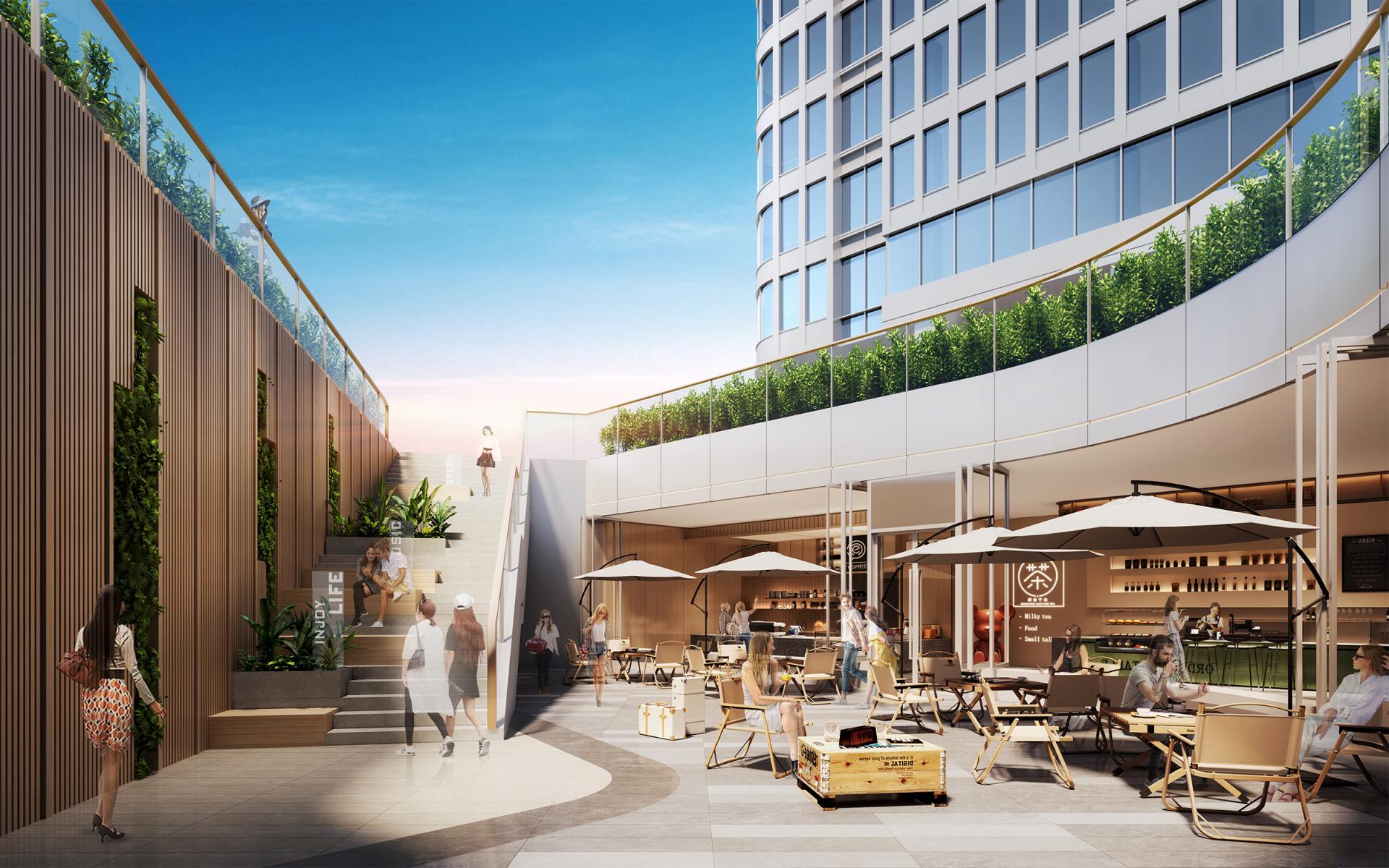
Located in Guangzhou, China, the project is adjacent to Shangyong Fruit Tree Park and the Haizhu Central Wetland Value Circle, benefiting from linear open spaces such as river systems and urban greenways. These exceptional natural resources establish a strong foundation for integrating urban life with ecological landscapes. In response to the homogeneity of contemporary commercial environments, the project adopts a scenario-based, experiential, and immersive design strategy, proposing the concept of “Riverside Forest Living.” It aims to create a three-dimensional courtyard-style commercial complex where landscape and retail are deeply interconnected, forming a unique environment that merges consumption, leisure, and natural perception.
The design introduces “Floating Green Islands” as its core imagery, shaping vertical courtyards that guide visitors upward through terraces at varying heights. Circulation paths and staircases are organically integrated with rest and social areas, enabling diverse spatial experiences while meeting commercial needs. IP elements are incorporated to form memorable visual anchors and enhance emotional engagement. Through precise spatial planning, the project harmonizes commercial operations, ecological immersion, and social interaction, supporting a dual experience of shopping and spiritual relaxation within a natural setting.
A key challenge—large structural columns affecting the continuity of the outer street—was transformed into a design advantage by reshaping column forms and integrating greenery, creating an ecological plaza that is visually striking and socially engaging. Indoors, escalators and independent columns adopt wood-grain materials to maintain stylistic coherence and strengthen the ecological design narrative.
Sustainability is embedded throughout the project’s life cycle. Wood-grain aluminum grilles and panels are used instead of solid wood, replicating natural textures while minimizing resource consumption. Durable, low-maintenance, and fully recyclable aluminum alloy materials, along with the extensive use of long-lasting ceramic tiles, reduce waste and uphold low-carbon principles.
As a key commercial and ecological node, the project revitalizes the area by seamlessly linking nature with urban activity. It promotes a healthy, low-carbon lifestyle and contributes to long-term community vitality, demonstrating the balanced integration of commercial value, ecological responsibility, and social benefit.
Credits
Entrant
HD DESIGN
Category
Interior Design - Residential
Entrant
Kunso Design
Category
Packaging Design - Wine, Beer & Liquor

Entrant
BA
Category
Architectural Design - Residential
Entrant
GUANGDONG VANWARD NEW ELECTRIC CO., LTD.
Category
Product Design - Home Appliances