2026 | Professional

偏軸軌跡 Offset Axis Trajectory
Entrant
無形設計室內裝修有限公司
Category
Interior Design - Residential
Client's Name
WEI TUNG LEE 李尉彤
Country / Region
Taiwan
Gallery



About The Entry
偏軸軌跡 Offset Axis Trajectory
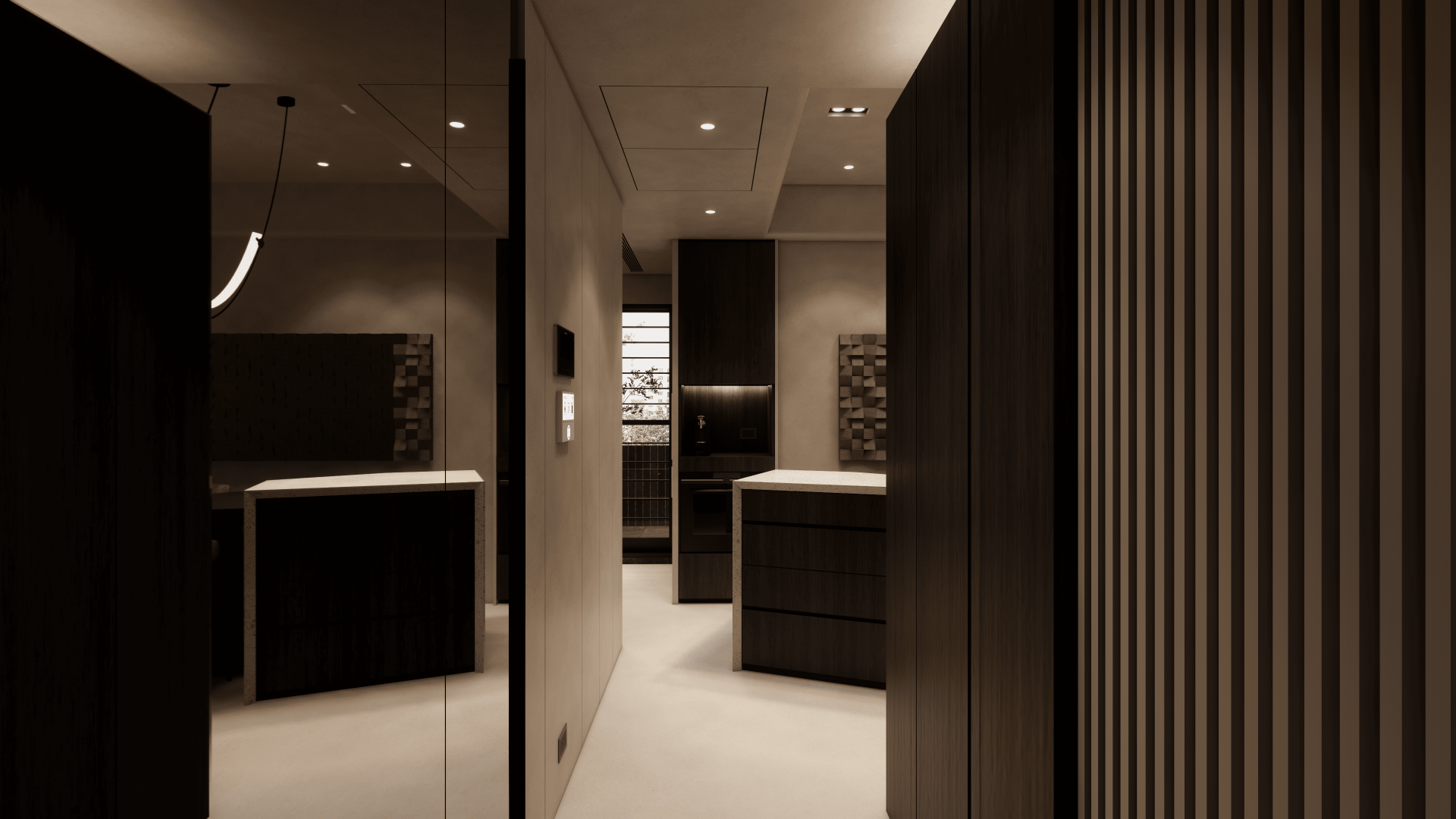
在非對稱的秩序之中,建立流動的空間路徑
Concept Statement|概念核心
本案以「偏軸」作為空間生成的起點。
不同於傳統以中心軸線為基準的規劃方式,
本設計透過略微偏移的軸線,
建立一條具有方向性與動態感的生活軌跡。
動線因此不再只是直線連接,
而是一段逐步展開的空間旅程。
人在其中移動時,
空間會隨著步伐與視線逐漸被揭示。
1|偏軸生成(Offset Axis Generation)
以入口為起點,建立一條略微偏移的主要動線軸線,
使空間在平面上形成自然轉折,增加層次與方向感。
2|動線串聯(Circulation Linkage)
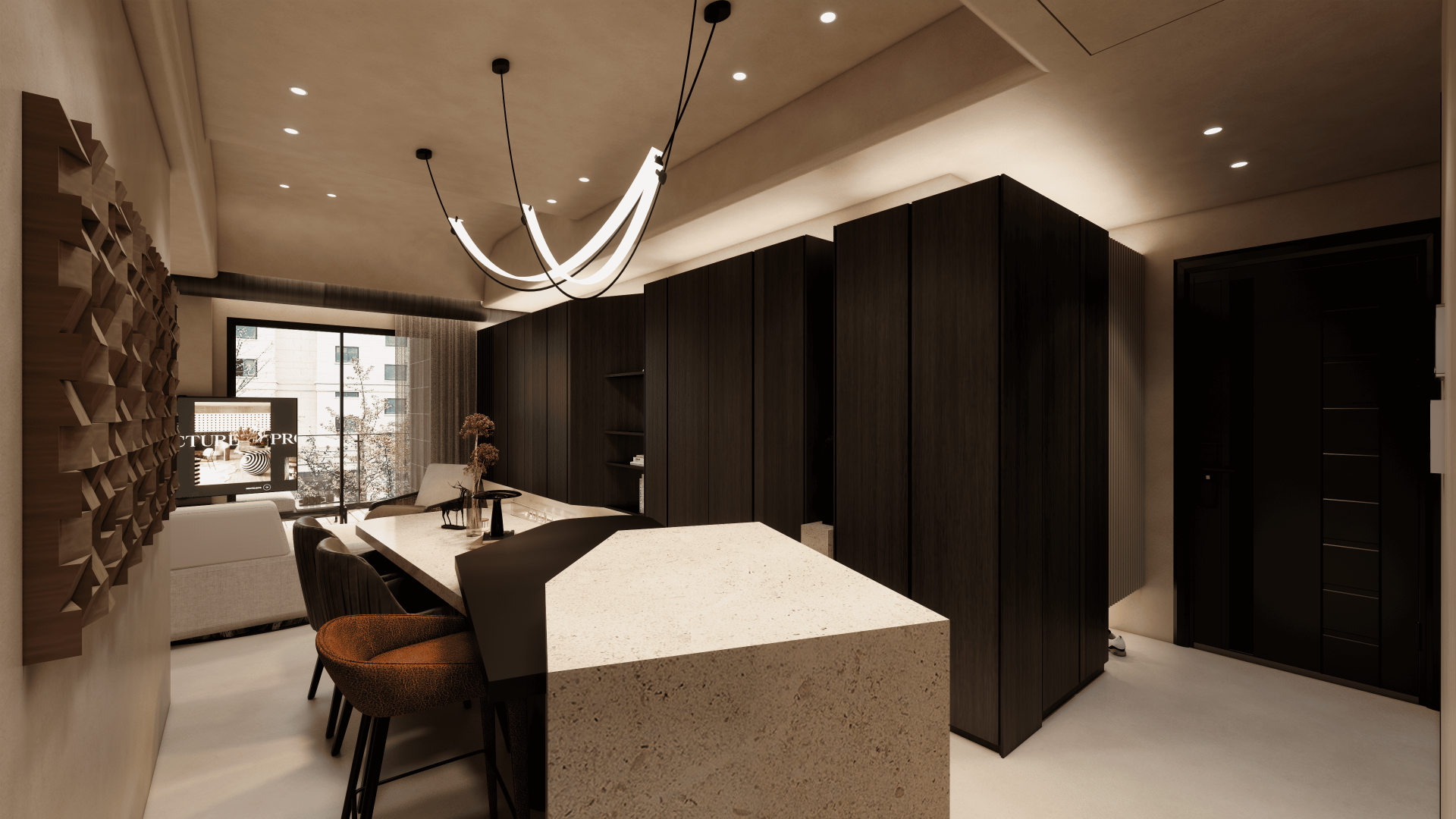
公共空間沿著偏軸排列,
由玄關 → 客廳 → 餐廳 → 景觀面,
形成一條清晰且連續的生活路徑。
3|視線延展(Visual Extension)
透過開口與家具配置,使視線沿著偏軸方向持續延伸,
強化空間深度與穿透感。
4|節點轉換(Spatial Nodes)
在動線轉折處設置功能節點(如餐桌、端景或窗景),
形成停留與轉換的空間節奏。
Plan Logic|平面規劃邏輯
本案平面以一條偏離中心的軸線作為主要空間骨架,
將公共區域沿軸線方向依序排列,
使空間從入口開始逐步展開。
相較於對稱式布局,
偏軸規劃使不同機能之間形成自然錯位,
增加空間的深度與層次。
同時,
軸線最終指向戶外景觀,
讓整體空間具有清晰而穩定的方向。
Offset Axis Trajectory|偏軸軌跡
Establishing a fluid spatial pathway within an asymmetrical order
Concept Statement|Concept Core
This project takes the concept of an “offset axis” as the starting point for spatial generation.
Unlike conventional planning approaches that rely on a central axis,
this design introduces a subtly shifted axis
to establish a living trajectory imbued with directionality and a sense of movement.
Circulation is therefore no longer a simple linear connection,
but rather a spatial journey that unfolds progressively.
As people move through the space,
the environment gradually reveals itself in response to their steps and shifting perspectives.
1|Offset Axis Generation|偏軸生成
Beginning from the entrance, a slightly shifted primary circulation axis is established,
allowing the plan to develop natural turns and transitions,
enhancing spatial layering and directional clarity.
2|Circulation Linkage|動線串聯
Public spaces are arranged along the offset axis,
moving sequentially from Entrance → Living Room → Dining Area → Exterior View,
forming a clear and continuous living pathway.
3|Visual Extension|視線延展
Through carefully positioned openings and furniture arrangements,
sightlines extend along the direction of the offset axis,
reinforcing spatial depth and visual permeability.
4|Spatial Nodes|節點轉換
Functional nodes—such as a dining table, focal display, or window view—are placed at points where circulation shifts,
creating moments of pause and transition within the spatial rhythm.
Plan Logic|Planning Strategy
The floor plan is structured around an axis that intentionally deviates from the center,
serving as the primary spatial framework.
Public zones are organized sequentially along this axis,
allowing the space to unfold gradually from the entrance inward.
Compared with symmetrical layouts,
the offset-axis strategy creates natural misalignments between functions,
enhancing spatial depth and layering.
At the same time,
the axis ultimately directs attention toward the outdoor landscape,
giving the overall space a clear and stable sense of orientation.
Credits

Entrant
HOHS DESIGN
Category
Interior Design - Retails, Shops, Department Stores & Mall

Entrant
Shanghai Baishu Architectural Decoration Design Engineering Co., Ltd.
Category
Interior Design - Commercial

Entrant
GUANGZHOU DANGXIA SUPPLY CHAIN CO., LTD.
Category
Fashion Design - Bags

Entrant
LANSONG DESIGN GROUP
Category
Landscape Design - Residential Landscape